
EP. 5
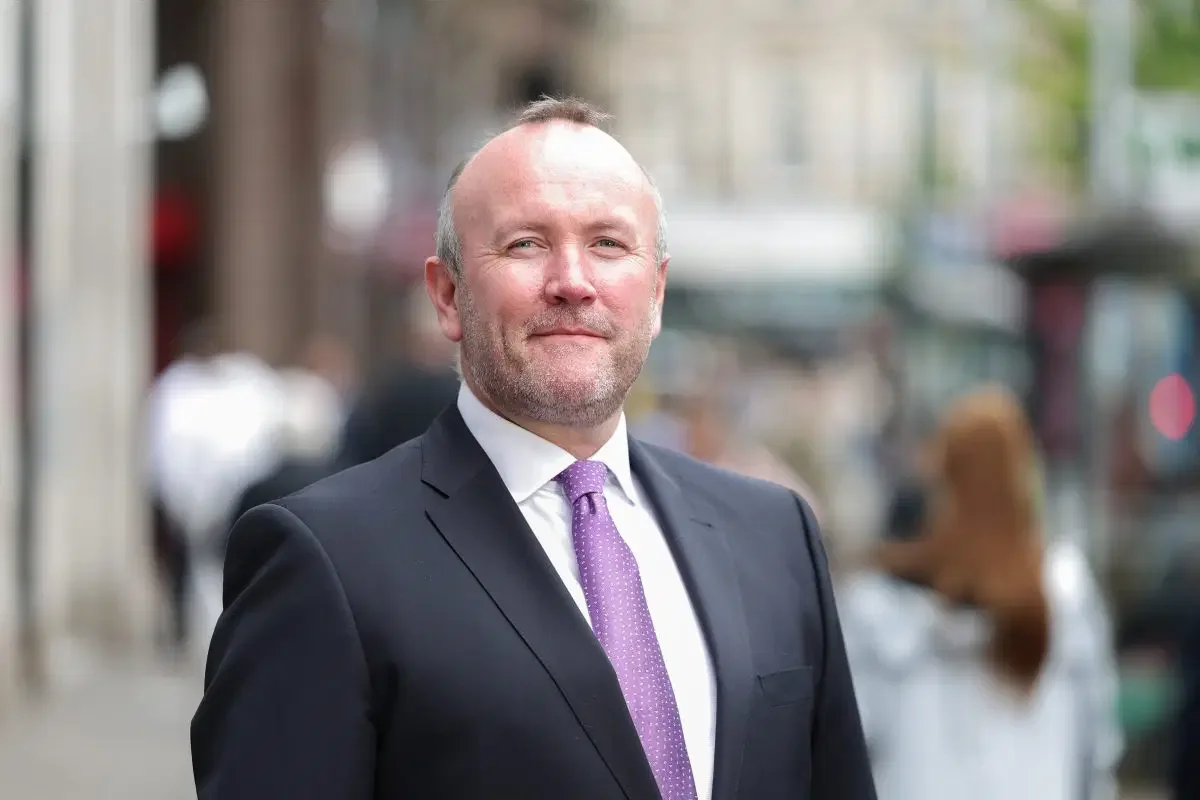
Michael Bready
Barrister, Bar of Northern Ireland
Cyber Essentials Plus, AI and Wellbeing at the Bar: Michael Bready on 23 Years in Independent Practice
Michael Bready is a barrister in independent practice at the Bar of Northern Ireland and the first independent barrister in Northern Ireland to achieve Cyber Essentials Plus. He covers the certification process, AI's role in legal work, and how barristers in independent practice can protect their mental health.
Michael Bready has been a barrister in independent practice at the Bar of Northern Ireland since 2000, with a mixed civil, family and criminal practice. He is the first independent barrister in Northern Ireland to achieve Cyber Essentials Plus — the government-backed cybersecurity certification. This episode was recorded in April 2024 and also touches on the Briefed practice management system, which Michael has been using for close to a decade.
The episode moves across four distinct areas. First, the Cyber Essentials Plus process in detail — what the certification requires of a sole practitioner working from a home office, the administrator account approach Michael was taught, and why the certification works as evidence to the ICO in the event of a data breach. Second, AI at the bar — Michael's view that the threat is real but specific, most acute for junior lawyers in document-heavy work, and that advocacy is the area least at risk because it cannot be replicated by a computer. Third, practice management for independent barristers — how the Briefed system replaced spreadsheets, gave Michael a single organised view of his fees and case files, and freed up mental space. Fourth, mental health and the specific loneliness of post-COVID independent practice — the colleagues who had not spoken to anyone since Friday, and the practical discipline of building walls between work and private time.
When you're at home working alone in a setup that you have set up yourself, it's all on you. If you don't seek out that third-party expertise, you're really stumbling in the dark.
Michael Bready, Barrister, Bar of Northern Ireland
The episode is recorded before the Briefed wellbeing and leadership conference mentioned in it, and it closes with Michael's predictions for 2024 — that remote hearings will face a pushback for everything except administrative directions, that e-bundles and paperless working will continue to grow, and that the bar needs to get comfortable with DXing being replaced by electronic document management. He calls it evolution, not extinction.
Share this episode
In this episode
- Michael's route to independent practice — 23 years at the Bar of Northern Ireland with a mixed civil, family and criminal practice, working without a clerking team or chambers structure.
- Cyber Essentials Plus — what prompted Michael to pursue the certification, what the process required of a sole practitioner, and why home office security is an entirely separate challenge from office-based working.
- The password layer — why changing default router passwords, using separate administrator and work accounts on your laptop, and knowing why your system is secure matters as much as having the certification itself.
- Cyber Essentials Plus as ICO evidence — how the certification dovetails with GDPR compliance, why the ICO has fined barristers who did not have basic security measures in place, and why having documentation of what you implemented matters in any investigation.
- The Briefed practice management system — why Michael has used it for close to a decade, how it replaced spreadsheets and disconnected processes, and the mental space that comes from having a single organised view of fees and files.
- AI at the bar — Michael's argument that AI is coming and the right response is to find where it can do work for you rather than resist it, and why advocacy is the area least likely to be displaced.
- Where AI creates specific risk — document review and creation at the junior end, the already-documented cases of AI producing incorrect written arguments for courts, and why the corrective mechanism is experience.
- The generational divide on technology — why each new generation of lawyers arrives with skills the previous generation does not have, and why that is evolution rather than extinction.
- Mental health in independent practice — what post-COVID loneliness looked like for barristers working from home, the colleagues who had not spoken to anyone since Friday, and how Michael spotted and acted on it in his own network.
- Building boundaries — the specific discipline of creating walls between work and private time at home, why the tail wags the dog if you do not do it, and the email-between-one-and-three principle Michael discusses but has not implemented exactly.
- Vicarious trauma — Orlagh's account of never having heard the term during her own years at the family bar, and why the removal of informal post-court decompression through remote working has closed off one of the main ways lawyers processed traumatic material without knowing they were doing so.
- Predictions for 2024 — a pushback on remote hearings for substantive matters, continued growth in e-bundles and paperless working, and the replacement of DXing and postal bundles by electronic document management.
From this episode
The most useful exchange in this episode for any barrister in independent practice is Michael's account of what Cyber Essentials Plus actually taught him. It was not the headline certification — it was the small things. Changing default router passwords. Setting up a separate administrator account so that if something catastrophic happens, there is still a way in. Understanding why the system is secure rather than just assuming it is. These are not technical steps. They are habits, and habits are what the certification builds. His point is that a sole practitioner at home has no IT support, no network security team, and no one to call when something goes wrong. The only protection is what you have put in place before the problem arrives.
His account of building boundaries between work and private time is worth reading carefully alongside the mental health section. The two are connected in a way that is easy to miss. The loneliness Michael describes — colleagues who had not spoken to anyone since Friday — is in part a product of the same environment that makes the work-life boundary problem worse. Remote working compresses work and private life into the same physical space. The solution to both loneliness and overwork is the same: deliberate interruption. Get up. Leave the desk. Go somewhere that is not work. The advice is simple. The discipline required to act on it is not.
Michael is the first independent barrister in Northern Ireland to achieve Cyber Essentials Plus — the government-backed cybersecurity certification for businesses.
Briefed's Cyber Security Awareness Training gives barristers and chambers staff the structured content to understand their obligations, identify risks and put the right habits in place — the human layer that sits beneath device management and network security. AI Training for Barristers covers the BSB's guidance on responsible AI use, the regulatory framework, confidentiality obligations and practical implementation — the structured version of the AI discussion Michael and Orlagh have in this episode.
About the guest
Michael Bready
Barrister, Bar of Northern Ireland
Michael Bready has been in independent practice at the Bar of Northern Ireland since 2000 with a mixed practice across civil and commercial disputes, family law and criminal law. He also practises as a mediator and arbitrator. He is the first independent barrister in Northern Ireland to achieve Cyber Essentials Plus certification. He has used the Briefed practice management system for close to a decade and writes and speaks on topics including digital working practices at the bar.
Transcript
Orlagh Kelly: Michael Bready, welcome to the Get Briefed podcast. How are you doing today? Thank you very much for joining us. Can you tell me and the audience a little bit about your career and who you are and what you do?
Michael Bready: I'm great, thanks Orlagh, it's great to be here. I'm a barrister in independent practice and I've been doing that for nearly twenty-three years now. I have a fairly mixed practice in civil and family, still a little bit of criminal law. And yeah, that's really the description.
Orlagh Kelly: Yeah. I'm just remembering, really, as I sit here, that you and I were against each other back when I was in practice. I don't know if you remember — one day you were a little bit late to court. You kept me waiting for about two hours and you incurred the wrath of a certain district judge.
Michael Bready: Well I'm better now. It's only about an hour and 40 minutes.
Orlagh Kelly: Ha ha, I've forgiven you for it. And so congratulations are in order because you are the first and I think the only independent barrister in Northern Ireland to achieve Cyber Essentials Plus. Which is a government-backed cybersecurity certification for businesses and it's not something that many barristers have to date achieved. So congratulations on that. I know that you worked hard on that this past couple of months. Can you tell me a bit about, for example, why you're interested in achieving that certification?
Michael Bready: Well, I think it probably goes back to COVID and when COVID began it was all that uncertainty and I remember — I got a whisper that there was going to be a lockdown — I remember packing up as many files as I could out of my office in work and bringing them home. And then when I got home I always had a home office of sorts, but then through lockdown it became the place of work. And so I think everyone's home office — mostly everyone's home office — was set up as a reaction to COVID and then it just went with it from there on. And cybersecurity was always in our minds, but doing this certification really gave me focus and allowed me to really sit back and reflect and say, well, I think I'm cybersecure — I wonder how cybersecure I really am. And of course we can always improve in cybersecurity.
Orlagh Kelly: And what did the process look like from first being accepted onto the programme?
Michael Bready: Well, it's all about information. They want to know where you work, how you work, which is pretty straightforward — or was straightforward for me, because you know, I was doing a lot of work remotely. So I had a computer at home and I had a laptop and an iPad and it was just all about making sure that remote access at home or if you're out and about was safe and secure. You know, I think most home office systems are fairly secure but this really reinforced with me — and should reinforce everyone — that you just can't rest on that. You have to keep checking. You have to keep reviewing it. Not every day, but you need to have a good system in place to work out exactly how secure you are. And I think as well you have to understand why you're secure. So you can't just work on the basis that there's a password on your router. You know, do you know the password? Who put it on? Maybe it came with the password, which most of them do. And have you changed it to your own password that only you know? And have you a way of safely storing those passwords? Small things like that that are different layers to building up, you know, the best security you can provide.
Orlagh Kelly: And of course then it strikes me, regardless, that you probably have in your more office-based environment where you will have experts that provide cyber security to a very high standard, that once you're out of that environment — in your own homeworking environment — you don't have cyber expertise yourself and as a consequence you do need actually to look at that, siloed off from where your main work is, in a library or a chambers, for example.
Michael Bready: Exactly. It's, you know, you can rely on other people when you're in a workplace environment, but when you're at home working alone in a setup that you have set up yourself, it's all on you. And if you don't seek out that sort of third-party expertise, you're really stumbling in the dark. You might know things, you might be good at some things, but you can't complete the whole picture that brings, you know, a totally secure approach to it.
Orlagh Kelly: And in terms of my experience now — I have to say, having worked with a lot of IT and technical individuals throughout the twelve years that Briefed has existed and having developed their own online products, I have had to learn, sometimes with very much of an uphill struggle, that language of IT and cyber and data and development and it's very different from the language a lawyer normally speaks. So I was mindful when we were introducing barristers into the scheme that was run by IASME that there could be somewhat of a translation difficulty with the very expert cybersecurity teams and the very expert barristers — expertise sitting obviously in different areas. How did you find the communication and the process from that perspective?
Michael Bready: Well, first of all the communication is at a top level and it's clearly been developed to deliver to people like me who don't have that experience or that expertise. So it's communicated superbly. If there are any questions, or even when you think you know, you're always offered a link. Even if you're doing the meetings remotely, there'll be a link in the chat box where you can go and click on it later on, or you can be sent a link by email later on that night, or something you can refer back to. So that was a concern for me. I have to say it was a concern for me, but it was no concern throughout the process. But I think the other aspect to it is that when you do something like this, you have to commit to it. So you have to be all in. So you know, you can't do this on automatic pilot, glancing at emails on phones. You have to give some time, you have to dedicate some time to reading emails, to considering the feedback you receive about where your systems aren't as good as they could be. So you really need to take time and read it at a time and in a place that you can absorb that information. So that's something that, you know, maybe we're all not as disciplined about anymore post-COVID and we're looking at phones and you know, flicking through things. But you need to sit down with some of this stuff and just really read it. And then when you read it, if you've got a problem — you know, anyone in the scheme answered it very freely. And there was a very willing offer of confirmation of any problem or anything you didn't understand. But in fairness, it was all delivered in a way that there weren't any problems.
Orlagh Kelly: Great. And so if there's a barrister watching or listening to this, half thinking about engaging in a Cyber Essentials process for themselves — that is to say, their own practice rather than chambers — what would you say? How do you feel having completed and achieved the certification? How has that changed your practice?
Michael Bready: Well, it's — peace of mind, of course, is the first thing, that's great. But you learn little things along the way that make you — you're not really changing your practice, you're just adapting it slightly and being aware of risks. So you learn little things along the way and then altogether at the end of the process, I feel anyway, that I'm operating in a better way, in a more secure way, and I'm aware of risks. And you know, I think that's part of any regulatory environment — just being aware of risks. And you can only be aware of a risk if you know what the risks are. So there's just a little bit of self-education involved as well, a bit of commitment time-wise. And one thing — you know, simple things, for example, when you open a laptop out of the box and you set it up, whatever the brand, you'll be the administrator of the laptop.
So through this training they suggested that you keep an administrator account and then you set up your own work account as well, so that if something cataclysmic happens, you can at least go in through the administrator's account or get somebody else some assistance to go through the administrator's account and maybe it's fixable. Maybe there's a way of — it's another barrier really. So small things like that. So then, you know, fast forward to two weeks after you've finished the course and you're sitting on your laptop and you're in a public space and you think, I'm really glad right now that I know that there's another level of security here. There's something else, another buffer for me. So that's peace of mind for me. And then it's a real measure that has a real effect that you're implementing, you know.
Orlagh Kelly: And of course, it works very well as evidence in the event that you either have a cyber attack or you have to report yourself to the Information Commissioner's Office for any reason — that you've undertaken a certification such as this and that you have got really quite a high standard of cybersecurity in place. Funny that you mentioned the administrator piece where you should have an administrator account as well as your own work account. The Information Commissioner's Office has actually fined a barrister in the past who did not have that in place. So although cybersecurity and the Cyber Essentials Plus certification may seem as if it sits quite far away from GDPR and the ICO, in fact they dovetail together to essentially protect your practice, your reputation, and in the event of any investigation, hopefully you would find a no further action recommendation coming out of that.
Michael Bready: Yeah, no, I thought about that as well and the way I thought about it — not as articulately as you just put it — but the way I thought about it was that if something happens — and I think we all have to work on the basis that something is likely to happen, on the scale of bad to terrible, and hopefully not too bad, but you might find yourself explaining to the Information Commissioner at some stage what your safety measures were. And we're always in a better position, because accidents happen and things happen, but if you're saying, well, this is what I have implemented — that's obviously going to be a better conversation than saying I didn't know what could happen so I didn't do anything about it.
Orlagh Kelly: Head in the sand type situation. Yeah. And certainly, you know, we also at Briefed went through the Cyber Essentials process this year and got that in place so that we could feel confident in terms of all of the different types of technology and cybersecurity here as well. So it's good to have it, it does give you some peace of mind. And I know that it's widely accepted by solicitors, for example, as a good indicator that anybody that they're working with has also taken cybersecurity well. So it should give you a competitive edge at some stage.
Michael Bready: Hope so and then we receive so much information within our practice that we used to receive hard copy by way of papers that they're automatically emailed now. And we are working remotely and storing things in the cloud and so there's peace of mind as well for providers of work to know that we're taking it seriously. Yeah, and that we're a safe person to work with.
Orlagh Kelly: Well, congratulations again. First person in Northern Ireland and one of the first in the UK to get it. So that commitment worked well for you.
Michael Bready: So far so good, yeah.
Orlagh Kelly: And so you were talking there about the change in, I guess you would describe it, practice — in that a lot of hard copy papers used to be the way and now it's email, downloadable bundles I'm guessing, and everything's much more electronic. How do you typically manage that within your practice and how do you manage your practice?
Michael Bready: Well, you need to train yourself and you need to go sort of through the pain threshold of that.
And you need to move from thinking that I need to get a highlighter to run through a document to highlight — to knowing that most computers will give you a highlighting function now anyway, and in fact many already did, but you just want to use it in that way. And it doesn't matter what device you use, you know, you find your own way for managing it. And then you train yourself that your go-to situation is that you can look on your laptop, your iPad, your phone, whatever device you choose to look at some piece of information or to search for a piece of information, rather than relying on, I need to go and find that file on a shelf. Yeah. I don't think we're totally at the electronic, entirely paperless system yet. And we're moving that way. I think that's a leap of faith as well for everyone involved — the judiciary, the solicitors, the bar. But we're moving there and there is a willingness to do it now.
People realise now how handy and how efficient it can be having a huge bundle instead of carrying a bag into court, carrying it in a laptop — the searchable function of that is only one of the benefits. And then you just adapt yourself and you train yourself. And I think a lot of these new processes are a commitment by the individual that I want this to work, I'm going to make it work. When it doesn't work, I'm going to find out why and how I can fix it rather than just, it didn't work for me so I left it. You know, and knowing that you have that layer of security when you're working online or you're working in the cloud or you're storing your documents gives you confidence to keep on trying.
Orlagh Kelly: And funny, that brings me around to the fact that now many people listening may not be aware that Briefed's very first product — and my sort of inspiration for starting the company — was to develop a practice management system for barristers, particularly solo barristers, who at the time I was frustrated at not having technology to help me run my practice. It was a busy practice ten or twelve years ago. And it would be disingenuous not to say that of course you're one of the people that now uses that Briefed product — the Briefed practice management system. Can you tell us a little bit about why you decided to use that and how you're finding it?
Michael Bready: Well, why I wanted to use it in the first place was for organisation — really for accounting organisation in that I wanted to be able to look at what fees I'd sent out, what had been paid, and then from that I realised that there was a consistent fee note exchange and receipt of payment exchange that provided that level of professionalism I think that was absent from my own practice. There was a way of using spreadsheets and laptops and saving things on drives and in different ways and using different processes, but this brought it all into one place, which was the first way. And then as I got used to it — because it's something again you commit to and you get used to and you go to training for and you become better at it as time goes on — then things started to be emailed to me and bundles started to be emailed to me and documents started to be emailed to me. And then this was a way of saving them in one area and assigning them to that case and just feeling that, well, you know, that aspect is totally organised. So that frees me up time-wise and frees me up mentally to not worry about it anymore and just to focus on, you know, doing the job really.
Orlagh Kelly: And how long have you been using it for now?
Michael Bready: It must be at least ten years.
Orlagh Kelly: About eleven. So we'll settle on that. Yeah, and that's great. I'm glad that it's working so well for you. It's sort of the baby of the family, it's the first product, and whilst we've moved out and created lots of other products and services, that continues to have been the kind of the first inspiration for my change from being a practising barrister and moving into the technology world, such as it is, and the learning curve that that was. So thank you.
So one of the things that we've been working a lot at Briefed and talking to many, many barristers in England and Wales particularly about, is AI — which is the hot topic of the year and probably heading into next year. Is it going to be an advantage for barristers? Is it going to bring risks? Is it going to eradicate the need for barristers? No one really knows the answer but everybody has an opinion. And so Michael, what is your opinion on AI for the bar?
Michael Bready: Well, I think AI's coming, so you just have to embrace it. So we have to be ready for it or have, in your own head or practice, a soft landing for it. But is it going to mean the end of the bar? No, I don't think it will. Is it going to mean the end of human decision-makers? No, I don't think it will. I think probably the main concern within the legal community at the minute is that AI will fulfil the role of junior lawyers — barristers and solicitors — in reviewing documents, at least going right up to document creation. And we've already seen across America and elsewhere that AI has created written arguments for courts and got cases wrong and things, so — but that will correct itself, of course it will. But you will still need that independent mind of a member of the legal profession to look at an argument, to assess it, to assess an injury maybe, to assess the strength of a claim. And you can only ever assess the strength of a claim, no matter what the type of claim is, through experience. So it won't remove the bar. I don't think it's a huge threat to the bar. I think we need to embrace it to say, right, well, if it can do some work for us, let's use it to do that work so that we don't have to do that. We save time, we save energy and let's make ourselves better then in another area, or better within another process. So let that pick up the slack. Big firms are probably worried about it. Junior lawyers might be worried about it because they feel they might be redundant because a computer can do that part of the job. But then you just find a different job to do as a lawyer and you re-approach it in a different way. I don't think you need to retrain, but you might just need to reassess.
Orlagh Kelly: Certainly there is the potential that junior lawyers coming through, for example, the Institute or bar school or any of those sort of training academies as such, to get their legal exams, may well benefit and have an advantage with being one of the first generation digitally native, essentially. If we're talking now — since we're in twenty twenty-three — these people were born in a world where the internet was standard and they may very well develop and have the skills to use AI to its potential more quickly than people a bit like yourself who are further into the seniority of the profession. And that might be how they can start to pivot a little bit and have an advantage.
And there might be an opportunity to get rid of, I guess, some donkey work — if indeed there's time spent making chronologies, summarising bundles, things that are not necessarily legal work but will typically take the barrister an awful lot of time to do. So it would be nice to see if we could find a way that AI could be a positive rather than a negative, certainly.
Michael Bready: Yeah, I think we'll do it easily. I think new generations of lawyers come out trained in new ways that older generations don't have. That's just the way of it. Whether you were better at searching on the internet twenty years ago when you moved into a firm and nobody was very good at the internet. You might remember one of the magical skills I came out of bar school with was the ability to attach a document to an email. Now it seems easy.
Orlagh Kelly: It is easy. Yeah. Well, it is easy.
Michael Bready: Exactly. Well yeah, well, I'm not going to congratulate myself now, but maybe twenty-three years ago it was a big thing. But you know, you were sending people emails, you were emailing pleadings when other people were posting them, you know, so you were more computer savvy, more savvy on the internet. So that was our skill then and every year since then people have more skills and have acquired more IT skills at the older end of the profession just don't have. Yeah. So that's natural.
Orlagh Kelly: Evolution, do you think, as opposed to extinction?
Michael Bready: Yeah, that's natural and that's good. And you know, if young lawyers come out saying this is how we can use AI, well then, you know, that's brilliant. Yeah. Yeah. Every firm would welcome them.
Orlagh Kelly: Certainly in my opinion it would be very difficult to replace advocacy. Yeah. And the years that takes — decades, in fact, for some — you know, from the most superbly skilled advocates, you just simply can't replicate that via computer. And therefore people who work very heavily in the advocacy arena — family, crime, you know, potentially employment, that type of thing — may find that they can garner the advantage of AI without having their careers greatly impacted, because they can still bring that unique selling point, the skills of an advocate. It might however be those that are in more paper-based areas that would struggle if computers can start to do a lot of paper-based work.
Michael Bready: It might be and it might be. Negotiation might be something that's under threat because it's probably not AI — it's probably more sort of an algorithm-based programme that's going to work out where you are against where your opponent is and where the middle ground is or where the best landing spot is for a debt dispute or a contractual dispute. It's probably not AI yet. At the minute it's probably, you know, an algorithm-based app or something. But so maybe there'll be less negotiation on the simpler matters. So again that's just evolution — then we need to be, you know, slicker on the more complicated matters. Or maybe that'll give us time to focus on them and maybe that removes that sort of menial task from the lawyer. Yeah. Whereas so it's not really a threat. Yes, it might be less work in that area, but you need to take it and then find other work in other areas or show an incentive that you could maybe identify new work in other areas.
Orlagh Kelly: Yeah, absolutely. Thank you for that. Michael, one of the things that I've been talking to a lot of people throughout twenty twenty-three has been around burnout and stress, particularly for members of chambers — the barristers. And a reason for that appears to be at the moment there is a significant amount of work and not enough barristers in any set of chambers to be able to take all of that on. I know that you're in independent practice and not necessarily associated with chambers, but that has led to lots of conversations around mental health and protecting the health and wellbeing of members and how that can be better facilitated than it typically has been in the past at the bar. And in fact, moving on into 2024, we are developing products and services that are available to help the bar with that. And we've a great wellbeing and leadership conference that's kicking off in spring 2024. But I just wondered from your perspective around mental health — are there ways that you identify how to protect your mental health, things that you've done in your twenty-three years at the bar to keep yourself robust and well?
Michael Bready: Well, I've always been lucky enough to have lots of family and friends around me, so you can't work on that assumption, but I've been lucky enough. And I've had a very supportive family, but at the same time a family who would quickly tell me when they saw something wrong and whether I wanted to hear it or not. But I think with mental health and burnout it probably got worse in the COVID years and we're probably trying to work out how to place ourselves in the post-COVID, working remotely but not working entirely remotely. And you know, if you take most barristers, no matter what their set-up, they started to work at home. And when you're working at home, you have all your work at home. Your files, your books, your computers, they're all there all the time. So if you take a working day and you're at your desk at say nine, you stop for your elevenses.
Yeah. And then you stop for your lunch. And stopping might just mean going and grabbing it and coming back to the desk, but you physically stop, you move. And then you come back in the afternoon, you might stop for a cup of coffee in the afternoon if you've got time. And then next thing you know it's tea time and you're having your tea and maybe you have your tea in your lap or at your desk, or maybe you go out and grab it and stick it in the microwave and it takes two minutes to heat up and thirty seconds to eat, and then you're back again, you're working. And the next thing you know, everyone's been there, it's nine o'clock at night, and you haven't done anything today apart from work. So that can happen. Unless you have something to interrupt you. So COVID — there's nothing interrupting you. Every day was the same. So now if there's nothing interrupting you, you have to interrupt yourself. Yeah. So you have to say, right, it's six o'clock, it's five o'clock, I'm having my tea, I'm not having it at my desk, I'm sitting at a table and going outside and going for a walk and going to go to my friend's house and going to do something. Maybe even lunch you say, right, well no matter what the weather, I'm going to sit in the garden under an umbrella and just eat a sandwich away from work. So you're almost — in your home, it doesn't matter how big it is, if you've got work there and work's in your mind, it doesn't matter how big your house is. So you need to build a wall basically between work and your private time and you need to say, after this time on this day, I don't do work anymore. I don't look at emails.
Some people can look at emails and not be distracted by work and not be taken out of their downtime. I can do that, but not everybody can do that. But you need to say, right, on well, I'm not working, I'm not sitting at my desk after seven o'clock, and then fill that time with something else. I'm going to go for a walk with the dog, I'm going to go for a walk with my partner, I'm going to go and see my mum, I'm going to watch TV, I'm going to go to the pub — no matter what it is, I'm not doing any work. And then you need to create a working week, you need to say, right, what am I going to do at the weekend? Because next thing you know it's Saturday morning, you're getting up, you're doing a bit of work, you're tidying up emails because they're not coming in. And then it's three o'clock and you've missed your Saturday. So you really need to work at it and find those boundaries and if they don't exist, put them in place. Yeah. And say, right, this is what I do and this is how I work. And you know, because I think the tail wags the dog if you don't do that. So you've got people sending you emails. Emails are like text messages now. Everybody wants an immediate response. There's a guy who wrote a book about time management, for example, not me. And he said he took his emails off his watch, his phone, his computer. He only had emails on his laptop and he only looked at them between one and three. And he only read them between one and three and he only answered them between one and three.
And eventually he trained the senders of the emails to know that nothing happens outside one and three. So they're not expecting a reply at six o'clock at night. They know.
Orlagh Kelly: Have you implemented that?
Michael Bready: So no, not one and three. But you might — yeah, it's a good well, it's a good principle. So you're saying, you're telling people — like, now we've got read receipts, now we've got messages on most email systems that say, do you want to send this during office hours? Or people can put on automatic replies that say, you know, after six I'm not going to read this. So now that's totally acceptable. Yeah. Before COVID if some busy commercial lawyer's email said I'm not reading this after six, I think people would say, well, they're not doing their job. Now we say, well, that's good.
Orlagh Kelly: Yeah, there's been a change in attitude. Yeah, which is great.
Michael Bready: Much more receptive to that.
Orlagh Kelly: Certainly I had found when I — one of the things that I missed when I left private practice and I hadn't really understood the benefit that I had had during my twelve years in practice, was the inbuilt sociability that exists. And so that typical feeling of finishing court and going for coffee or going for lunch with quite often your opposite number or your instructing solicitor — and what I hadn't realised, of course, when I benefited from that, is when you don't have that, that you can be quite lonely. And there is, I think, the option at the bar, being independent workers, exacerbated significantly by remote hearings, remote directions, and Zoom, and even remote consultations — that that innate sociability that a lot of people benefit from if they're that way wired, if they're sufficiently extrovert, if that's taken away, even that in and of itself can create an anxiety or a strain on your mental health and wellbeing. Have you any experience of that?
Michael Bready: Yeah, I have colleagues who have said to me, you know — "I haven't spoken to somebody since Friday." So they actually haven't spoken to anybody since Friday. No, it was more during post-COVID times when people weren't going out, when people weren't really mixing, but they were saying, I haven't spoken to anybody since Friday, and there was a real sense of loneliness. You could tell — I think you can often tell when somebody is really yearning for a conversation or they're lonely or they haven't spoken to someone. So I think whilst I didn't really suffer from it, I was acutely aware of it and I had signposted it amongst my friends and family — and not the closest of friends, just to work out, you know, there's people out there struggling. If you can identify it, if you're lucky enough to identify it, act on it. You know, small things. Act on it. Phone them back. Phone them back when it's not about work. Or say, you know, let's go out for coffee on Tuesday and actually go, because we all say, let's go out for coffee, and can't make it. You know, tie yourself down to think, you know, someday I might just need a coffee. So yeah, that sense of loneliness was really apparent and I think it was acutely felt by members of the bar because they were working at home and they didn't have the office environment to go to, they didn't have those coffee shops anymore, they didn't have the courtroom, they didn't have waiting outside the court to go to. They were just simply online waiting. And that could be lonely.
Orlagh Kelly: And interestingly to me, something that I've been exploring a lot in the past year is vicarious trauma. And it's not something that I had been very aware of before this, but essentially that concept that lawyers typically deal with very traumatic content. It might be because they're involved in a murder or rape trial, it could be in the family law world, it could be around abuse. And a lot of exposure to statements of evidence, medical reports, photographs — that whilst you as a lawyer were not present at the time of an incident, you are nevertheless subjected to and really wrapped up in all of the descriptions of the content, be it, as I say, photographs, video on occasion, statements and people giving evidence. And as a result of that, that can cause a vicarious trauma. It can cause post-traumatic stress disorder through that vicarious nature.
And I found this really fascinating because as a predominantly children's law barrister back in the day, I had never heard of it. And I was involved in cases such as non-accidental injuries to babies, sex abuse cases, and there was no concept that actually your mental health could suffer in that environment without proper help, counselling on occasion if that was what was deemed appropriate. So that's something that we're thinking about and we're trying to figure out ways to essentially raise awareness of it. But it certainly struck me that it might be that good old-fashioned way — if you come out of court, you go for a coffee with someone involved in the case and you get it off your chest — was a way of coping with it. Maybe a, you know, an old-fashioned way of coping with it without even realising that you're doing so. That has somewhat been removed as a technique or a tool available to barristers and lawyers on the basis that there are so many remote hearings that you're not even in the room and you don't have that availability.
Michael Bready: Yeah. Well, I think it's like anything — you raise the flag and give it a label and tell people what it is. Because some people may have — you might have come home, you may have gone for coffee with a colleague, you may have come home and maybe, you know, one of your young children does something and you bite the head off them and you don't connect that up to — I'm actually more stressed than I would be right now, I'm more anxious, I'm unsettled — but you don't connect it up. So knowing what the signs are gives people the ability to say, hold on, you know, this isn't right. Maybe I need to think about this a bit more. So I think, you know, on a basic level, yes, of course you're right, people can go out and talk about it over coffee. But if you don't know what you're looking for, if you don't know what the signs are, you may not be able to diagnose yourself, for example. You might have to rely on somebody else. Maybe you don't have anyone else who's close enough to say, look, I think you are very anxious right now. I think you're different, I think you're talking very fast, I think there's something different about you generally.
If you don't have that person, you can't see it, you don't know what to look for. There's the risk. I think it's more than just the lack of social interaction. I think we just know what these things are now. We can identify them. We can help people identify them themselves. If you think there's something wrong, people now know where to go for help. Whereas maybe as little as ten years ago you wouldn't have known where to go for help. And by help I mean professional help.
Orlagh Kelly: And it certainly seems to me that it's much more acceptable to talk about these things. There has been a real push — for example, I know there's been a big push at the Bar of England and Wales — to really identify to the wider profession about health and mental wellbeing. And some of those things are the fact that it's now acceptable not to read emails after a certain time, because that leads to stress and burnout. And there is progress being made and I see that in ten years a significant amount has been made, and hopefully more will be made as well.
Michael Bready: I think it's across the board. I think it's in every jurisdiction actually — connections in all the jurisdictions really. And it's everywhere. Mindfulness is everywhere. It's even in the schools. Yeah. We're all very aware of it and I know about time out and taking time out and stopping and just walking away sometimes is the best treatment we can give anybody. And also we're all very aware of people's struggles and we're much more sympathetic, I think, maybe — certainly much more informed about them. And I think they've maybe been oversimplified over the years, and now we realise that mental health is a really complicated area and a really difficult area to address as a single topic. And there just needs to be lots of assistance, lots of safety nets, lots of talk about it. You know, the old first slogan I think was, it's good to talk — so it's not just good to talk to each other, it's good to talk about mental health. And maybe that's something that somebody in that conversation doesn't realise is really weighing down on them. But I think it's everywhere. Certainly I feel it in my workplace. I see it and I feel there's a huge amount of support for anyone who's going through a difficulty. And a difficulty could just be that you're just really tired right now. You know, that could be enough. And that could be a huge difficulty because you're really tired. You might go behind in your work, you know, your relationship at home might suffer from it — all from being really tired. And the answer, you know, a number of years ago might be, well, you know, you need to get more sleep. But you know, I can't go to sleep. You know. So there's different things — the most simple things, if they're maybe addressed quickly, hopefully don't turn into anything more significant. But maybe they will and maybe you just need lots of help.
Orlagh Kelly: Absolutely. So Michael, looking into twenty twenty-four, what's your vision, predictions, insights — what are the hot topics for the bar going to be?
Michael Bready: I think it's mainly developing the remote work and probably document handling is going to be a big topic this year about how we receive documents, how we use them electronically. So I can see that. I see that as a challenge for myself, so that's something I'm looking into and looking around I can see that that's a topic being discussed. So I think that's the next stage we're at really in the development of online working and remote working — how are we going to, you know, really effectively, rather than just emailing huge files or getting bundles, how are we going to get them and use them, and use them efficiently.
Orlagh Kelly: And so you think remote working's here to stay?
Michael Bready: Yeah, I think remote working — we always work remotely.
Orlagh Kelly: Remote hearings, for example.
Michael Bready: I don't think they're here to stay. I think remote hearings might just be administrative hearings, you know, sort of administrative reviews. I think there's a pushback from remote hearings. Because it was fine, it was okay, but it's just still better to have people in a courtroom for assessing credibility, for seeing them and giving their evidence. And maybe the technology's not good enough yet and for quick interactions between parties and the bench. And you know, you can't have a time lag. You can have a time lag if you're giving evidence — even if it's one second, it's amazingly off-putting. But if you're actually interacting, having a conversation, making submissions — there's a degree of interactions it just doesn't work. So I think there might be a bit of a pushback from remote hearings save for directions hearings and things like that. But I think there'll be a greater use of e-bundles and paperless trials and moving in that direction.
Orlagh Kelly: So regardless of remote or not, it'll be a significant increase in making sure that you can work digitally?
Michael Bready: Yeah, I think people are going there anyway, but COVID has accelerated it. Yeah. So I think it was going that way, but now we're realising, right, well, whilst everybody doesn't love remote hearings, there's lots that we do love. There's time saving, there's more efficient ways of using your time. And there are things that seem now totally inefficient, like posting or DXing big bundles of papers. And I think that was going anyway, it's just accelerated as well.
Orlagh Kelly: Yeah. Well listen, thank you so much for coming to talk to us on our podcast. I really appreciate your time and your insight. And if there's anyone else watching or listening to this who has something to say and wants to join us on the podcast, they absolutely can. Would you recommend it, Michael?
Michael Bready: Highly recommend. It's a pleasure, Orlagh. Thank you very much for having me.
Listen and subscribe
New episodes published monthly.
You're subscribed. New episodes monthly.
No spam. Unsubscribe any time.