
EP. 30
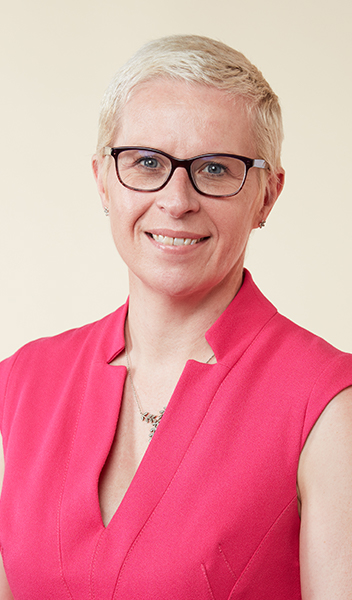
Sarah Longden
Chief Operating Officer, Quadrant Chambers
What are the Pillars of Legal Marketing
Sarah Longden is Chief Operating Officer at Quadrant Chambers, having joined in 2017 as Business Development Director. She covers three decades of chambers marketing, the two principles that underpin all of it, and how a background in marketing led to a COO appointment.
Sarah Longden began her career in legal marketing by accident in 1994, temping at law firm DJ Freeman before moving to the bar in 1999. She spent a decade at 11 Stone Buildings under senior clerk Chris Berry — a set known for its early adoption of caricature branding and one of the first chambers websites — before moving to Stone Chambers to build their marketing operation from scratch. She joined Quadrant Chambers in March 2017 as Business Development Director and was appointed Chief Operating Officer in May 2024. In 2025 she was named Chambers Leader of the Year at the Legal 500 Bar Awards.
In this episode, Sarah traces the evolution of chambers marketing from pencil-and-paper directories and early websites through to video content, YouTube channels, and TikTok. She sets out what she considers the two non-negotiable pillars of effective legal marketing — demonstrating expertise and building relationships — and explains why consistency across channels matters more than chasing individual ideas. She also addresses the challenge of driving marketing initiatives inside an organisation where the people you are trying to help did not come to the bar to be marketed.
Barristers become barristers because they don't want anyone to tell them what to do. So it's always going to be about buy-in, it's going to be about persuasion.
Sarah Longden, Chief Operating Officer, Quadrant Chambers
Sarah also discusses her transition from a purely marketing role into chambers operations — covering leases, insurance, HR, and organisational culture — and reflects on how completing an MBA while working full-time gave her the broader strategic thinking the COO role required. Quadrant's approach to diversity, including the COMBAR Underrepresented at the Bar scheme, the Prime Initiative, and an online speed moot designed to widen access beyond London, also features in the conversation.
Share this episode
In this episode
- How Sarah entered legal marketing by accident in 1994 and what the role looked like at a law firm versus an early-adopter set of chambers.
- The marketing landscape at 11 Stone Buildings in the late 1990s — caricatures, one of the bar's first websites, and the beginning of directory submissions.
- The two pillars Sarah identifies as fundamental to chambers marketing: demonstrating expertise and building relationships.
- Why consistency across channels matters more than any individual initiative, and the risk of starting something that cannot be sustained.
- The challenge of driving marketing buy-in inside an organisation of self-employed barristers, and the difference between persuasion and pressure.
- Quadrant's use of video content, YouTube, and early-stage TikTok, including the qu-bits format developed by silk Paul Downes.
- How Sarah's transition from Business Development Director to COO changed her day-to-day work, covering leases, insurance, HR, and organisational culture.
- Quadrant's diversity initiatives: the COMBAR Underrepresented at the Bar scheme, the Prime Initiative with HFW, a Women in Chambers event, and an online speed moot.
- How completing an MBA at the Open University while working full-time shaped Sarah's strategic thinking and supported her COO application.
From this episode
Sarah's central argument is that chambers marketing, however the tools change, comes down to two things: demonstrating expertise and building relationships. Everything else — video content, social media, directory submissions, events — is a vehicle for one or both. The implication for anyone building a marketing function in chambers is that channel decisions matter less than whether the content being produced actually shows what barristers know, and whether it creates genuine contact with the people who give them work.
On the operational side, Sarah's move from Business Development Director to COO reflects a broader point about how marketing experience translates into leadership. Running a marketing function inside a chambers — managing buy-in from self-employed practitioners, aligning individual practice goals with a collective strategy, building community rather than just visibility — is, as she describes it, already most of the job. The formal shift into operations added leases and insurance to the inbox. The core skill set was already there.
Barristers and clerks who build deliberate professional networks generate more work.
Our Strategic Networking for Barristers & Clerks course covers relationship-building strategy, how to identify and develop contacts who can give work, and how to turn existing relationships into instructions. It is BSB-accredited and carries 1 CPD hour.
About the guest
Sarah Longden
Chief Operating Officer, Quadrant Chambers
Sarah Longden has over 30 years' experience in the legal sector, 25 of which have been at the bar. She started her career at law firm DJ Freeman in 1994, moved to the bar in 1999, and spent ten years at 11 Stone Buildings before establishing the marketing strategy at Stone Chambers (now 36 Stone). She joined Quadrant Chambers in March 2017 as Business Development Director and was appointed Chief Operating Officer in May 2024. In 2022, Quadrant were named Marketing and Front of House Team of the Year at the Legal 500 Awards. In 2025, Sarah was named Chambers Leader of the Year at the Legal 500 Bar Awards. She holds a 2:1 in Mathematics and an MBA from the Open University, and sits on the board of London International Disputes Week.
Transcript
Orlagh Kelly: So welcome Sarah Longden, Chief Operating Officer from Quadrant Chambers. We're delighted to have you here today. I'm particularly interested in talking to you, I have to say, because of your tremendous background in marketing and business development. And it's unusual for someone, I believe, to have that professional background, but end up leading Chambers, which is what you have recently been promoted into at Quadrant. So before we get into that, Sarah, can you tell me a little bit about your background and how you got started in your professional career to help the audience understand your pathway to where you are now.
Sarah Longden: Yeah, sure. Thanks very much, Orlagh, and thank you for having me on the podcast. I started out really by accident, as sometimes these things are serendipity in your life. I temped at a law firm many years ago, 30 years ago now, 31, at DJ Freeman, where I temped in the marketing team doing the Christmas card project, where you get all of the different, you have to organise all the logistics to work out that the right partner sends the right card to the right client, which fell under my remit. I was waiting for a job interview actually to an accountancy firm because I've got maths and science as my background.
And that didn't work out, but they were looking for a marketing assistant. So I ended up staying at DJ Freeman for about five years. My director of marketing, her brother was senior clerk in a set of chambers, which is how I ended up moving across into chambers. So as with many of us that work at the bar, there is always some kind of connection that happens as to why you end up there. And that was mine. And I worked for Chris Berry at 11 Stone Buildings for close to 10 years until he retired.
He was a fantastic person to work for, incredibly creative. They used to get called the Armani Chambers because they were always a bit swish about things. Yeah, was great fun working for Chris. I'm still in touch with him and have a great fondness for him, I have to say.
Orlagh Kelly: That's a great start. And did you have then a degree background in marketing or have you learned as you've gone along?
Sarah Longden: No I didn't. So I did my marketing qualifications with the Chartered Institute of Marketing over the time that I was at DJ Freeman and then I finished my diploma when I was in my first year probably of working at the bar. So that stood me in kind of good, good stead for formal training.
Orlagh Kelly: So thinking about that move into the bar in around 25 years ago, would that be right? Yeah.
Sarah Longden: Yeah, that's right.
Orlagh Kelly: What did marketing in a set of chambers look like then?
Sarah Longden: Yeah, that's a good one. So, Chris was quite innovative. So when I got there, they famously had caricatures. He had a friend of his who used to draw caricatures for some of the newspapers and so on at the time. And he had all of the barristers had a caricature and you'd walk into the reception there and all of the walls would be a caricature of the different barristers. And so they had a website at that time, which was quite forward thinking. And they also had little.
Orlagh Kelly: A website was forward thinking in the year 2000.
Sarah Longden: Yeah, yeah, absolutely. Yeah, was about 99 I started, I think. But yeah, I mean, I remember being at, well it shows how old I am when I was at DJ Freeman, you know, when we first had email that was down in the library and there was one computer that you could email people from. So.
Orlagh Kelly: I remember those days as well, actually.
Sarah Longden: So websites were definitely new at that time I think. And the caricatures were fantastic, they were a real eye-catching thing to do. But obviously things change and become slightly more professional than perhaps they were back then.
Orlagh Kelly: Yeah, and so there was a website, there was the hook, I guess, that sort of innovative hook around the caricatures. Were there directories back then? Was that a thing?
Sarah Longden: Yeah, there's still the horror of directories. I don't think quite in the same machine-like way that they are these days, but certainly we were starting to do things like submissions at that time. That was certainly fairly new to me to do that, but yeah, I definitely started with those 11 Stone Buildings.
Orlagh Kelly: And so in your day to day role, just trying to think about 25 years ago, what would you have been doing that was marketing?
Sarah Longden: I think in some ways the tools don't change that much as to what the core of marketing tends to be. We were still doing seminars and events for clients, we were still doing articles or publications, which now you would talk about as thought leadership, but we were still doing those sorts of things even back then.
Orlagh Kelly: And given that you did have, as you describe, an innovative senior clerk in Chambers and that the website was relatively unusual at that time, do you feel that that allowed you to propel into your career because you started working with a forward thinking set of Chambers? Because my sense is even now there are different attitudes towards marketing within Chambers, either it's seen as this wonderful thing to help promote the barristers and Chambers or on occasion it's a "could you also do that alongside your real job" attitude, I don't know if that's fair to say.
Sarah Longden: Yeah, yeah, I think that regardless of where you go, if you're in professional services or elsewhere, I think you're still going to have that kind of approach. You're going to have people that are really into it and really get it. And for them, it's not a problem. They totally see the value of it. And then you've got other people that just don't particularly want to engage. But that's whether you're in law firms, wherever you are, you're still going to have that. So I don't think that particularly changes at the bar. I think one of the joys of being at the bar, I think, is that you work with some really entrepreneurial people, whether that's people that are in a role, you know, like Chris's senior clerk when, you know, he was one of the original kind of really go-getting senior clerks that were still on a percentage at that time, very innovative about how they approach the business of chambers. Or if it's barristers that you're working with that are really dynamic, because ultimately they're self-employed and they're responsible for their own success and their own drive to make that. So you'll have a real mix of people that you work with, but certainly in my experience that kind of entrepreneurial side does make for some very dynamic people, which is great.
Orlagh Kelly: And can you think of any sort of highs across your 25 years in the bar generally in terms of marketing or business development or where you really saw an opportunity to implement change?
Sarah Longden: I think it's just when you have successes of feeling that you've done something to the best of your ability. I think it's whether it's going to be that you've done a big client party for 400 people and everyone's had a really good time at it, everyone in chambers feels very warm about each other and about your own success at chambers. I think they're important from that perspective. But you're always trying to, to my mind, try and do things better than you did the last time. What did you learn?
What were the lessons? How can we make this smoother? How can we make it more efficient? What are the things that we need to think about? So I think it's just that sort of constant improvement, I think, with it.
Orlagh Kelly: Yeah, I mean, perhaps putting you on the spot here, but any challenges to bringing marketing in and, you know, driving it forward into?
Sarah Longden: I think you definitely need to have energy for it. I think that's probably where I've, I think I probably have got the energy for it because you've got so much energy that you can spend on what you're doing. So you need to have plenty of it to drive initiatives through, to keep things moving. You have an idea of what it is that you want to achieve as far as what will be good for the marketing of chambers and how you fit that in with the people that you're working with where marketing is absolutely not the reason they came to the bar at all.
So you have to make things as easy as you can for people to do and have the energy to drive that through, I think. And when I use the word drive, it's to drive the initiatives and to keep those going rather than it being about, you know, bulldozing things through for people that don't want to do them. It's not that kind of driving through, it's the fact that you want to get people to do the marketing you know will be beneficial for Chambers and how you keep those initiatives moving and how you adapt them to ensure that they do come through in the end.
Orlagh Kelly: Yeah. And so you touched briefly on the fact that there's people at the bar who marketing is not for them. That's not why they came to the bar. Certainly back in the day when I was a practising barrister, marketing was almost a word that I hadn't heard of.
And although because I didn't work within Chambers and didn't have a clerk, you had to go out and build up your own business. I can, on reflection, see how I did that. And I didn't understand that that was a version of marketing or business development at the time. How do you, do you think that barristers currently in this day and age as such have a better concept that they are the product and that they need to market themselves? Or do you feel that that's still quite a, you know, it's not taught at any stage during your academic pathway or pupillage to the bar that it's a new concept that you have to start to introduce and I guess drive a little bit on an individual basis.
Sarah Longden: We certainly look to help barristers to understand, I mean ultimately as we talked about before, it's their individual business, they're self-employed and so as a chambers you're juggling with 78 different individual business plans and how they want to develop their own business in conjunction with hoping that that all moves in the same direction as Chambers strategy. And that is always a challenge. But I think what we try to do with the marketing is to not have too much friction about what it is. Ultimately, I think you're trying to communicate and demonstrate the expertise of your barristers. So thought leadership obviously comes into that sort of aspect quite well.
And what you're doing is trying to create opportunities for barristers to make and build relationships with people that can give them work, ultimately. I mean, it doesn't get too much more complicated, I don't think, than that. There are various different vehicles we can use to do that, whether it's using video and things like our short qu-bits that we have that are relatively sort of innovative as far as marketing products concerned.
Orlagh Kelly: So tell me a little bit about what that is for anyone who might want to know.
Sarah Longden: Okay, it's one of, Paul Downes, one of our silks here. It's his baby. He's another very entrepreneurial person that you get to work with, which is just brilliant at the bar. And those were his ideas. So they're 10 minute videos, or they're all going to be a how to do something or what is something. They're things that have quite a long lifespan. It's not about, this is the latest case. It's about what's the concept, explain it to someone and explain it in 10 minutes.
So they're really useful for either if you've got pupils or students that are coming through, if you've got junior lawyers that are just being introduced to concepts, but they're also quite helpful for someone who maybe hasn't looked at something for a while and wants a quick refresher. Or if you've got a client and you want to explain a process of something, they can be quite useful for that as well. So they're quite an innovative way to deliver thought leadership, but still you're going back to the principles of I'm communicating and I'm demonstrating my expertise. So I think really the marketing comes down to those kind of two elements of building relationships and demonstrating expertise.
Orlagh Kelly: And so if you had to really boil it down about how you make marketing successful for Chambers, it's those two elements. If anyone listening is thinking about what can I take away from this podcast, it's those two elements. It's demonstrating expertise and building relationships and all of the ways that you could potentially do it. So that's a wonderful way that you've described that little, I guess, very modern way to digest information. How do you typically, what's your channel for delivering that out?
Sarah Longden: Yes, yes, I would say so. Yeah.
So we've got a YouTube channel at Quadrant, which we've spent quite a lot of time kind of building up. We've got over, I think we've got about 1,400 subscribers, something like that. We've through various initiatives that happened over lockdown. I think to add into what you're going to take away about the marketing as well, I think another one of the pillars is consistency — it's great to have great ideas, but if you're not going to follow them through, it's like if you're going to start a podcast, you want to know you've got half a dozen episodes, not that you've got an idea and you've done one and isn't it great we've done a podcast but it's never seen again. You've got to have consistency and you've got to make sure that you're keeping that up. So I've always been quite deliberate about not starting initiatives that I know are not going to be followed through on. I think consistency is key.
Orlagh Kelly: And there is a lot of work. I think people assume that these things can be thought up and delivered quite quickly, but actually there's, I mean, we know from delivering our own podcast, it's a lot of, you know, it's a full-time job for someone to research and set it up and deliver it consistently. And so there's certainly something to be said for not starting and there's nothing worse than maybe starting to listen to a podcast to find that it's three episodes and it's all done and over, that someone's lost interest somewhere along the way. Yeah, consistency is key.
Sarah Longden: Mm-hmm. Yeah, absolutely.
Orlagh Kelly: And any advice that you would have maybe to someone coming into Chambers relatively new into the world of the bar and possibly taking on their first role at the bar as a marketing professional, anything that you think that they could learn from you.
Sarah Longden: I think that first of all is start from the premise of barristers become barristers because they don't want anyone to tell them what to do. I think that's always been my theory about it and I think it stands you in quite good stead because it's obviously different to being in a law firm where there is a hierarchy, people are employees and therefore there is a responsibility to do certain things. Whereas in the chambers it's always going to be about buy-in, it's going to be about persuasion. So lots of kind of demonstrating as much as you can the evidence for what it is that you're doing as to why you think it's going to be a good idea and what we think it's going to do for chambers.
I think the other thing to look at as well is it tends to be that people want to say, what's the thing that works for marketing and particularly for barristers? I've definitely been asked that question quite a lot of times over the years. And I think it's about having an integrated programme. So I think if you're going to come in, it's not just one stream that works. It's about making sure that you have got consistency across the different channels that you want to use.
Orlagh Kelly: And have you any thoughts on what, without trying to give away your playbook, because I know that you're super successful at this, but what are the best channels — you mentioned YouTube there — are there other channels or delivery methods that you have found have been particularly good? Or if someone was coming in thinking, well, TikTok's a great way to move things forward, would you have any advice about the more modern marketing ways that work on a B2C level that on occasion one might not think would work particularly well for the bar?
Sarah Longden: Yeah, I think that, I think obviously things change a lot, particularly I think lockdown is a great example of that where everything shifted to being online, everything was video and we saw some of that. We have started a TikTok account, but we're relatively early days in that. But I think so long as you know that you're going to be in somewhere that's going to be a professional environment that suits the context of your business, I think anything is open really.
Orlagh Kelly: And so then just again, for the audience perspective, in case they haven't come across Quadrant Chambers, how would you describe Quadrant? What's your, I guess your elevator pitch, which I'm sure that you know, or else they put you terribly on the spot.
Sarah Longden: Hahaha
I would like to think that we have a great culture here, I think is one of the strongest and I think it also feeds into our values. So I think we've historically been called the friendly set, which may have been called as a put down at the time, but we wear it as a badge of honour. So I think we have a great team ethos here at Quadrant. The types of sectors that we've been involved with, we've had to develop relationship marketing from quite early on.
Which I think has really stood us in good stead. There's a lot of catch-up on that sort of thing now, but it's something that we've been carrying out for a very long time. And we understand that I think if you're going to be successful in your marketing, it's about building community.
You know, 90% of our work is going to come from private practice lawyers at least. You've got very sophisticated commercial clients now who want to understand the barristers that they're instructing. So your business and your, I guess, supply chain of how we deliver, we're very close to the private practice lawyers. You know, they've all, not all, but they will have gone to university quite often, both done law but taken slightly different routes. So it's a very close relationship, I think, between barristers and private practice lawyers. There's a lot of commonality there and a lot of understanding. I view it as we build community at Quadrant.
Orlagh Kelly: Just coming back a little bit to your key role in Chambers from 2017, I believe, was marketing and business development. And now you're leading Chambers as Chief Operations Officer. An unusual step, I think. I think you're maybe one of the first professionals to have made that leap from marketing and very pure professional marketing and business development into Chief Operating Officer. Correct me if I'm wrong. It definitely seems to me, I haven't come across that particular professional move.
Sarah Longden: I think perhaps moving across from within a chambers that may well be the case, yes, but there are people that have got marketing backgrounds that have moved into the operations side of the business and to chambers directors type of roles, but maybe not within the same chambers, but certainly, how you're looking to build and execute your strategy — marketing is such a big part of that. It is quite supportive of moving across into the role, but there's definitely lots of new things to learn, that's for sure.
Orlagh Kelly: Well, I was going to say, what's new and what does your day look like now compared to what it did last year?
Sarah Longden: It definitely is different. I mean, I can be dealing with any number of different... At the moment, I'm looking at leases. I've just spent the morning looking at insurances. So there's all of these new, exciting type of things to deal with. I didn't have to before. HR comes across my desk. So we've done quite an interesting piece around organisational culture. That's been quite good to be involved with. I've really enjoyed doing that.
So yeah, it's very different. It moves. One of the interesting things actually is it changes from being something that is very, the marketing is very deadline and task driven. And so your sense of achievement and that you're getting things done is very different than moving into a role where things are slightly more slow moving. It's not a job where you have a list of tasks and you can tick them all off and get through them. So that's been quite an interesting shift actually.
Orlagh Kelly: You can essentially have a marketing calendar to some extent for the year that you can work through with a little bit of ability to improvise but I'm guessing from an operational perspective you also have to be a little bit reactive to something that comes up and are you enjoying the challenge? I mean I'm guessing that you're enjoying it. Anything that you miss from your old, more pure marketing life?
Sarah Longden: I think it's certainly probably the security of having 25, 30 years worth of experience of doing something so you know it inside out. But that's part of the excitement of moving across I think is the challenge of learning something new. And, you know, I turned 50 last year, it's a nice time in life to reflect and to want to kind of pivot and change and have a new challenge for the next 10 to 15 years.
Orlagh Kelly: Very good. And what about vision for Quadrant, maybe vision for yourself would come to that, but vision for Quadrant in terms of the next 10 to 15 years that you would like to execute under your leadership?
Sarah Longden: I think that coming into the role and why I was able to move across was definitely because we were in a really good place. One of the things I was most impressed about Quadrant when I first joined as Director of Business Development was how commercial the business was. They really ran Chambers as a business. I certainly, going into lockdown as well, was very grateful to be part of a Chambers that was so well organised, that we've had a financial controller for quite a number of years.
And really took itself seriously so it was seamless to be able to move from working from home and you always felt very secure in the business of Chambers. So consistency when I came in and continuity was really what Chambers is looking for. I think the next 10 to 15 years we will be looking at growth. We're very keen to keep the culture that we have at Quadrant so we've always gone with a policy of organic growth and I would like to see that improve.
We definitely need to improve our diversity as with many commercial sets we are still struggling I think to see that as a reality. We've got quite a number of initiatives that we take part in but I think that takes time for it to start to come through and see some actual results from it. So yeah.
Orlagh Kelly: What type of initiatives do you get involved in around diversity out of curiosity?
Sarah Longden: Yeah, so we are part of the COMBAR Underrepresented at the Bar scheme, so we support that. We also work with Prime Initiative, which targets children from disadvantaged backgrounds, but that will be at kind of 16 to 18 year old level. So we partner up with HFW and we work with them to provide part of the week. It would be difficult for us to do the full week. So we get students that will come in for a couple of days, they'll come in and they'll do an advocacy exercise and really just demonstrating the remit of Prime is to encourage children to see that there is a career to be had within the law. So we've had some great initiatives with them. We do a Women in Chambers event every year that we put together.
We also do a speed moot and we do that online and that's really been about making sure that people have got access to that. We started it in lockdown but we also recognise that not everyone can travel to London to take advantage of the bar initiatives that do take part so we feel the online has been quite important from that perspective.
Orlagh Kelly: So even in and of itself, essentially creating more accessibility for people who aren't in the right geographical area for in-person events. Yeah, interestingly, one of the things that I guess, thinking back to when I was a law student, of course, the thing that was most interesting to most of us was criminal law, because that was the interest in facts and I actually remember deciding not to do any commercial law modules because it seemed so boring. It was all about contracts, which is interesting to me now, given that I've ended up with a very commercial career in a private equity backed business. And so I certainly at that stage did not see any value or interest in commercial. And I wonder, is there a way to try to articulate the very interesting cases, et cetera, that happen in the commercial world? When you're 18 to 21, you're really just thinking about crime and all of that kind of thing which of course is not necessarily the area that people would want to go into and remain in. Long term or wouldn't be able to necessarily financially.
Sarah Longden: Yeah. Yeah and I think one of the other things that tends to get talked about as well is you can have quite a lot of control over your diary as far as being a commercial lawyer versus not. You tend to be on quite long running cases and if you decide that you want to have a family and that you're, for example our head of chambers she took the decision she wouldn't do any cases over a certain length and she wouldn't do international cases where she had to leave and go out of the country until her kids were grown and so she's been able to have that sort of control over her career in a way that she might not have been able to do if she was in areas of law where it's a slightly quicker turnover of cases.
Orlagh Kelly: Yeah, and when I did family law, I mean, you're really, your diary's at the behest of the judge and the client. You know, there's an illusion that a self-employed individual, you have complete control and you can have as many holidays as you want. And it's almost the exact opposite, to be honest with you, in that situation. I don't know, had I understood the fact that commercial law was more open to being flexible with your lifestyle through the journey of your career, would that have made any difference to me? Or it may not have, because again, in my early 20s, I wasn't thinking like that but yeah it's interesting trying to get the message across it's a great area to work in and it's very interesting and flexible for lifestyle so very good.
Sarah Longden: Yeah. Yeah, definitely. Absolutely.
Orlagh Kelly: You mentioned lockdown a couple of times during the discussion and the changes that that ultimately brought. Do you find that there are fewer people in chambers now than previously or that there are any other changes that you've noticed, good or bad?
Sarah Longden: I think there's definitely more people who have continued to work from home. We try and be quite social here, so we've normally got something going on at least once a month that will be, whether it's a coffee morning or lunch or evening drinks or something else of that nature. So we try to have touch points where everybody's around. Generally it's not too bad, but it's certainly slightly lower than we were pre-lockdown, I would say, for sure.
Orlagh Kelly: Yeah, yeah. And do you think you'll need to change your building to accommodate that?
Sarah Longden: I don't know. It's going to be interesting to see. I did an MBA — I started it in lockdown and finished it at the end of last year and my final project was looking at the lease renewal and how we make a good decision. So yeah, we will see.
Orlagh Kelly: Well, you know what you're at. Definitely, I know. I mean, there's some of our other guests that we've had on the podcast started a renovation immediately pre-lockdown, which then continued through lockdown. And ultimately, they almost had to rethink it in terms of creating more open plan and hot-desking space because the offices that they thought that they needed really moved. So I guess at least you're not trying to do it during that era.
Sarah Longden: Yeah. No, true. Yes, that's very true.
Orlagh Kelly: Very good. And what about yourself? I mean, I know that you've a lot of passions that you have outside of work. Is there anything that you're really keen on and that you'd like to continue to develop?
Is that horrible when people ask you what are your hobbies? And you realise you like work.
Sarah Longden: No, no. So I've got a marathon coming up at the end of April, so I've got that to do as far as outside of work is concerned. And I think, as I say, I finished my MBA at the end of last year, but I'm a great believer in education and I did a maths degree while I was working full-time. I did my marketing qualifications while I was working full-time. So it'll be interesting to see once I've recovered and forgotten how exciting the MBA was to finish.
Orlagh Kelly: I must get chatting to you about that because that actually sounds like something that I would enjoy. I can't imagine where I'd find the time for it right now, but it does sound interesting. Did you enjoy it predominantly?
Sarah Longden: Yeah, definitely. I mean, it certainly made a difference in applying for this role. I think it would have been naïve to have applied for it without having the backing of something like that. So yeah, I'm very glad that I've done it. It gives you, or for me, it gave me just bigger picture thinking, I think.
Orlagh Kelly: Yeah, which of course is great because the bar is very niche and quite specific. So one of the things that's nice is to hear something from outside. That's why, on our leadership conference — we're trying to think of ideas — our leadership conference, which you're speaking at, obviously called Thinking Outside the Box and trying to introduce concepts and ideas from outside the bar, where some little nugget might be useful. Not lots of change, but maybe something.
Sarah Longden: Yeah, I think the thing about it is it gives you space to think about it when it's always very busy, it's always very reactive in your day-to-day role. You don't always get that space to sit down and think about things a little bit more strategically, you know, in the day-to-day role. So I think conferences and so on can really offer you a point at which to do that.
Orlagh Kelly: Yeah, absolutely. Well, one of the things that I see that I believe that you were quoted by Legal 500, I think, is that Quadrant Chambers was described as a set as light years ahead of other sets in terms of marketing. And I'm going to believe that that is really as a result of your hard work. What a wonderful accolade to be particularly pulled out in that submissions world which is typically usually about the barristers and maybe a little bit about the clerking team, very rarely about anyone outside of that, so congratulations on that, that was phenomenal.
I cannot wait to hear from you at our leadership conference on Chancery Lane in a couple of weeks and I know that we'll have a bit of extra content from that that will be available to anyone who wants to, who can't make it but who wants to hear about it after that and thank you so much for joining us on the podcast Sarah, I've really appreciated your time.
Sarah Longden: Thank you.
Listen and subscribe
New episodes published monthly.
You're subscribed. New episodes monthly.
No spam. Unsubscribe any time.