
EP. 9
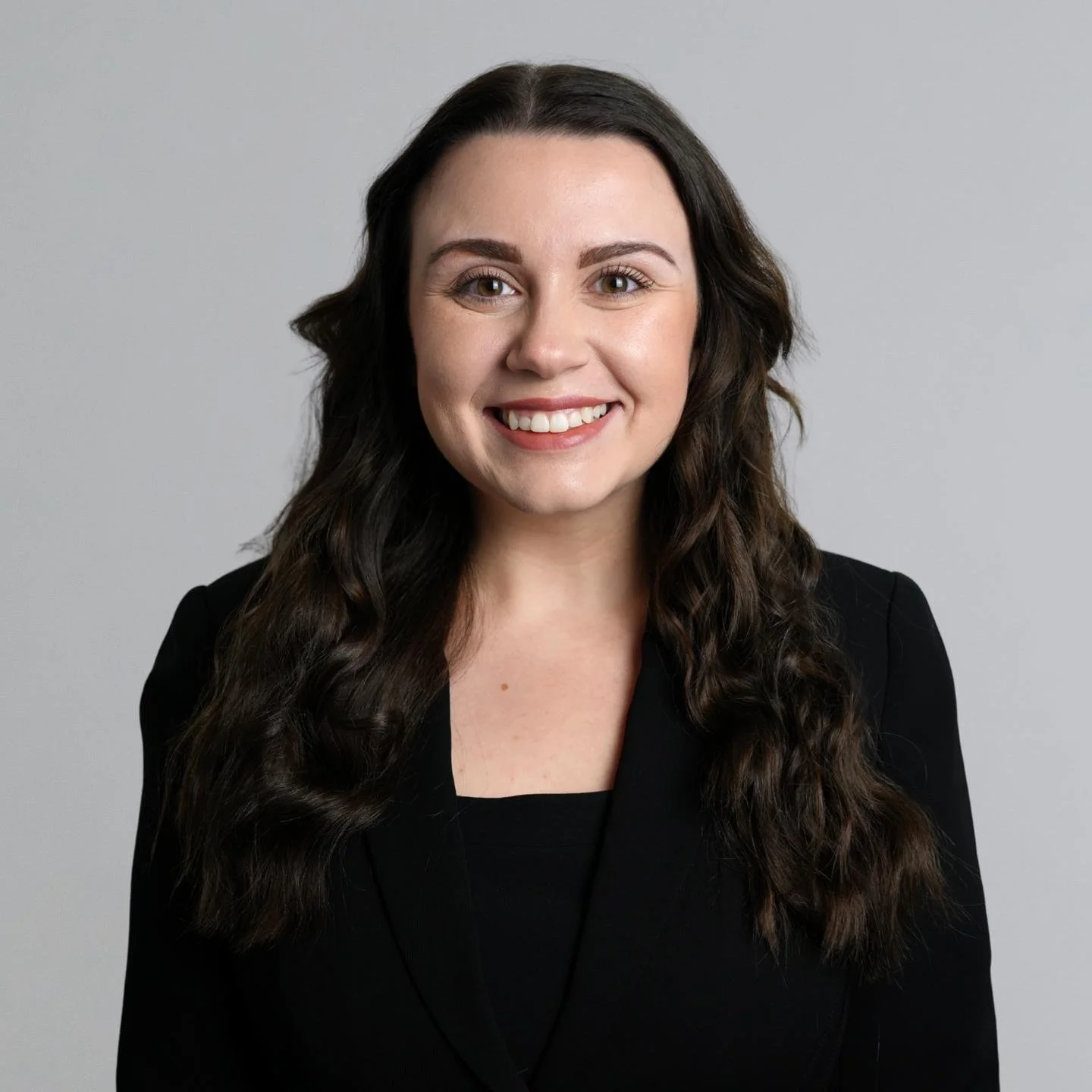
Sophie Stevens
Pupil Barrister, 9BR; Co-founder, Neurodiversity in Law
Neurodiversity at the Bar: Sophie Stevens on Dyslexia, Pupillage and Building a Movement
Sophie Stevens is a pupil barrister at 9BR and co-founder of Neurodiversity in Law. She covers what dyslexia looks like in a high-pressure criminal practice, the accommodations that are and are not available, and how a tweet in lockdown became an organisation that neither she nor its founder expected.
Sophie Stevens did not always want to be a barrister. She spent a year at drama school, dropped out, moved home to study history at the University of Southampton, got a first, did the GDL, did the Bar Practice Course with scholarship support, was called in 2022, and arrived at 9BR for an 18-month pupillage. She is also co-founder of Neurodiversity in Law — an organisation that started with a tweet from founder Tom Hood during Covid and grew into something neither he nor Sophie expected.
This episode is recorded during Sophie's third six, the night before a last-minute brief arrives. It covers what dyslexia actually looks like in daily practice at the criminal bar — not as a diagnosis to manage but as a different way of processing, one that she has turned into a method. She describes her technique for late briefs: an initial skim of the key documents, a deliberate pause, a second read, then the trained ability to find what she needs quickly. She is candid about the things that are genuinely hard — noise in court, new material arriving mid-hearing when two people are also talking — and equally candid about the things that have become easier than they would be for neurotypical practitioners, because she has been building the skill her whole life.
I always like to say that I can see the papers slightly differently. I will pick up on something that perhaps someone else hasn't. And that's because I've read it and thought about it because my brain works differently. It's not about that my brain is weaker or unable to do what the job is. It's the fact that I bring something different.
Sophie Stevens, Pupil Barrister, 9BR; Co-founder, Neurodiversity in Law
Sophie also addresses what chambers and clerks can actually do — the conversation she had with the 9BR clerking team about papers in advance, the reasonable adjustment she asked for and the honest acknowledgement that it is not always possible, and how asking for five minutes in court to read new material is not a big deal even when it feels like one. The episode closes with her tips for any pupil starting out, a thought on accommodations for neurodivergent clients in crime, and her plans to return to Neurodiversity in Law more fully once tenancy is confirmed. If you want to get involved with Neurodiversity in Law, contact them via their website or LinkedIn.
Share this episode
In this episode
- Sophie's route to the bar — drama school, a first in history at Southampton, the GDL and Bar Practice Course with scholarship support, and a call in 2022 after a journey of five to seven years.
- The self-doubt that almost stopped her before she started — early education that positioned her as a theatre person rather than an academic, and the fear of bar exams that accompanied her into law.
- 9BR's 18-month pupillage structure — why the extended timeline gives pupils time to establish themselves step by step, from a sentence in the magistrates court through to the Crown Court.
- Sophie's first Crown Court closing speech — winning the acquittal, sitting down afterwards and realising that all the training had come to that moment, and why it was significant for someone with a history of challenges with self-confidence.
- What dyslexia looks like at the criminal bar — taking longer to read material, processing it differently, finding late briefs genuinely challenging, and the technique she has developed: skim the key documents, leave it, read again, then use a trained ability to find exactly what she needs.
- The systemic problem of last-minute disclosure — not just for neurodivergent barristers but for everyone, and the absence of any real allowances for people who process information differently under pressure.
- The conversation Sophie had with the 9BR clerking team — asking for papers as early as possible, accepting that it is not always achievable, and how noting the preference and acting on it when possible is itself a meaningful accommodation.
- Managing noise in court — how simultaneous conversations prevent Sophie from reading new material at all, what she does about it, and why asking the bench for ten minutes is not as difficult as it feels.
- Sophie's argument against steering neurodivergent individuals away from criminal practice — every neurodivergent condition is different, the profession already has people with undiagnosed conditions succeeding at every level, and the right response is destigmatisation not redirection.
- How Neurodiversity in Law began — a tweet from founder Tom Hood during Covid, a small group including Sophie coming together around it, and an organisation that grew far beyond what any of them expected.
- What Neurodiversity in Law does — events including NeuroConnect, a focus on research, and a community for neurodivergent legal professionals of all kinds, not just barristers.
- The gap in training on neurodivergent clients — crime in particular has extremely high statistics of neurodivergent individuals coming through the system, the difficulties of diagnosis and disclosure, and the practical steps barristers can take in conference that go beyond formal intermediary support.
- Sophie's tips for pupils starting out — the pause always feels longer to you than it does to anyone else; take time to think; have self-belief and maintain it.
From this episode
The most useful thing Sophie says in this episode is also the simplest: she asked the 9BR clerking team to note that she would appreciate papers as early as possible. She was clear about why. She accepted that it would not always be achievable. And that conversation — which took minutes — produced a meaningful accommodation without requiring a formal process or a policy change. Her point is not that this is enough, but that starting the conversation is the thing most people do not do, and that doing it changes the dynamic considerably. The same logic applies to asking the bench for ten minutes when new material arrives: it feels enormous, it is rarely a big deal, and the professional obligation to process the material properly is more important than the discomfort of asking.
Her argument about neurodivergent clients in crime deserves more attention than it got in the episode. The statistics on neurodivergent conditions in criminal justice are well documented. The intermediary system covers formal proceedings. What is not covered is the barrister in conference, explaining charges, instructions, options — the parts of the process where the client's ability to participate is most consequential and least supported. Sophie's position is that barristers should be trained to check, to ask, to adapt — not as a legal formality but because it is the job.
Briefed produces two courses directly relevant to this episode — one developed in collaboration with Neurodiversity in Law.
Neurodiversity Training for Barristers & Chambers Staff is a course developed in partnership with Neurodiversity in Law — Sophie's own organisation. It covers understanding, supporting and representing neurodivergent clients and colleagues at the bar, and is the structured version of exactly what Sophie describes as missing from her training. The New Pupil Starter Pack with Public Access Training covers the practical foundations Sophie discusses throughout this episode — what pupils need to know at the start that nobody tells them.
About the guest
Sophie Stevens
Pupil Barrister, 9BR Chambers; Co-founder, Neurodiversity in Law
Sophie Stevens was called to the bar in 2022 after studying history at the University of Southampton and completing the GDL and Bar Practice Course with scholarship support. She undertook an 18-month pupillage at 9BR Chambers in Leeds and Bradford, supervised in her first six by Graeme Logan and Will Noble, with a practice focus on crime and extradition. She is co-founder of Neurodiversity in Law, an organisation created during Covid to destigmatise neurodivergent conditions in the legal profession and build a community of neurodivergent legal professionals. She has written on neurodiversity for the Barrister magazine and brings particular focus to supporting neurodivergent clients in criminal practice.
Transcript
Orlagh Kelly: Good afternoon, Sophie. Thank you for joining us. Today we have Sophie Stevens, who is a pupil barrister currently at 9BR Chambers in your third six, as I understand it, Sophie, and co-founder of Neurodiversity in Law. You're very welcome onto the podcast. We've been looking forward to speaking to you for quite some time and delighted we can fit in with your busy schedule that you have at the minute.
Sophie Stevens: Absolutely. Thank you so much for having me. It's always lovely to speak to everyone and sort of speak about not only being a baby in the world of the bar still, but also talk about neurodiversity as well, which is obviously really important to me. And to lots of other barristers out there that are either coming into the profession or already involved. So it's a real pleasure to be able to speak and sort of share my story and thoughts with everyone.
Orlagh Kelly: Brilliant. Well, on that, let's get to it. Can you tell me a little bit of how you got into law, why you decided to go to the bar, what's your background?
Sophie Stevens: Yeah, so I always start this and then think, I've got one of those stories that's definitely not the norm — it's a very different story. And everyone has a different story — I think that's what's so lovely about the bar. We've all got different stories as to why we joined and how we got here. But mine — originally I didn't want to be a barrister. There we go. It's out there. Someone who was brought up in that world of doctors, lawyers, things like that — it was very much just do what you love and the rest will come in time. So I originally was going to do theatre and I went on that journey and went to drama school for a year in London. Yeah, and it was really tough to...
The thing with drama is it is similar, but it's also very different to a career in law, which is that there was a lot of differences in that sort of training and that process. Obviously, law is very academic in some ways. So that was where I started and where I ended was very different — it's here, being a pupil barrister currently. It was originally that I went to drama school for a year, decided I'm not sure this is for me career wise, and looked up different routes into different professions that might have some of the same things theatre did. But I really missed the academic side of study and the challenge that academia had with it. And that's not to say you can't do that with theatre, but my course was very, very much sort of performing and touring productions and things like that as well. So it was different.
And I began researching in my spare time, sort of criminal barristers and what they did and their advocacy and all of this. But I still, to be honest with you, I wasn't quite convinced I could do it. I had a bit of a sort of, I don't think I'd be able to do it type feeling.
Orlagh Kelly: Do you know why, why was that kind of bubbling up in you and that insecurity so early on?
Sophie Stevens: I think in truth, my early education sort of pigeonholed me a little bit — you want to do this theatre thing, you'd be a great actress, do that, you know, don't worry about the academic stuff, you know, your strength is theatre. And that was very true. But I also was — I was more academic than perhaps I realised. I had that doubt in the academic, it was sort of a fear of academia. And that was very much my own self-doubt in my capabilities. It was very much, I could do the advocacy — that wouldn't be the problem. But can I pass these horrific exams that everyone talks about on the forums and what I was reading at the time?
So I didn't do law after that. I dropped out of my theatre degree after the first year and then moved into history at the University of Southampton. And I moved home to study and did it that way to sort of have the support moving into academia, because I knew I was good at history — it was something I did well at A level — and I was like, well that's going to give me a really good written platform for the bar if I choose to do that. So that's what I did. I did really well, I got a first, and then did my master's conversion with the University of Law — so the GDL as it was called — and then did the Bar Practice Course with support of scholarships along the way.
It was a bit of a journey. It wasn't very much sort of waking up one minute thinking I want to be a barrister. It was definitely a journey.
Orlagh Kelly: And how long was that academic journey then from 18 to, I guess, getting called?
Sophie Stevens: Yeah, so I got called in 2022 because it took longer for me because I had to do the GDL and the conversion and obviously I did a degree and then had to restart that first year again with the history. So I think — my maths is terrible, which is —
Orlagh Kelly: Just really put you on the spot. Sorry.
Sophie Stevens: My maths is terrible, but it must be about — it must have been somewhere between five and seven years now thinking about it.
Orlagh Kelly: That's a real investment of time, you know, in your early years.
Sophie Stevens: It was a lot. And it was a real investment for everyone around me, which everyone sort of forgets about the bar. You know, as it is, it's quite a journey for everyone. And you need that support around you. And that's where —
Orlagh Kelly: Leap of faith. Do you know the thing? It's almost like, okay, there are things that you can do that are within your control in terms of exams, etc. But overall, the whole thing just seems like a massive leap of faith. Are you really going to make it? I mean, I was called more than 20 years ago, but I can almost still feel my parents waiting with me to get the letter to see did I get into the Inn, which is what I needed to do at the time.
Sophie Stevens: That happens so much in the process. It's not just one thing. It's like, it's the scholarship for the GDL or it's then the application for one of the Inns and then it's the application for scholarship at the Inns to get funding. It's constant. It's a constant process.
Orlagh Kelly: You certainly deserve to be here, if not for resilience and effort. You know, those things kind of get lost in translation because people start as if, you know, day one of your pupillage is your brand new. But actually you've put in a lot of hard graft just to get there and you've learned things along the way. So well done.
Sophie Stevens: Thank you, absolutely. And I want other people to see that it doesn't have to be something you've always wanted to do, and people to understand that it's okay to have dips in your own self-belief. You go on that journey and I continue to do it now. Your first Crown Court trial was a mammoth moment of can I really do this? And then you do do it. And then you're like, oh, I did. And yeah, that's very much it. So no, that's sort of — I think I hope —
Orlagh Kelly: Tell me a little bit — I mean, thinking it, it's so heart-warming to think of the fact that you put in such effort and then that you've made it. But tell me about some of those kind of key moments for you. Was it the first time you were on your feet? Was it the first time you were shadowing somebody in the Crown Court? Have you been on your feet at all at the moment? Have you had that opportunity? Yeah. So what are those kind of pivotal moments for you that you're starting to experience as a pupil?
Sophie Stevens: I think it's been different throughout the process. Obviously, I'm at the end of my time at 9BR as a pupil, so 9BR does an 18-month pupillage.
Orlagh Kelly: That's quite innovative, isn't it? I remember chatting to Martin about that and it's a really interesting and valuable thing to do, admittedly. And it's working for you, obviously.
Sophie Stevens: Yeah, it gives you more time to sort of really establish and note those moments, not for them to just sort of come and go. It's been — there have been monumental moments throughout the process, and one thing they do at 9BR in pupillage is we build on that. So day one isn't a Crown Court trial, it's a sentence in the magistrates, and then you move on to a trial in the magistrates. So I think I've probably had those sort of moments at each phase, when new things come in, that's been a step up. But for me, I definitely think the highlight has been my first Crown Court, because doing the closing speech — and I was successful, I had the client acquitted as well, which was amazing. Yeah. So it was really good from that aspect, but it's not even about that. It was that moment I did the first closing speech and I sat down after and I really realised that all that training, all that time had now come to that moment and I had hopefully delivered — and I knew I delivered the best I could at that point. I think, yeah, that was quite a big moment for me, especially for someone who has had challenges with self-confidence.
Orlagh Kelly: You did it. You've proven it to yourself. It's just building on that now. And what are your thoughts about — you're coming to the end of your third six, you say — what are your thoughts about what you do and where you'd like to specialise in?
Sophie Stevens: Yeah, so still crime is where my heart is. But I have had the opportunity to pick up extradition at 9BR as well, which has been really nice because again, I think the fear was a bit, oh, that's really academic, that's a lot of drafting, or whatever crossed my brain when I first was given a brief for extradition. But I've done well in it. So again, you're constantly proving that new things can come across your desk and you can have a go. I'm always willing to say yes and have a go at different things and try and challenge in that way. Yeah, I think crime with a little bit of extradition is the way forward for me.
Orlagh Kelly: Excellent. And such a wonderful future you have in front of you. And are there any challenges you think during the journey that you've had to overcome? Anything maybe a little bit different or particular?
Sophie Stevens: Yeah, so obviously, I'm dyslexic. I don't like to see it as a challenge. I like to see it as a positive, but it does feed into the fact that I have to approach things slightly differently. So it has so many benefits being neurodivergent, as well as obviously some natural challenges, which is that I sometimes take longer to read material. I sometimes process it slightly differently. It can be sometimes overwhelming in crime, particularly, to get late briefs and tackle them really late in the day or have to digest that material very quickly. But almost knowing that has allowed me to tackle it head on and not make it any form of issue or anything like that. It's actually become almost a skill that I can deal with it very effectively because I know that's something I have to work at. So yeah, I think the late briefs — you almost prepare yourself for it, that you know it's coming because everyone says you know everything's quite last minute. But when it actually happens, I think it is a real challenge at first to get into that rhythm of knowing how to approach those papers and deal with that volume of material very quickly.
Orlagh Kelly: Do you have a specific technique? Or is it just something that you've — a technique that you could tell us about, about how you approach that? I know, you know, we spoke before the podcast, you've just received a last-minute brief tonight. So after we finish here, you have to work. And if I recall correctly, I said I remember those days and I don't miss them. So what is your approach then that you've essentially created as an effective approach for yourself?
Sophie Stevens: So I think everyone approaches differently with different things, but for me, it's an initial read — a full brief skim of the important things. So the previous convictions, the defence statement if there is one, the summary of the evidence, a quick skim. And then I tend to leave it for a bit to let my brain try and digest that material. And then naturally I will read it again to try and digest it again.
And then I think something I'm really good at, that has just — I'm able to find what I need quite quickly. I think that's because I know I probably won't be able to read everything that's given to me and I do have a tight timeframe. So by tomorrow, I will need to be up to speed on the key parts of the Crown's case and my defence and so on. And I'm able to do that quite efficiently and quite quickly through just having almost trained my brain to be able to skim read that material and know where to find what I need to find. But that comes with time — day one definitely took me a lot longer than it does now.
Orlagh Kelly: And experience — it'll come with experience as well.
Sophie Stevens: Exactly.
Orlagh Kelly: It's a part of the job I don't think most people realise exists. And I certainly found it probably more when I was very junior — I was a baby barrister, you were asked to do a mention or take over a case where someone got caught and you had to run to court with the papers reading them on the way. And most clients don't expect that — that's the level of service that they're getting. They still got a good service but you really have to be able to bring your A game in very, very quickly.
Sophie Stevens: Yeah, I think that's the bar whether or not — like myself, I have dyslexia — whether or not you have a neurodivergent condition or not, that is something we all tackle with, even neurotypical brains will still struggle with the amount of volume at any time. I think almost in my situation I'm better at knowing how to deal with that because in one sense I've dealt with that all my life — in some ways it has always felt like I was taking longer to read material or things like that. So actually now this is fine. You know, I tackle it with almost ease — I'm probably pitching it a bit high to be honest with you, I'm feeling good today. Yeah, we're feeling positive. I'll let you know at 10pm tonight or if I'm still feeling as positive.
Orlagh Kelly: Thank you. I mean, it does make me think probably slightly differently than I had previously thought — in that I'm aware of and have experienced receiving trial bundles the night before or getting them on a Saturday morning for a trial starting on a Monday. And in reality, if you calculate, it's probably just not possible to consume the information in the appropriate way, regardless of how you do that. If you're neurodivergent or neurotypical, it's just — there's just too much for a human being to process. But that is what is expected increasingly and more and more. I was called 20 years ago, but I know that particularly crime barristers, family law barristers — I'm sure employment and immigration face it too — there's your brief, you have to do it. And the pressure that exists for the bar as a profession to absorb the fact that somebody else hasn't adhered to the directions in time — you have to as a person somehow sacrifice your personal life, sacrifice your professionalism and how you potentially like to prepare cases, because you have to meet deadlines that have been set and dropped by someone else, or unreasonable deadlines. I mean, that I've been aware of and experienced, but I hadn't really thought about people who have to consume information in a different way or prepare themselves in a different way. And so it's insightful to hear your version and start to go, well, I mean, if people who have all of the neurotypical ways of digesting information struggle with this, well, of course, people then who have different ways of doing it are going to struggle as well. And there are not any allowances for that, are there? There's no real accommodations that I'm aware of.
Sophie Stevens: Not massively. It's very much — I think this is a big sticking point of how much accommodation really is necessary. There's a lot — I've coped fine. I am one individual and how my neurodivergence affects me is different to perhaps someone else who has a different neurodivergent condition. And I think it's about — the real question is how far can we go to actually sort of adapt the system to allow for that? I think it just comes down to very much conversations — a conversation like we're having, just thought processes and discussing the way I work and how it affects me and highlighting that.
But a really good example, I think, is at 9BR — when I started, I had a really open conversation with the clerks and everyone about the fact that I would really appreciate papers as soon as possible, as far in advance as possible. Now that's not always possible. The reasonable adjustment, if you will, to put it that way — be that Sophie always got her papers at least 48 hours in advance — and that would be ideal. But that's not the way the criminal bar works. And I accept that. And I think it would then become somewhat of an unreasonable expectation to sort of say, you have to make sure that happens. So instead, the balance I found for me is I opened a conversation and I said, I would really appreciate it if it could be noted that if possible, I would love to have them as early as possible. And that was noted, and where those opportunities arise, I am given that assistance from the clerking team.
And I think another good example would perhaps be in court — if I'm trying to digest new material that's coming in, saying, actually, can we have five or ten minutes just to review or look at that, or step outside and have a look. It doesn't need to be a big thing made of it, but if we need a bit of time in court, why shouldn't we be able to have just —
Orlagh Kelly: Have you been able to get that from the bench?
Sophie Stevens: Sometimes. I think it depends on where you are and how pressed the court is. And also sometimes how confident you feel to sort of say that as well. Sometimes it's tough. I mean, you've got a client, everyone's, you know, churning off and you've got to feel able to stand up and say, hang on a minute, I just want ten minutes to process this material. Because one of the things I really struggle with is noise. So if someone's talking to the side, or the bench is talking to the legal adviser, for example, and my client's trying to grab my attention — I'm trying to read a new statement, for example — I'm not processing that material at all, because I can't read and hear. So I was never able to revise with music. So when everyone loves their — they were like, I stick a load of music on and I just revise. I mean, that would be awful for me. I mean, I wouldn't take any of the information in. But it happens in real life, and some days I can just crack on and get on with it. But other days you have to be aware of your professional obligations as well — that I do need to process that material and I can't if everyone's talking. So I will have to ask about and read it or just say, one moment, can I just read this and then I'll come to you? And that's fine — you know, that's not a big deal.
Orlagh Kelly: And so — I mean, part of me wonders then — and we're going to move on and find out a bit more about Neurodiversity in Law — but you have been able to make this work for yourself in a high-pressured crime environment. Is it arguable that there are individuals who could and can be really excellent barristers, but have neurodiverse skill sets that are good for them in some ways, but in a hindrance in others — that they probably couldn't really thrive in a crime environment, and would have to, if starting the career, be cognisant of those limitations that might exist, and that they would fit better somewhere else, or their skill sets would fit better elsewhere?
Sophie Stevens: No, my view is, if you want to do something, you can do it. And if you really want it — you know, if you start open conversations, a lot can be said for talking about things. And a lot of, you know, Neurodiversity in Law came out of a period of time in Covid when we all realised there wasn't a lot of discussion. That was it in a nutshell. So what we did is we started creating a discussion between barristers and practising neurodivergent barristers, people who were coming into the profession like myself, and solicitors as well, and those who are a massive part of the legal profession. We just started creating a conversation, and the conversation was, you know, we want to destigmatise, we want to get rid of this thought process of there might be somewhere better for you — because I don't believe in that at all and I don't think that's the way to look at it. I think what is the way to look at it is that every single person with a neurodivergent condition brings something different because they have that. Rather than seeing it in reverse — and I can speak for myself because it's not appropriate for me to speak about others, you know, everyone's is very different and that's unique to them. But for example, I always like to say that I can see the papers slightly differently. I will pick up on something that perhaps someone else hasn't. And that's because I've read it and thought about it because my brain works differently. It's not about that my brain is weaker or unable to do what the job is. It's the fact that I bring something different. I think differently. And that was really our key tagline from the start, which is we all think differently — everyone does, whether or not they have a neurodivergent condition or not.
Yeah, I think, you know, from the question you asked, I really don't think there's any sort of limit to anyone's ability to succeed. And I think it's really important we reframe the narrative to something positive to ensure that others see it that way.
Orlagh Kelly: And so the thing then that would appear to me to be key is that people feel enabled and supported and confident to ask for whatever they ask for, and that that is received in a manner which is like, okay. And I mean, we're talking now about neurodiversity in law and diverse thinking, but it's for people who have dependents who they have to leave at a certain time, you know, to pick up children, or they've got dependents — they feel that it's okay to say to the clerking team, I need accommodations because of my lifestyle. And essentially, that everyone feels empowered to create that world and ask for what it is they need to be successful, rather than trying to say nothing and hope that they can meet these relatively unreasonable requests in some instances.
Sophie Stevens: Sure. I think it's also about acknowledging the fact that there's a lot of people already doing things without perhaps disclosing that they have dyslexia, ADHD or ADD or whatever it is. There are people that already are among us in the bar being very successful without the support. And knowing those people have also succeeded — it would be great to hear from them, to show perhaps what they did or didn't struggle with, how they've succeeded, and to share. You know, conversation almost starts from the top. We need more people who are, you know, not just the juniors shouting about it, but almost, you know, the judges who perhaps have undiagnosed ADHD that they never knew about — but having thought about it, perhaps they do. It's about those conversations too, to acknowledge that there is this almost untapped potential that does already exist in the community and there's more value and talent to come through into that community.
Orlagh Kelly: Yeah, and supported and pulled through. So tell us a little bit — I mean, your — Neurodiversity in Law started through realising there was no conversation about this. So how has that developed? What does it look like? What is it? Let's pretend someone has never heard of it.
Sophie Stevens: Yeah, so Neurodiversity in Law is in essence an organisation that wants to empower neurodiversity in the legal profession. It started with a tweet from our founder, Tom Hood, who is incredible and just put out a tweet about it. And a few of us got together and said, well, actually, I feel quite passionate about that as well. And that's where the original structure came from and the co-founders came from. And I was one of those individuals.
And what it's developed into is almost — it wants to show that there's no mind that should be left behind, which I think is their current quote. And to get a conversation going, focusing on positives and beating the stigma. And I should say we are not actually actively on the running board anymore, and I've taken a step back, but they are currently doing lots of different sort of events and opportunities for individuals to get together, talk about neurodiversity and sort of challenge the stigma. So we've had some events in March — NeuroConnect, for example, which was a networking event for neurodivergent individuals in London. And it's just a community, but it's also an organisation that's looking to now conduct research and try and assist with enhancing support and relationships for people in the profession. And it's not just barristers as well — it's legal professionals in general. So there's solicitors and solicitor advocates and other legal professionals involved. So yeah, it's definitely — it took off massively and I don't think we all kind of expected that when it first —
It was this little tiny thing in Covid that just became so much bigger than what we could have really ever imagined. And what's really nice is from that, lots of branches have stemmed as well with new organisations forming. But all of this goes towards the conversation and highlighting that there is all this success in the profession and out there. And yeah, it's been — it's been lovely to see.
Orlagh Kelly: And if you had, for example, one ask of the audience of people listening today, in how to — I know that you've stepped back — but how someone listening who feels passionate about this could either get involved or could help you. What would that be?
Sophie Stevens: You can head on to their website and drop them an email. There's a section specifically for dropping their team an email to say that you're interested. Alternatively, it's quite prominent on Twitter and LinkedIn as well — I always plug LinkedIn because I think it sometimes gets left behind, but it's one where you can just drop a message into someone's inbox.
Orlagh Kelly: Yeah, drop into their inbox. I mean, they're very active and they're very on it. But the first port of call would be to go onto their website and drop them an email. There's a specific button for it and you can get involved.
And so what I'm thinking about, for example — of people and ways that they might be able to help — is they might be able to attend events, they might be able to speak at events. The people who have possibly gone through an entire career successfully, either knowledgeably or without their own knowledge, having some neurodiverse issues — they could start to communicate that. If they felt open to doing that, that would help the cause — that would appear to me from what you've said.
Sophie Stevens: We try to stimulate some of that kind of senior leadership and bring that out. Absolutely brilliant.
Orlagh Kelly: And so what's next for Sophie?
Sophie Stevens: What's next — the five-year plan, which was sort of seven years I think. You know, it's going to be almost the close of that direction I'm heading in. I've got my tenancy application coming up and, you know, the outcome of that will be a big step. And then everyone sort of has said to me that that's where your career again sort of begins all over again once you're a tenant. And I'm sure you can say whether or not that's more true than I would know at this phase, but I don't know what's next. I want to go back to neurodiversity and give it more time than I had originally, because obviously I'm still active in it. I recently wrote an article for the Barrister magazine on neurodiversity, and I give a lot of time to my neurodivergent clients as well, which is a massive part of what I see in my practice — hopefully developing into.
Orlagh Kelly: That's something that we haven't even touched on. For those people who are used to dealing in a neurotypical fashion — on any given day can have neurodiverse clients — I don't recall during my training at any stage having support or assistance to understand how best to support those clients. Is that something that's lacking or has that improved?
Sophie Stevens: From my experience, I think there's more guidance now on how to support, but I don't think we go far enough. I think it's a different way of understanding somewhat. So something I champion quite heavily in my practice is that I'm best equipped to help people with neurodivergent conditions process the legal system. And it's because sometimes they're given all this information in really short periods of time, particularly in the magistrates court. And, you know, one of the things we had a big discussion on not that long ago was screening individuals and how to even know, because one of the problems with diagnosis is that it's not done unless you've been to school and they've done an assessment, or you've had access to have that assessment done.
So you might be dealing with people who don't actually know. And I think it's about ensuring you ask — have you ever had any issues with this? Do you struggle with this? — or to try and check in. And I don't think we sort of do a huge amount of training to say, you know, this is how we can support people, this is how to approach it. I mean, I make an active effort because I'm aware.
Orlagh Kelly: Awareness is key.
Sophie Stevens: But there are sort of two different levels of awareness. You're dealing with the individuals practising at the bar and then the clientele that you're also dealing with. I mean, crime in particular has extremely high statistics of individuals with neurodivergent conditions being involved in crime. And that's a real key thing to be thinking about and making sure people are able to adequately assist and help them understand. I mean, we have a lot of intermediary support and that is covered very, very well in terms of — you can get an intermediary report and an intermediary will assist with the proceedings. But I'm talking more about how you as a barrister can assist in conference and those sort of basic things and thinking outside of the box of how to explain things to individuals to ensure that they understand.
Yeah, I mean, it comes with the job, but it is definitely an area I think in the future — when you say what's next for Sophie — tackling and having a look at that as well, ensuring there's more conversation around that and that everything in that realm is also covered as well as it could be. It's a big topic — we could be here —
Orlagh Kelly: Yeah, there's a lot.
Sophie Stevens: There's so much, there's so many angles and that's why it's important to talk.
Orlagh Kelly: To talk and to start thinking it through and understanding it. Absolutely. Well, it's been lovely to talk to you. Thank you very much. I'm conscious of time, you have a brief waiting for you that you have to get to, as all our barrister guests inevitably do. It's been wonderful. I look forward to talking to you again. One last thing — do you have any tips for any pupils starting out, anything that you've learned during your pupillage phase that you wish you'd known at the start?
Sophie Stevens: Oh gosh. The pause feels longer. There we go — there's one of the tips. The pause will always feel longer for you than it does for anyone else. Always take the time to think before answering a question. Never feel afraid to ask for time, or for time to think, or anything like that. Because it is difficult when you first get on your feet and it is scary, but you can so do it, and you will do it, and you will continue to succeed. I think — have that self-belief and maintain it — would probably be what I'd say.
Orlagh Kelly: Well done. Well, thank you. You've done a great job so far. I'm excited for you getting started out into tenancy. I'm sure you'll have no difficulty there. I'm looking forward to hearing from you another year or two down the line, where you've gotten to and what you're doing — because you're clearly breaking ceilings and doing things differently.
Sophie Stevens: I hope so. Thank you so much for having me.
Orlagh Kelly: Thank you very much.
Listen and subscribe
New episodes published monthly.
You're subscribed. New episodes monthly.
No spam. Unsubscribe any time.