
EP. 11
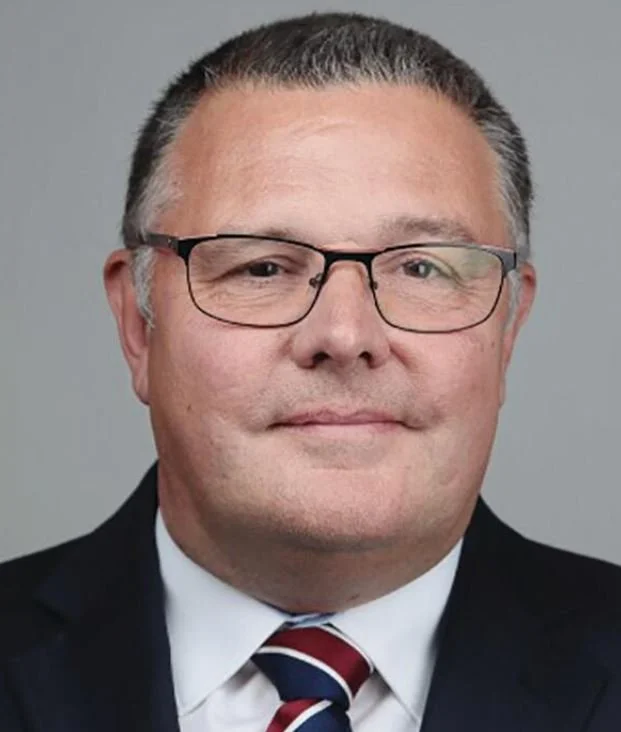
Stephen Ward
Co-founder & Business Development Director, The Barrister Group
The Barrister Group Story: Stephen Ward on Remote Clerking, Pupillage Reform and 40 Years in the Temple
Stephen Ward co-founded the Clerks' Room in 2001 after a Christmas and New Year where he realised he hadn't seen his young children for weeks. That business is now the Barrister Group — 300 barristers, its own case management software, and a Pupillage Academy with 1,071 applications for 12 places.
Stephen Ward left school at 15 and a half with no qualifications, mowed lawns near Brighton, and ended up in the Temple after the man whose lawn he was cutting turned out to be the Director of Public Prosecutions. He spent 16 years in traditional chambers — the last years as senior clerk, getting in at 7am and leaving at 9pm, not seeing his children — before co-founding the Clerks' Room with two barristers in 2001. That business is now The Barrister Group, a private limited company of 300 barristers operating entirely remotely from its base in Taunton, backed since 2022 by LDC (Lloyds Development Capital), with its own bespoke case management system and a growing Pupillage Academy.
This episode covers the full arc: the clerking culture of the mid-1980s, where junior clerks were called sir and shouted at and there to be kicked; the moment in the late 1990s when broadband replaced ISDN and Stephen realised you no longer needed to be physically in chambers at all; the decision to set up in Taunton and prove the remote model 24 years before the pandemic made it normal; the investment process, including a year of turning down private equity before LDC arrived and actually understood the business; and the thinking behind the Pupillage Academy, which Stephen sees as the most significant legacy of his remaining years.
I honestly believe that a clerk is a supplier supplying services to a barrister who is a self-employed person, and they join chambers to get the best possible services they can for the price they pay. So I see my role as to provide the best possible services at the best possible price.
Stephen Ward, Co-founder, The Barrister Group
On pupillage, Stephen is direct. He has been trying to reform how it works for most of his career. One in ten applicants gets a place. Candidates can wait five years and lose it entirely. The process is voluntary, inconsistently run, and structurally excludes people who cannot afford six months on a small grant. The Barrister Group's approach — blind CVs at sift stage, structured marking, feedback to all 1,071 applicants — is his practical answer. His five-year plan is to scale that to 24 pupillages a year and eventually take pupils for other chambers who want the process but not the administrative burden of running it.
Share this episode
In this episode
- How Stephen ended up in the Temple — a lawn mowing business in Brighton, a chance comment from a neighbour who turned out to be the Director of Public Prosecutions, and an interview at 2 Crown Office Row that changed the course of his career.
- The clerking culture of the mid-1980s — being called sir and shouted at, the junior clerk there to be kicked, and why that experience planted the seed of wanting to change things.
- The first computers in chambers in 1985–86, the two diary systems of the era — Meridian Law and ACE (Applied Computer Expertise) — and how Nick Salt at 3 Serjeants' Inn let Stephen take the lead on understanding them.
- Why the paper diary was the last thing chambers were willing to move online — and why Stephen believes it was about control, not convenience.
- The direct relationship between technology and the size of chambers — why 30 barristers was the practical limit when someone had to manage the diary manually, and how that ceiling has since disappeared.
- The controversial view: a clerk is a supplier, the barrister is the customer, and the job is marketing, diary management, invoicing, billing and credit control — all of which are scalable, even if the personal relationship is not.
- The Christmas and New Year that changed everything — sitting in chambers meetings at 9pm with two small children at home, working out on paper what a different model would look like, and calling two barristers who were immediately keen.
- The founding of the Clerks' Room in 2001 with Harry and Jonathan — the reaction from the profession when they left (exactly what they expected), the office above the builders in Taunton, and the deliberate decision to prove the remote model from day one.
- Why the pandemic was entirely positive for the Barrister Group — their telephone system was already online, their servers were already in a server farm, and the biggest question on that Monday morning was whether people could take their chairs home.
- The decision to build their own bespoke case management software — the only chambers to have done so — and why owning their own data was the prerequisite for everything that followed.
- The investment process — a year of turning down private equity firms who did not understand the people side of the business, before LDC arrived, got it immediately, and have done exactly what they said they would do.
- The Pupillage Academy — 1,071 applications for 12 places, blind CVs at sift stage, structured marking, feedback to every applicant, and a waiver from the BSB to stagger start dates two at a time every two months.
- Stephen's five-year plan: scale to 24 pupillages a year, offer the selection and recruitment process to chambers that want it without the administrative burden, and make pupillage more accessible to people who currently cannot afford the six months on a small grant.
From this episode
The Barrister Group is the most useful case study in this episode. Stephen did not build it by disrupting the bar — he built it by taking the same functions every chambers runs (marketing, diary, billing, credit control) and making them the explicit product of a commercial business rather than the informal output of a clerks' room. The controversial bit, as he calls it, is that this requires letting go of some of the personal relationship that traditional clerking is built on. His argument is that the relationship is still there — it just looks different when the clerk is a supplier and the barrister is the customer, rather than two people who have worked in the same building for 20 years. The 300 members and the LDC investment suggest enough barristers agree.
On pupillage, his position is one of the clearest in the episode archive. The system is not working, it has not worked for a long time, and the people most affected are the ones who cannot afford to wait five years for a place that may never come. His solution is not to argue about it — it is to build a process that is transparent, structured and gives feedback to everyone who applies, including those who never make the shortlist. The 1,071 applications for 12 places are a measure of demand. Scaling that to 24 places and eventually offering it to other chambers is his answer to the structural problem.
Building and sustaining a practice at the bar requires the same skills Stephen describes as the core of a clerk's job: relationships, visibility and consistent follow-through.
Briefed's Strategic Networking for Barristers & Clerks covers how to build the professional relationships that generate and sustain work — the structured version of the marketing and business development approach Stephen has applied across 40 years at the bar. Developed with experienced business development professional Bernard Savage, it is designed for both barristers and clerks operating in a market that rewards those who show up consistently.
About the guest
Stephen Ward
Co-founder & Business Development Director, The Barrister Group
Stephen Ward began his clerking career in 1983 at 2 Crown Office Row and spent 16 years in traditional chambers, latterly as senior clerk. In 2001 he co-founded the Clerks' Room with two barristers — later rebranded as The Barrister Group — a private limited company providing clerking and chambers services to over 300 self-employed barristers operating entirely remotely. The Barrister Group is the only chambers to have built its own bespoke case management system and is backed since 2022 by LDC, part of Lloyds Banking Group. Stephen has spent much of his career advocating for reform of the pupillage system and leads the group's Pupillage Academy initiative. He is based in the South West of England and his interests outside the law include motorsport, photography and travel.
Transcript
Orlagh Kelly: So welcome back to the Get Briefed podcast. Today, I'm delighted to be joined by the co-founder and business development director of the Barrister Group, the famous Stephen Ward. Stephen's a veteran of the clerking room. I'm not sure if you're happy with me calling you that, but I think you started out in 1983, with 40 years under your belt — I think you deserve to be recognised not only as one of the most forward-thinking minds in the legal sector, but you have a lot of experience with the bar as an industry. And I'm really delighted that you're happy to come and share with us today. Thank you very much.
Stephen Ward: Pleasure to be with you.
Orlagh Kelly: Thank you. So I guess start at the beginning, Stephen. Where and how did you get into working at the bar, so to speak?
Stephen Ward: So I left school age 15 and a half. I got permission to leave early because I really didn't like school or exams and things like that, so I never bothered to take any exams or anything. I just left school and I wanted to work — I live down near Brighton on the coast and I was basically out earning, doing whatever I could do. So I like to think of myself as quite entrepreneurial from day one. I actually had a lawn mowing business when I was 15 and a half and employed people. And one day somebody said to me, you should go to London and work in the Temple. And I'd always understood from my parents that you needed to be a bit careful about religious people. So I basically thought, well, I'll steer clear of that. I don't want to work in a temple.
And then when I told my parents what had happened that day and what this chap had said to me, they said, you stupid boy. The Temple is a place in London where barristers work. You should go and find out a little bit more about what was said to you. So I went back and saw this chap and he said, I think you should be a barrister's clerk. You work very hard. You're very conscientious, trustworthy, which was all very nice when you're that age. So he arranged the interview and I went to see Arthur Mildon QC as he was at the time, at 2 Crown Office Row, and I got offered the job. And as it turned out the guy I was mowing the lawn for was the Director of Public Prosecutions at the time and he'd met this KC who said, we're looking for a new junior clerk, if you know of anybody hard working, you know, looks the part, then let me know. So yeah, it was a completely coincidental thing and I didn't realise until quite a bit later on what had actually happened. Yeah, there we are.
Orlagh Kelly: What was it like being a clerk in the mid-80s? The junior clerks of the current age would probably not even recognise that role or that job. Can you tell us a bit about it?
Stephen Ward: My strong suspicion is that a junior clerk today with a traditional junior clerk's upbringing would recognise it. I think — I mean — I didn't enjoy it at all. It was a horrible place to be. You know, barristers were called sir and ma'am at the time. They just shouted at you if they wanted something done. You know, the junior clerk was there to be kicked.
And I wasn't used to that, having run my own business and been quite successful at it. But I realised that because of my parents badgering me, that if I wanted a career at something rather than just running a small business and earning cash, then I needed to do it. So it was my father's sort of words echoing in my ears all the time about, just shut up and get on with it, and learn a trade — that saw me through really, because I didn't enjoy the first sort of two years of the profession at all. And I think that's really what's brought about where we've ended up now, because it's that wish to change and modernise.
Orlagh Kelly: Would you say that the experience that you had then in the mid-80s would have been the same for every junior clerk in every set of chambers at that time?
Stephen Ward: Yeah, definitely. I mean, the whole profession is, in my opinion, a culture. And I still think there's a lot of good that's going on at the moment, but I imagine if you dig down — and not many people are going to be prepared to tell you — but if you dig down, I imagine there's quite a lot of horrible things that still go on as part of the culture. And that's really what we're driving to change — just to raise awareness that a lot of this is not acceptable, whatever it is. I won't go into any specific details, but whether it's to do with females or pupils or just the way juniors are treated, there's a lot of bad things that do go on, and I believe they still go on to this day. But you know, there we are.
Orlagh Kelly: And so I'm very keen to talk about where you are now and what you're doing with the Barrister Group. But before we get to that, what was your pathway then from those first two years as the junior clerk moving forward for a while?
Stephen Ward: So in a nutshell, my progression was to move on from being the boy — the junior clerk pushing a trolley up and down Fleet Street — which I do think, you know, I look back now and it's a very positive experience because I learned a lot, but it didn't feel like it at the time. You then move on to being a junior clerk and learning more detail about the way the profession works and how to deal with the courts. And obviously a lot of what we're doing is interaction with people — whether it be barristers, other clerks, senior clerks, or clients, professional clients, lay clients — you're always dealing with people.
So as you work your way up, the main thing that happened for me was my chambers I was in at the time, which was 3 Serjeants' Inn with senior clerk Nick Salt, was one of the very first chambers to get a computer system in chambers. And I always laugh because the computer system that came in was enormous and what it replaced was two enormous filing cabinets. So instead of having filing cabinets with paper, we now had an enormous computer, and then if you wanted a copy of an invoice, you printed it out on a bit of paper. So you know, I did find that quite amusing.
Orlagh Kelly: I don't know — what year would that have been, do you know?
Stephen Ward: That would have been about 85, 86.
Orlagh Kelly: So it was about 85, 86 before the first set of chambers got the first computer. Okay.
Stephen Ward: Yeah, and then it was quite a while before we moved on to the diary system, moving the diary on to — at the time there were well, the two systems, Meridian Law and ACE computer systems: Applied Computer Expertise. And basically it really got my interest because nobody else seemed to know how this thing worked. And the senior clerk, Nick Salt, was really, really good in terms of being modern and technical, but he was quite happy for me to take the lead. And I was sort of ending up going in at the weekends, because I wanted to, and helping load all the systems. And what I actually found was I worked out what didn't work and what was broken as well. And so I got quite a good understanding of it. And like anything that you become a master of, people tend to come to you and ask you for advice and get on the user group and so on. So it really sparked my interest in technology and I think more importantly, you know, trying to work out what the point was — why replace something with something that did the same thing? But moving on from that — once we went onto the diary system, that was the biggest game changer.
And even sort of 10–15 years on, a lot of chambers had moved their fees onto the diary system, but not the diary — they didn't want to do away with the paper diary. And even in Scotland they've only just recently moved from paper diaries. So there was a huge reluctance to move the diary. But for me the game changer was as soon as the internet became, instead of the old dial-up ISDN, you moved on to having broadband permanently turned on — and that suddenly just sparked my interest in having, well, why do you even need to be there? So if you don't need to be there and you can do everything remotely, well, then that's a game changer again.
Orlagh Kelly: So just out of curiosity, why was the diary the whole thing? Why was that the particular thing people weren't keen on moving online?
Stephen Ward: I'll probably get shot for saying this, but it's about the control — the clerks having control. I mean, in most chambers I worked in, the diary was really the domain of the senior clerk, and the junior clerks were able to look at the diary. The diary was a big red and black book in most chambers, and somebody had that diary, and it's the Bible of work for all the barristers. And bearing in mind in those days you only had, you know, anything up to sort of 30 barristers, I guess — and probably that was the reason why you didn't grow much bigger than that, because it would have been unwieldy to manage more diaries. So it's a control thing, I think more than anything.
Orlagh Kelly: Okay. And of course then the introduction of technology allows the unlocking of what are really now becoming super chambers in terms of size. You say that back in the nineties, sort of 30 was sort of where you were sitting in terms of being able to do that manually and manage it properly. Technology is what's led to the large sets that exist, you know, like your own. Now I hadn't understood that there was such an explosion in terms of size.
Stephen Ward: Yeah, I think — I mean, whatever I say is going to be controversial.
Orlagh Kelly: That's why you're our guest, Steve.
Stephen Ward: Because, you know, it's not going to be everybody's view. My view is a traditional clerk who likes total control — there's only so much you can do, you know, to know people intimately, to know their work wants, balances, preferences — to know their diaries inside out, to know their lives and so on. There is only a certain number of people that you can do that with. If you let go of some of that control in a certain way — and we've used technology to do that, which we can obviously talk about in due course — but if, at the end of the day, this is the controversial bit as far as I'm concerned: I honestly believe our job is marketing, diary management, invoicing, billing, credit control — all of those things are scalable. Yes, you do let go of some of the personal relationship, but at the end of the day, I honestly believe that a clerk is a supplier supplying services to a barrister who is a self-employed person, and they join chambers to get the best possible services they can for the price they pay. So I see my role as to provide the best possible services at the best possible price. I don't think that's particularly controversial, but something has to give somewhere. And I'm a great believer in, you know, trying to provide the services in the best way that we believe the barristers want. And that can always be interpreted different ways.
Orlagh Kelly: And so you mentioned the word controversial and I do know that there has been — and controversy is maybe too strong a word — but certainly you've chosen to do things differently in an environment and industry that doesn't typically like change, like most industries. And so where along the line when you were working in traditional sets of chambers, did you start to feel that there was a different way to do things, or that the way it was currently being done was not how you saw the role of the clerk?
Stephen Ward: My story is pretty straightforward. It's a very personal journey. I'm not suggesting it's the same as anybody else's, but I used to get into chambers when I was senior clerk — I used to get in at 7–8 in the morning so I didn't see my kids when I got up. I'd be doing billing before the barristers arrived to try to get on top of it, and then the barristers would come in and they'd all like a little chat, which is very nice. But when you've got 30 barristers, that's taking up quite a bit of time. Then they go for lunch and they want to chat on their way to lunch, and they come back from lunch and have another chat, and then they all say goodbye in the evening, and then it's sort of 9 o'clock in the evening before you're managing to get back on top of the work that you didn't have time for. So you haven't seen your kids when you go to bed. And then you get brought in to do chambers meetings, which I always found very bizarre because we were always brought in and told we have to be there, but we didn't really have much of a say on the meetings.
I'm sure that's changed these days. My experience was quite a long time ago. And so, you know, I'd sit there in the middle of chambers meetings, just thinking, how would you do this if you were a normal business? You wouldn't be sitting there at nine o'clock at night. And we have this unusual dynamic where, you know, chambers is very democratic — it has a constitution, everybody's got a say. But it's just very difficult to get everybody aligned to drive things forward. You might have somebody who does criminal law, who has a different agenda to someone who does family law or commercial law. They want different libraries, they want different IT, some are willing to invest, some want to save money. So it's very, very hard. Some chambers manage it very well, others struggle, but I can only speak for us. So I sat there at nine o'clock at night with two very small children at the time, realising I wasn't seeing them and realising that in my opinion I could do a better job if I actually had the authority and the resources to do it myself.
So it was really a Christmas and New Year where I just basically decided, let's just sit down and work out what this would look like, put it into a plan. I talked to two other barristers in chambers about it, who were both very, very keen.
And the three of us put together a business plan which turned into the Clerks' Room, now the Barrister Group. And it's really very straightforward — the company provides all the resources and takes over all the management, we make sure that we are accountable to the barristers, but we're driving everything forwards in their best interests.
And it just means everybody's aligned because the company earns its money via commission from the barristers, and therefore we're incentivised for the barristers to earn as much as they can because then we earn more commission. So the staff are more aligned because they're working in a more commercial environment — they're aligned to wanting to serve the barrister who's our customer, and also work within the business and be looked after. And our feeling is that because everybody's aligned, it works really well. I think that's how we've grown to be 300 people now.
Orlagh Kelly: Yeah. And so the barristers that you spoke with — how long maybe would you have been in the industry when you had that Christmas New Year revolution as such?
Stephen Ward: So that was 24 years ago, so that was 16 years in.
Orlagh Kelly: 16 years in, okay. So 24 years since you set up what was originally the Clerks' Room, is that correct?
Stephen Ward: That's right, yeah, 2001.
Orlagh Kelly: And so tell us a bit about that process. Was there indignation from your colleagues in the clerking community at the bar? How did you approach the fact that you were going to do something different?
Stephen Ward: That's a really hard question to answer because this wasn't really about anybody else — this was about us realising that we thought there was a better way of doing it. When we started there were three people — two barristers and myself — and we just believed in what we were doing. The reaction from others in chambers when we left was the reaction that we expected, which was basically, you know, we can make your life more difficult, which is exactly the problem you're trying to solve. So that was quite reassuring in a way that that happened because what we believed to be the problem and the bad side of the profession came out. So that was fine. That actually gave us a bit more of an impetus to want to do more.
All of my colleagues and friends that I've grown up with basically said, well done, but we don't think it'll work, and good luck to you, and, you know, see what happens — we'll take a watching brief. And that was it really. It's not very exciting. We got on and we worked really hard for five, ten years maybe.
Orlagh Kelly: And you continue to base yourself in the Temple at that stage or did you essentially create the remote model? Yeah, I mean, you kindly had me down to Taunton — it's about 10 or 12 years ago now. I remember going down in a white Volkswagen Beetle. Four-hour drive.
Stephen Ward: We deliberately wanted to be somewhere different, that was outside. We had an office above the builders in Taunton and it was a modern box on an estate, and we deliberately wanted to prove the case that we could work remotely but still do the work. And gradually people just came, talked to us, they agreed that they thought the model was great, people have come on board, and it's been a slow gradual growth until more recently where we've been invested in and then we've seen quite a bit faster growth since then, and the rebrand and all that sort of thing.
Orlagh Kelly: And so in Taunton, in your new office above the builders, proving the fact that — you know, 24 years ago — that the barristers and their clerking teams can essentially work remotely. I mean, remote working is really very well known now, but that's really just because of the pandemic, I would suggest, four or five years ago. To be doing this 24 years ago, to me, demonstrates a huge amount of forward thinking. And obviously there must have been challenges along the way at the start — is there anything that comes to mind? Because you're doing a new model with a new business. There's inevitably —
Stephen Ward: Not really, is the answer to the question. It's a very strange thing, but we were labelled the virtual chambers when we first started, which I think was meant to be disparaging, and I'm not sure we really liked that label. But you can see why people would say that because — you know, a traditional chambers — and you do have to think very carefully about the word chambers, that's a whole different sort of discussion, but — chambers is a group of individuals who get together and share expenses. It's not even officially recognised by the Bar Standards Board. You know, that's another contentious point. But if you look at the Bar Standards Board logo, it says regulating barristers — they would love to regulate chambers, but at the moment that's an interesting point.
So we created our chambers — we had a physical office there. There isn't really any difference between what we had and a traditional chambers, other than the barristers had the tools to work from home, whereas in a traditional chambers at the time, the barrister didn't have the tools, the servers were located in the office. But as we've grown, we've just realised that all of the challenges that everybody faces — growing your IT, and today the most common thing is cyber security, and working through all these problems — because people have got these legacy systems and they've never really seen it as an investment in the business in chambers, looking after their IT and doing patches and security, it's much harder to change. Whereas, you know, when the pandemic came around for us, we already had our telephone system completely online, our IT was in a server farm. We literally just picked up our laptop, took it home, plugged it into the internet at home and carried on. The biggest sort of thing that people asked me when the pandemic struck on that Monday morning was, would it be all right if I took my chair home? I don't want to sit on a dining room chair. Yeah, exactly. But it was very strange. And nobody would want the pandemic — nobody would wish for that.
Orlagh Kelly: What a great problem to have.
Stephen Ward: But it obviously was entirely positive for us, because what was perceived to be that little bit different, if you like, suddenly became normal. And because of that, we've got the efficiencies of that. And it allows us to be very fleet of foot — we can make some changes, which I think organisations with 300 people quite often struggle to make as a business decision and move quickly. But we can, which is really one of the best things about what we're doing, I guess.
Orlagh Kelly: Yeah. And do you — I mean, the sense that I get from you is that you're very much a formalised private business rather than an equivalent of chambers, in that you don't have committees as such. I'd be correct if I recall — you've never had a chambers vote. And so you've set up, you've grown — I know that you have a couple of co-founders. Would you describe Harry as one of those?
Stephen Ward: I had a chambers meeting.
I forgot to mention.
Orlagh Kelly: How did — is Harry one of the original people that went in with you on the idea and continued?
Stephen Ward: Harry and Jonathan were the two original co-founders. Harry and I have continued, yeah. So we've, you know, most of the people — including staff — we've lost very few staff over the years. And it's just been a really good team. I mean, the one thing I'm always at pains to say when I do these discussions is — people ask me, has it been easy? Is it all smiles? Of course it isn't. It's been really hard and we've faced a lot of challenges. And I think, you know, we don't sit here and say, oh yeah, we've solved that problem so we didn't have that challenge. Of course we did. I think everybody faces the same challenges. It's just how you deal with it and how committed you are to wanting to sort it out. But that's where I think we've found it a little bit easier — we can, you know, the problems are as difficult everywhere, but we've got the ability to sit down and really try to get everybody's ideas, find a solution and go with it. Because quite often a solution is not a right or wrong — you could be completely split around the table as to which way to go — and I always liken that to a marriage really, because quite often in a marriage you've got two views, so you might disagree. But the answer has to be that you've both agreed on the option you're going to take, and if you go with that, sometimes it works, sometimes it doesn't, and then you might have to change tack. But we don't have any issues with the politics — we decide what we think is the right business decision and we go for it.
Orlagh Kelly: Very good. And so tell me about the move from the original Clerks' Room to what you are now, which is the Barrister Group. I know this is fascinating.
Stephen Ward: So the one step before that, which I think is quite important in our sort of history, is our decision to build our own case management software. A good few years back, there were really only two case management software systems at the bar — it's a relatively small market. And we were very frustrated about our ability to get hold of our own data and analyse it ourselves, because that's the lifeblood of any business. And I'm not critical of any case management system or company because they're trying to please everybody and that's always hard. So we made a business decision that we would build our own case management system. I'm not aware that's ever been done before as well. So that was tough — huge investment, huge learning curve, lots of challenges that we didn't realise we would come up against. But that was really fundamentally the big difference as to where we were able to set a new course.
And as I said, going back to that original point I made about — and it is not a disparaging comment, it's just I try to think of things very straightforwardly — effectively, marketing produces some work, which manages a diary, which produces an invoice, which you need to collect, and then you start again. So once you've built that into your IT system and you've got rid of all the things in legacy IT systems that aren't relevant to that process and aren't helping you, then we become quite — I'd say more of an IT business as much as a chambers.
So we like to think we're a professional services firm, IT-driven, in the legal sector — probably in that order. And basically that, coupled with the fact that we are a private business — whereas I'm not aware there's any other chambers out there that is a private business — we were approached by a number of private equity people, which we —
Actually we got to the stage of not wanting to go down that route because we weren't happy with any of the approaches we'd had. They didn't really see the value of the people in the business, because at the end of the day we're a people business. And so we got very disillusioned with it, to be absolutely honest with you. And after about a year of being approached and turning them down, we were then approached by LDC, which is part of Lloyds Banking Group — Lloyds Development Capital.
And it's fair to say that the meeting we had with them from day one, they got the business and they didn't want to come in and make all these changes. They just wanted to support the management team to get to where we wanted to get to. So, you know, up until that point — and I make the point because I think it's very relevant for anybody who's interested — up until that point, we were disillusioned and didn't think it was right. So when people ask me now about what's your experience, I have to say you have to meet quite a few people and you have to go through a painful process. And then we found what we believe to be the right partner who told us exactly what they would do, how it would work, what they expected, what was expected of us. And we're a year in almost to the day and they've done exactly what they said they would do. So, you know, is it hard work? Yes. Is it demanding? Yes. Are they hard taskmasters? Yes. But we signed up for that.
Orlagh Kelly: Is it exciting? I guess so.
Stephen Ward: It is very exciting. It's very exciting from a point of view of legacy because — you know, I've got five years left to give. I'm 55 now. And in my view, a lot of what we've set out to achieve we will achieve. And certainly things like pupillage and so on — we really want to bring about some positive change. And opening up the profession to make it more diverse, making access to justice better, which is a different topic again, but we can do that because we can put more effort into providing services to clients that might well be free of charge or whatever. But you know, access to justice is a big topic. It's something that whilst it's not the primary business driver, of course it's there in the background and we can support it and we can do some good. So yeah, lots of exciting things. As I said, I'm not — you know, I preface it all by saying it's hard work. But I don't think anybody in our profession would be lying if they said they had an easy job.
Orlagh Kelly: Well, if anyone follows you on LinkedIn, they'll know that you work very hard and work all of the time, but with many interesting things along the way and lots of journeys — and I do follow you with interest. So the Barrister Group, almost a year old from that sort of rebrand, I guess, with the investment. And what is the difference? Is there any tangible difference from the Clerks' Room to the Barrister Group, other than brand?
Stephen Ward: Not really, is the answer to the question. It's a branding exercise. We did some quite a lot of client feedback and the feedback was the word Clerks' Room doesn't have the word barrister in it, and therefore there was a little bit of confusion in the marketplace — what is the Clerks' Room? Is it a proper chambers? Is it — so we had a brainstorming session. And we liked the idea of the Barrister Group because obviously within the group we've got various other businesses — public access businesses and mediation and various other things we do — but they're all part of the group. But essentially we are a chambers with the bolt-ons, and it was really just a refresh. Put the word barrister in there. It's going to help us with our international growth in due course. So yeah, just trying to be a little bit clearer.
Orlagh Kelly: So you said, I think, earlier on that you have grown more quickly as a result of investment. What do you typically do to attract talent — either talented barristers or talented staff — and retain them?
Stephen Ward: We respond to the incoming inquiries. We're not actually doing very much in terms of recruitment other than the pages on the website that say what it's like. What we're doing is not right for everybody. We know that at the end of the day, there's 17 and a half thousand barristers out there — we're 250. If we grow to a thousand, we're still — there's still 17,000 out there. We don't do criminal law, so take off the criminal barristers. There's huge room for growth. Ever since I've been a clerk, there's been talk of consolidation — you know, the smaller chambers will either become niche or they won't be able to survive, the larger chambers will get bigger. That's what's been said for 40 years. And I don't disagree with that. And I think that's happening. You know, for me, if you're a small chambers, you've got to go very niche or you've got to join up with someone else because you just can't compete in terms of marketing budgets and digital marketing and so on. But at the end of the day, is there enough work around for everybody? Yes. You know, our barristers find it a very attractive proposition. Yes. So there are so many positives. It's just about making sure that the bar as a whole markets itself about the positives of the bar, which I think is really hard.
Orlagh Kelly: Yeah, absolutely. And so one of the things that I recall reading about was an initiative that you're trying very hard to get off the ground around pupillage. Can you tell me a bit about that?
Stephen Ward: Yeah, so it's very frustrating from my point of view because I've been involved in pupillage almost since day one when I started, looking at the way it's done. You know, you've got to go right back to the way that you advertise pupillage. What you say in those adverts? Are you being inclusive? Are you actually just looking for, you know, red brick firsts? Or are you actually looking for the best possible candidate? I mean, I don't want to be controversial, but you know the whole practice of how pupillage is done — I find it very frustrating. I think, you know, I'm only giving a personal view. The whole way pupillage is funded, the way the pupil has to not work for six months — I mean, what type of person can afford to not work for six months on a small grant? I think it's all contributing to what I would call the problem of pupillage — the number of people that are going through bar courses. There's so many things. It's a massive topic. But at the end of the day, I don't sit here and say I know the answers — I just sit here and say I think the whole problem is huge, and it doesn't matter who you talk to — all the stakeholders are all involved in a little bit of the problem and I can't see who's bringing about the change as a whole.
So, you know, we get involved with the Bar Standards Board who, very admirably, go out and consult with the profession. But it's a huge problem. In my opinion — I'm sure most chambers say it's not a problem, it's always been done like that, what's the problem? — but you know, it's sort of one in ten as far as I see the stats. It's one in ten who get a pupillage. You can wait five years and then it's just completely — you've lost it. You know, is there the diversity? Is there the inclusion? Is there the access?
All I want to do with pupillage is look at the way that it's done, try to bring about more professionalism — and I don't mean that as contradictory about the change, just the way systems, processes, marking, advertising, engagement with the profession. And what we've tried to do is get the Bar Standards Board involved with a discussion about sharing of those resources, because the bigger chambers are fine, but the smaller chambers only have such limited resources. And at the end of the day, everybody is doing it voluntarily. And I just think that, personally, it's unsustainable. And I think if we can build something in the Pupillage Academy and we can share resources, we can share best practice, we can possibly even look at providing funding in due course — then I think we can make a positive change and we can make it more accessible. We can tackle some of the problems of over-selling of the bar course in my opinion and so on. So I'm very passionate about it, and I see more of a legacy in pupillage than I do in everything else.
Orlagh Kelly: Yeah, and I know that you've been working very hard on it for quite some time. And I think if I recall correctly, you read something where you said — we're going to have to pause this because we can't get any of the traction required. Has that changed? Have you been able to move forward with your plans to bring in key stakeholders?
Stephen Ward: We've moved forwards. We've done a sort of full about-turn. We spent about two years — and again it was COVID and a different world — but we spent about two years in negotiation, or discussion, with the BSB, whatever the terminology. We finally got — we were basically told we needed to reapply from scratch because the BSB went out and they asked for feedback about how you change pupillage and how we can do it better. So we submitted all our ideas and we're told, well, that's a bit too radical and that's not the way it's been done before. So that was a bit disappointing. But you know, you've got to work with what you've got and you've got to keep trying and pushing. So we eventually got approval again under the new regime and we've now entered this round of the pupillage cycle, which obviously the gateway is now closed. We had 1,071 applications for 12 places, of which we interviewed — we narrowed it down to 60 that passed and then 30 that were invited for interview. But it was for the first time ever a completely transparent process with no names, no identifiers on the CVs. Everybody that was involved in the process didn't get to see the actual CV until the interview. So we had no idea of anybody's background, sexual orientation, you know, we had nothing. We just had the details. And it was a really great process and I think we've got a very, very high standard of candidate. And the idea, subject to everything going as expected, is we will offer 12 places — and that's the start of the new process really.
Orlagh Kelly: Is that 12 places? That must be one of the largest numbers of pupillages in any set. Is it?
Stephen Ward: I don't think there's any official data, but I think probably so. I mean, our plan — and this isn't set in stone — is to start two people every two months. So we've got a waiver from the BSB on the starting timetable because we said to them that we want to induct two people every two months so that we can get people started and we can generate a cycle. And then if that all goes well and we get to the end of this 12-month cycle, then the plan will be to up that to 24 pupillages next year so that we start two people per month every month. So that's why we asked for a waiver on the timetable — not because we don't want to comply, we'll do everything in the gateway timetable, but the actual start dates we want to stagger. And then we get a proper Pupillage Academy cycle going, and then that's completely scalable.
And the idea being that we can take pupils for other chambers in due course. These are all ideas, but it may be that a chambers says, well look, we can't — we don't want to do the selection — so we can say, well, we will do a fair selection and recruitment process and you can take number 12 in the process and they will just agree to that. If they can't get funding, there are plenty of people out there — the Inns, the Bar Council, the BSB, the Supreme Court even — have offered funding. You know, the CPS, there may be loads of people out there that are willing to fund — they just don't want to get involved in the process or apply to be an AETO. So, you know, one step at a time, but there are options there and it's about making it more formal, more process-driven, in a way that's completely open and fair.
Orlagh Kelly: Wow, it sounds amazing. Absolutely unbelievable. The thought of 24 pupillage spaces potentially next year with that to grow — ambitious, but I'm sure achievable knowing you, definitely.
Stephen Ward: Yeah, there's nothing stopping us. Whether we do it or not, the system and the process is repeatable and there's nothing stopping us. So that's more of what we're trying — you know, the other thing we agreed to do this year is give feedback to every single applicant on the process, which is one of the biggest things that came out of the research — they don't get through, they don't get an interview, they don't hear back from chambers. And we said that anybody who applies to us will get formal feedback.
Orlagh Kelly: Over a thousand people are getting feedback.
Stephen Ward: Yeah, so it's been quite an undertaking. But you know, even when people have failed at interview, all of the interviewers were asked to fill out a feedback form that must be disclosable. And to be honest with you, the problem is just the sheer quality of people. You know, if you're interviewing 30 people and they're all amazing, how do you tell that amazing person who's got to that stage that they're not one of 12? There's very little you can say that's negative other than we wish we could give everyone an opportunity.
Orlagh Kelly: Yeah, gosh, well done. That sounds amazing. And what does the future look like for the Barrister Group? You've mentioned you have five years left as far as you're concerned to give. What's the five-year plan, I guess?
Stephen Ward: Well, the plan is really straightforward. I mean, you know, we like to think we've built a good business over the last 20, 25 years. LDC have invested to help us grow our systems and processes, invest in IT, invest in good staff. We don't have an upper limit on the number of people that we think we can provide services to — whether it's 500 or 1,000 or 2,000, we just don't really have a view, because it's really about building our systems and building our tech and making sure that the service we provide is right. We've now got a membership services officer in Lauren, and her job is simply to make sure our barristers are happy. I say simply, obviously it's not simple, but you know what I mean — she's got a very clear remit and it's all about best practice in IT.
When you become scalable like we are now, we can invest in cyber essentials, we can invest in moving over to Power BI, we can invest in going on to Azure — we can do all of these things which we wouldn't have dreamed of at the beginning because they're very expensive. But when you've got the scale, it's just enabling us to do these things properly and well. And at the end of the day, I'm a total believer that the barristers don't really care about a lot of this stuff. If you say to them, well, we've moved our systems into Azure and we've got multi-factor authentication, they're like, that's a nightmare, isn't it — it means I have to now use an app on my phone. You're like, well, yeah, but we're keeping your data secure. They're like, well, it's really hard. But at the end of the day, you have to lead by example. We're not trying to do anything to be clever — we're just trying to be professional and make sure our barristers are looked after. And from marketing to digital to public access to mediation, growing internationally, all of these things are just things we can do with scale. And I don't think there's anything particularly revolutionary with that.
Orlagh Kelly: I don't know. You've created your own little revolution, certainly, with barristers from all over the UK, I think, joining — and possibly Ireland as well. And it sounds like you've got some international ideas, so it sounds very exciting. I know that you do a lot with — is it Formula One or cars?
Stephen Ward: Yeah, well, I'm very — my hobbies are basically motorsport and photography. And travel. So, you know, the fact that we're online — I mean, I'm in the Outer Hebrides next week. But, you know, I've got a Land Rover that's got a 240-volt socket in the back. I've got Starlink on the roof and I can do a Teams call from anywhere on the planet with about two minutes' notice. So, you know, it just means you can. There's not a lot of motorsport going on in the Outer Hebrides, but travel and photography and working is fine.
Orlagh Kelly: Brilliant, fantastic. Well, thank you very much for joining. I'm sure we'll have you back on again to talk about some of those other topics that we've kind of touched on today, but haven't had time to keep going. And I look forward to continuing to follow you on LinkedIn and knowing where you are around on your travels.
Stephen Ward: I'll have to quiz you on the Northern Ireland bar at some point.
Orlagh Kelly: Yes, absolutely. I'm more than happy to help. Thank you very much. That's great.
Stephen Ward: Thanks for inviting me.
Listen and subscribe
New episodes published monthly.
You're subscribed. New episodes monthly.
No spam. Unsubscribe any time.