
EP. 22
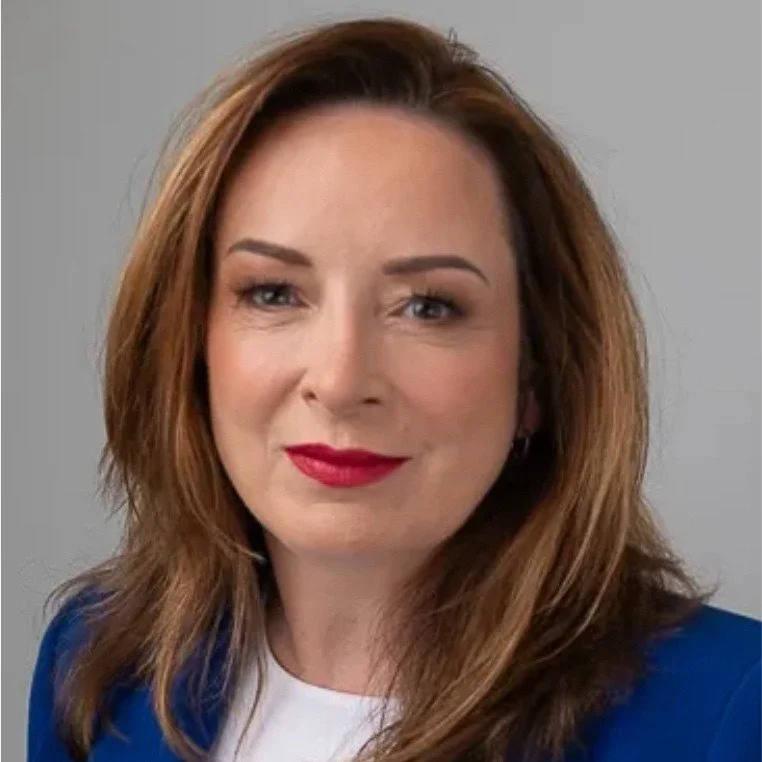
Denise Breen-Lawton KC
Barrister & Joint Head of Chambers, St Paul's Chambers
Redefining the Background of the Barrister
Denise Breen-Lawton KC is a terrorism, fraud and organised crime barrister who was called in 2000 and took silk in 2024. She covers her non-traditional route to the bar, what it takes to lead chambers, vicarious trauma in serious criminal practice, and what the profession still needs to change on diversity.
Denise Breen-Lawton KC was called to the bar in 2000, having left school at 16 with two GCSEs, worked in a fish and chip shop, returned to education in her 20s, completed a business management degree — the only person on her course to get a first — and then done a post-graduate diploma part-time before going on the bar course with no connections in the law. She got her pupillage at St Paul's Chambers in Leeds after being spotted as a paralegal at Owen Mitchell, sitting behind silks in a major fraud case. She has been at St Paul's ever since, becoming its first female head of chambers and its first criminal silk. She was appointed KC in 2024 and is a Master of the Bench at Gray's Inn. At the time of recording this episode she was joint head of chambers at St Paul's Chambers, Leeds.
In this episode, Denise describes the terrorism cases she prosecutes — extreme right-wing and jihadist material shared online, beheading videos, encrypted communications — and what it takes to present that level of technical and distressing evidence to a jury in terms they can follow. She traces her route from North Wales to the Leeds bar, explains why networking built her practice where academic credentials alone would not have, and addresses the experience of becoming head of chambers without any prior management training. The conversation covers vicarious trauma directly — Denise describes leaving court in tears after cross-examining young children in a sex case and then having to get on with it — the informal support systems that used to exist in chambers and no longer do, and the BSB consultation on a positive duty around diversity.
I left school with only two GCSEs because I was so disillusioned by the process. I was told by the careers teacher — if she can really be called that — that I would never make anything of myself.
Denise Breen-Lawton KC, Barrister, St Paul's Chambers
Denise also addresses sexual harassment at the bar directly — she says she experienced it over the years and said nothing — and discusses the Worker Protection Act 2023, Talk to Spot, and what chambers can do to make reporting feel possible. On social mobility, her position is that individual barristers going into schools is not enough and that the government needs to invest, including financially, if the pipeline into the profession is to change at its root.
Share this episode
In this episode
- Denise's route from a rural village in North Wales — leaving school at 16 with two GCSEs after being told by a careers teacher she would never make anything of herself — through a fish and chip shop, a diploma, a business management degree, and a post-graduate diploma, to the bar course with no connections in the law.
- Getting pupillage at St Paul's Chambers through a paralegal role at Owen Mitchell — sitting behind Nigel Sangster KC in a major fraud case until he spotted her and offered her pupillage.
- The terrorism cases Denise prosecutes: extreme right-wing and jihadist material distributed online, beheading videos, encrypted communications, and the challenge of presenting complex technical evidence to a jury in terms they can understand.
- The importance of networking as a junior barrister without pre-existing connections — how a VAT fraud case from Owen Mitchell paid off her debts and set the foundation for her practice.
- What changed for junior barristers after the pandemic: time slots replacing full lists, remote working replacing chambers lunches, and the loss of the informal decompression that came from being physically present with colleagues.
- Becoming joint head of chambers in September 2022 the Friday before the criminal bar went on strike on the Monday — and what leading a chambers actually requires when advocacy training prepares you for almost none of it.
- Vicarious trauma in serious criminal practice — describing a case where she had to cross-examine children as young as five in a sex case, leaving court crying, and then getting on with it.
- Sexual harassment at the bar: Denise says she experienced it over the years and said nothing. The new duty under the Worker Protection Act 2023, Talk to Spot, and what chambers can do to make reporting feel possible.
- Social mobility and the BSB consultation on a positive duty around diversity — why geography limits the pool of candidates available to regional chambers, and why a regulatory stick applied to an unachievable target creates problems without solving them.
- Denise's personal strategy system for barristers in chambers: annual goal-setting, silk and judicial ambitions written down, and senior clerk reviews against those goals each year.
From this episode
Denise's account of her own route to the bar is the episode's most direct argument about diversity and social mobility. She did not have connections, did not know how to get pupillage, performed poorly in interviews she was underprepared for, and got in through sustained presence as a paralegal — being noticed by a silk who spotted something worth investing in. That route required financial self-sufficiency throughout, the willingness to take risks without a safety net, and a very specific stroke of luck. Her point is not that the system worked for her — it is that the system placed almost every possible obstacle in her path, and the question is how many people who could have done what she did simply did not get that one break.
On vicarious trauma, her position is straightforward: the profession has always operated on the assumption that you get on with it, and for most people that holds up until it doesn't. The informal support that existed when everyone came back to chambers for lunch and waited until six o'clock for their papers — talking, complaining, decompressing — was not recognised as support at the time. It has gone, and nothing has replaced it. The cases have not become less serious. The content has not become less distressing. The isolation has increased. That combination is the problem.
Chambers have obligations around bullying, sexual harassment, and equality and diversity that require trained staff and documented processes.
Briefed produces three courses relevant to the themes in this episode. Anti-Bullying and Harassment Training for the Bar covers the obligations placed on chambers and what a compliant culture looks like in practice. Prevention of Sexual Harassment at the Bar (Essentials) covers the anticipatory duty introduced by the Worker Protection Act 2023. Equality and Diversity Training for the Bar covers the legal framework, the BSB requirements, and what chambers need to have in place.
About the guest
Denise Breen-Lawton KC
Barrister — St Paul's Chambers at time of recording; now St Philips Chambers
Denise Breen-Lawton KC was called to the bar in 2000 and appointed KC in 2024. She practises in terrorism, homicide, fraud and organised crime, acting for both prosecution and defence. She was the first female head of chambers and the first criminal silk at St Paul's Chambers, Leeds, where she served as joint head of chambers from 2022 to 2025. She is now a tenant at St Philips Chambers, Birmingham. A Master of the Bench at Gray's Inn, she sits on its management, elections, and equality and diversity committees. Legal 500 2025 describes her as "a truly exceptional advocate" whose "mastery of complex and vast cases is second only to her ability to convey the same to a jury in a clear, digestible and persuasive manner."
Transcript
Orlagh Kelly: So welcome to the Get Briefed podcast. We're really delighted to have you, Denise — joint head of chambers at St Paul's Chambers. Thank you for having us and being here.
Denise Breen-Lawton KC: I'm delighted to be here. I have to say that I felt a bit of imposter syndrome this morning when I was signing on to the link and thought, why do they want to speak to me?
Orlagh Kelly: Well, that's very interesting. That's a topic that really runs throughout a lot of the podcasts that we do because it's really about career and how we're typically talking to people who are very high achievers — and you are a high achiever. I can see from your profile, for example, you were only called in 2000, which doesn't seem that long ago. And you've been joint head of chambers since 2022, the first ever female head of chambers at your set St Paul's, and the first ever criminal silk to come out of chambers. So varied — and the area that you work on, and I hope that you'll be able to talk a little bit more about it — counter-terrorism, fraud and organised crime: very, very complex, difficult areas of law. So absolutely astonishing to me that you would have any type of imposter syndrome whatsoever. But can you tell us a bit about what it is that you do at the moment? The type of cases that you work on?
Denise Breen-Lawton KC: So I've been doing terrorism cases for quite a long time and I prosecute. They normally fall into two categories: extreme right-wing terrorism, or jihadis spreading stuff on the internet, encouraging people to commit offences like bombings and rise up against the West, for example. And so that will often feature sharing beheading videos and sharing videos of terrorist attacks that they've already undertaken, encouraging others to get involved and commit those acts again. And there's a huge rise in far-right extremism at the moment. We've seen a massive spike in prosecutions in relation to that. And it's really quite a worrying trend. So those types of cases often involve having to present quite complex telephone evidence and piecing together a timeline — videos and quite technical evidence about computers — and trying to make the jury understand it is quite a big challenge.
Orlagh Kelly: So very, very complex content that needs to be distilled and communicated in a way that the man on the street — woman on the street — who's not an expert in any of this type of thing can understand it and make good decisions about justice. And how do you do it? Before you came to the bar, for example — is this what you wanted to do, or has there been a journey?
Denise Breen-Lawton KC: I grew up in a rural village in North Wales where young women were either expected to marry a farmer or work in a factory, and very few people went to university at all in that village. School wasn't really a priority for most parents, I don't think. And growing up in the 70s, state schools — they weren't brilliant, most of them. And the one I went to wasn't brilliant either. It wasn't very inspiring. And so education wasn't top of the priority list really. And I worked in a fish and chip shop from the age of 13, paid for my own clothes and earned my money in order to do things I wanted to do. I left school with only two GCSEs because I was so disillusioned by the process.
I was told by the careers teacher — if she can really be called that — that I would never make anything of myself. Which was encouraging.
Orlagh Kelly: We now start to understand where imposter syndrome might have fostered itself.
Denise Breen-Lawton KC: So I've always had to work in order to support myself financially, which helps me to understand those who want a career at the bar and don't come from privileged backgrounds — how they might feel and what they've had to do to get where they are. And so for a little while I worked in various places, and then I thought, actually, my way out of this is education. So I went back to college and I got a diploma in business.
I thought actually I did quite well there, so maybe I could do something else. Maybe I could do a degree. And I went on to do a business management degree. And I was the only person on the course to get a first. So I thought maybe I'm not stupid, actually.
Orlagh Kelly: If you don't mind me asking, what age were you in and around that when you got your first?
Denise Breen-Lawton KC: In my 20s.
Orlagh Kelly: That's quite advanced, you know, in terms of your education — to at that stage think maybe I'm not stupid. That's incredible that you had that journey.
Denise Breen-Lawton KC: And so I'd been working at the Boots store at holidays and weekends to fund myself through uni. And as soon as I finished uni, they offered me a job and I moved to their head office in Nottingham. And I started working in marketing because I thought, you know, that was quite interesting. I'd done marketing, law and accountancy as my three major subjects in my final year and I enjoyed all of them.
At one point I thought maybe I'll be an accountant, but then thought actually no, it's quite dull. And when I started in marketing, I thought, this is all about a company's profits and money and figures, and it's not really about people. So that was really — and somebody said to me, you know, you'd make a good barrister. And I thought, well, maybe I could do that. So I looked into it and I did a post-grad diploma part-time at weekends whilst I was working over two years. And then I took a leap and left my job and went on the bar course. Didn't know anybody in the law. I didn't have any connections. And I just thought, I want to do this. I want to be a criminal barrister. And I was interested in people and the impact that crime has on people from both sides.
So I went on the bar course, did really well. And then I thought, actually, I've got no idea how to get pupillage. I went to various pupillage interviews, performed terribly. I didn't know what I was doing. And I realise now that most of the people interviewing me didn't know what they were doing either. From a chambers' perspective, I got a job at Owen Mitchell in their fraud department as a paralegal and sat behind various silks and juniors in a massive fraud case for five months. And Nigel Sangster KC was head of chambers at the time, and I was sitting behind him and working with him. And he spotted that I was enthusiastic and determined and quite sensible. And so that's how I got my pupillage at St Paul's Chambers, and I've been there ever since.
Orlagh Kelly: That's a wonderful story. It's fascinating to hear of the journey that you went through to get there and how really nothing was handed to you on a plate whatsoever. You had to be financially sound to get through all of this. But the risks that you took as well — giving up your job and going to the bar course without a pupillage — and the cost of that. It obviously wasn't easier to get pupillage in the late 90s than it is now.
Denise Breen-Lawton KC: And, you know, we didn't have websites and things like that, so you couldn't really do your research on chambers other than just speaking to people.
Orlagh Kelly: I know. Can you imagine pupils these days hearing the phrase "we didn't have websites".
Denise Breen-Lawton KC: They had a printed brochure in chambers when I arrived. I've still got it, actually. And I show the juniors in my chambers now and they're just wide-eyed.
Orlagh Kelly: Memorabilia, yeah, and some things were simpler, I think — you weren't connected to your phone and your emails and constantly available. There's something to be said for the good old days. Yeah. But technology has taken over and that's where we are. So once you had done your pupillage then, how has the past 20-odd years moved on in terms of your career? How have you progressed to where you've gotten to?
Denise Breen-Lawton KC: I'm trying to drum into the juniors in chambers now that networking is so important. One of my first big cases as a very, very junior baby barrister was a VAT fraud, and that came from Owen Mitchell. That one case paid off all of my debts — because of the connections I'd made throughout the journey.
And those connections stay with you throughout the whole of your career.
Orlagh Kelly: Yeah, and I think it is — whilst, I mean, my theory on it is, whilst you can learn as much as you can and be a fantastic advocate, if you're not great at networking or forming relationships you really will struggle to get work. And where there are people that have natural opportunity by virtue of the family that they come from or the network that is pre-existing, maybe from school — if you don't have those networks, that's it.
There's no point in sitting in the library working every day. You actually need to meet people.
Denise Breen-Lawton KC: Absolutely — and learn from those people, and go to court and sit and watch other people, and turn up to circuit events.
Orlagh Kelly: Do you think it's more difficult for more junior individuals now because technology is such a big part of their life that they're not typically great face-to-face communicators? It's more of an uncomfortable environment. I used to work in call centres and I used to work in a shop and so my communication skills all came from face-to-face or telephone — I had to work as well to help finance what I was doing.
In a world where even dating is now on apps and in messages, how do you form the people skills? And in a world where remote working is something that people can do that we didn't ever have back in the day, how do you form relationships? And I think those are actually, if I'm honest, disadvantages to people that are trying to make it at the bar. Would you agree?
Denise Breen-Lawton KC: I absolutely agree and it's very different. So when I first started in chambers, everybody would come back to chambers for lunch and we would all talk about what was going on and the work we were doing and the difficulties, the problems you might have, and talk about legal problems and things like that. And it was a great way of decompressing as well and getting stuff off your chest. And we had to wait in chambers until six o'clock at night to find out what we were doing the next day and pick up our papers.
Now everything is digital. And so trying to get people to come into chambers and see each other is hard work. Of course, they've got a lot of pressure on their time. There's a lot of work to do and they get everything digitally. They work at home more. And so I think they become more isolated and it's very difficult from a wellbeing point of view and a career progression point of view to encourage people to network and come out of their shell a bit.
We've seen on circuit as well that pupils and young people who came through the pandemic in particular haven't learnt the etiquette and court advocacy skills that you would normally have learnt before that, because now they have time slots to appear in the criminal courts, for example. They don't get to sit there and watch a list and watch other people.
Orlagh Kelly: Watch and observe.
Denise Breen-Lawton KC: Mitigating or opening a sentence and picking up good or bad habits, you know, and thinking why was that good or why was that unsuccessful? Watching the judges to see what kind of judge they are and what annoys them or...
Orlagh Kelly: You have to understand what drives the judge to understand how to advise the client, really. It's interesting — I was called in 2002, so there was no such thing as time slots. It was a half ten start and you had to be there ready to go and it might take to four o'clock before you get on. Of course, in those days, if I was just doing an adjournment, it was a 15-pound fee. Certainly there was no money being made back in those days at all. But what I was doing — probably reluctantly — was sitting in court observing what everybody else was doing. And that is something that I probably hadn't understood has gone. I mean, it would be interesting to almost identify what the best way is that a junior could learn and set that out. And it would have to be that you're in chambers and that you're in courts and in person and at events, almost moving away from the digital advantages that exist to get the old-school skills.
Do you think there are any advantages that the juniors have, talking about disadvantages — the advantages they have in the world they're growing up in and starting their career in at the moment?
Denise Breen-Lawton KC: I think they're very fortunate at the moment that there's so much work around. And they can pick and choose the type of work they want to do. When I started — and no doubt when you started — you had to build those networks, build your reputation, go and do that mention in Cardiff that nobody else wanted to do in order to help the solicitor out and build that loyalty.
Orlagh Kelly: So with such an avalanche of work at the moment, that scarcity doesn't exist in the same way.
Denise Breen-Lawton KC: It's a huge advantage in that they can just pick up work very easily.
Orlagh Kelly: Yeah, so that is a great advantage. And the concern that myself and my fellow baby barrister colleagues had is that we weren't going to make money and we weren't going to have a career, that was a real driver. And that stayed with us — it certainly stayed with me for the duration of my private practice in terms of being hungry for work, even when there was a lot of it. There was always a concern that there might be less next week. And that's not something that the current generation of young barristers have. But that might happen at some stage. It does appear to go in peaks and troughs and they might, yeah.
Denise Breen-Lawton KC: And I think that day will come.
Orlagh Kelly: I think so. I mean, thinking about the long criminal lists, the fact that trials are being booked into late next year and into 2026 — is there ever a chance that there just isn't as much work available?
Denise Breen-Lawton KC: I think it goes around in cycles — in about 10 years' time they might find it more difficult if they haven't forged those relationships with solicitors and made the effort.
Orlagh Kelly: But yeah, they don't have the foundational work done that they need. And so you were elected as joint head of chambers a couple of years ago. How does that feel, and what is that like for someone who didn't even know if they were going to be a barrister or not?
Denise Breen-Lawton KC: It was a bit odd. We were elected the Friday before the criminal bar went on strike on the Monday — in September 2022 — which was interesting.
Orlagh Kelly: You need more time on your hands, I guess.
Denise Breen-Lawton KC: A challenging situation to face as the first issue as head of chambers, but we got through it. And I think I've learned a lot about myself during this process — and about other people and how to manage people. I'm very much a sort of servant leader and try to lead by example rather than shouting at people or trying to force people into doing things they didn't want to do. But yeah, it's interesting actually being the first female head of chambers at St Paul's because when I joined it was very much a boys' club. Very much so. When I went into the robing room in Leeds when I was very junior as a pupil, there were maybe three female barristers who did crime. And the only crime they did was sex cases.
Orlagh Kelly: Okay.
Denise Breen-Lawton KC: That was classed as women's work. And I think it still is to a certain extent in some quarters. And so that's the thing we have to change, really. I'm working hard on circuit to try to change that for young women so they don't get pigeonholed in that way. But I think I've learned a lot of diplomacy skills I didn't know I had, managing the team.
Because it's like trying to herd cats most of the time.
Orlagh Kelly: That's just the barristers. It is an interesting — I think, I mean, I've often thought about the academic route to being a barrister and then the career pathway, which is honing in and advancing very particular skills. So advocacy is often quite confrontational — telling somebody else that they're wrong. And that's not how you can actually run a business or be a leader. That's actually almost the opposite.
Denise Breen-Lawton KC: Yeah.
Orlagh Kelly: For most people there's no opportunity to either get education or observe or learn those skills because you're very focused on your core key skills to be a good barrister. And certainly when I left the bar and moved into doing different things and had my own team, it was completely new. I find it a bit unsettling to have gotten very good at something only to find that you're not very good at some other things and you have to start to learn again.
You know, it's almost fine when you're a baby barrister because you really know nothing and you're good at nothing — so it doesn't matter which skill you're being expected to do, you have to learn. But once you've been able to perfect certain skills and then you have to start again, I suppose — you had to as joint head of chambers, and you appear to have adapted to it very easily and very well.
Denise Breen-Lawton KC: Yeah, thank you. It's been quite a steep learning curve, I have to say. I've had to deal with members of chambers having breakdowns during that time, and trying in different ways to find different solutions and ways of supporting them. So it's outside my skill set.
Orlagh Kelly: Of course. So thinking about that — we haven't talked a lot about the type of complex cases that you do, but straight away you've already mentioned videos of beheadings. And you and lots of other people in your chambers, both barristers and your support team, will be exposed to distressing content as part of the cases that you do. What we here at Briefed have been doing is a lot of work around vicarious trauma and understanding how that impacts the profession more. I certainly hadn't actually really heard of it until relatively recently, and certainly not while I was in practice, even though I was on some sex abuse cases and complex children's non-accidental injury cases. So traumatic content will be different. And then you've talked about other people within your chambers going through difficult times in terms of mental health.
Do you feel that there's an issue around the support available or the awareness that exists within the profession around vicarious trauma?
Denise Breen-Lawton KC: Yes, I do. I think we've just always had the attitude where we'll just get on with it and it will be fine. And for the most part that's ok as a short-term strategy, but for the long term I don't think it really works and we do need to address it in some way. How we do that, I'm not entirely sure. I think it's not just the barristers either — judges don't really have that support either, and they often have a constant diet of sex abuse cases. They're not really supported to deal with that. The way I deal with it is to try and switch off when I go home and, you know, thank my lucky stars that I've got a healthy 15-year-old daughter. She's got lots of interests.
I spend most of my weekends at the side of a hockey pitch screaming. And so I try to be thankful for the things I do have.
Orlagh Kelly: I certainly think — did it make any difference to you then when you had your daughter? I certainly found — I mean, I had done a lot of children's cases, but it was before I had children. I had children after I'd left the bar. But I don't believe that I would have continued doing children's law. I don't think that I would have — or maybe I would have, because that's what was done. And there are so many phenomenal mothers and women who lead children's law, especially in Northern Ireland. And they do it wonderfully. But on reflection I think I would have found those cases much more difficult when I had my own children. But you've obviously continued.
Denise Breen-Lawton KC: I have, and I'm not quite sure — I think I probably compartmentalise it in my head. I'm not entirely sure how I do that, but I have been able to do that, I think. There was one case that really affected me, I think, when my daughter was about five and I had to defend in a sex case where there were, I think, six children involved and the youngest two were five years old. And I had to cross-examine them. And I remember leaving court crying, sitting in my car, thinking, this is awful. I've just had to basically almost suggest that all these kids are liars, but without actually saying it. And they really don't understand what's happened to them. So yeah, and I just think, well, I'm just going to have to get on with it.
Orlagh Kelly: Yeah. But no real support as to how to do that. And, you know, reflecting on one of the things you mentioned earlier — when you were more junior in chambers, kind of early 2000s, you had to be there, you had lunch with everybody, you were there to six o'clock to get your papers. Something else that has been flagged to me by one of our other guests on the podcast was that that was an opportunity to get things off your chest. And it was an informal type of therapy with other people who knew and understood.
And so when you're working on those cases with that type of distressing content, there's a decompressing available to you immediately with colleagues who understand what you're doing — and that's before you go home. However, that has now all changed and there's something to be said for understanding that those support systems that existed informally and almost by chance have been taken away.
Nothing has replaced them at all. I mean, on a smaller version, when I left the bar, it was really only once I left that I understood the social infrastructure that existed for me. I would talk to solicitors and barristers when I was at court and I would go for a coffee and we would have lunch. If you like being around people, it's very good for your mental health and for your energy. And if you become isolated because you're working on your own — I didn't think I was having a social life when I went to court, but I actually was. I just didn't realise it at the time.
And so there's a big push for people who want to work from home because it's convenient in many, many ways. But I think — I haven't necessarily noticed it, but there is a lot to be said for getting up, getting the make-up on, and getting out there and talking to people. And that in itself is good for mental health.
Denise Breen-Lawton KC: Yeah, and I think that's why robing rooms are so important because you get a chance to chat to people who are not involved in your case. And they say, what are you up to? And you describe what you're up to. And then there's an element of gallows humour. But it gives you an opportunity to talk about stuff that you wouldn't be able to talk about otherwise.
Orlagh Kelly: And I think it's interesting that you mentioned gallows humour — and I know that this exists really in the medical world as well. And if written down and published in the press, it sounds terrible. But there is, I believe, an element of that required to decompress and to sort of compartmentalise what you're dealing with. Would you agree?
Denise Breen-Lawton KC: Yeah, it's a coping strategy. Yeah. You don't necessarily realise you're using it.
Orlagh Kelly: Yeah, it's all the little mechanisms that we as human beings have found to cope with inadvertently, in a world where that's not actually a big focus for the profession typically. Yeah, very good. And so at the moment — I don't know if you have any comment on this — there's a relatively new Labour government, there are policies brought in about prison overcrowding and early release, and you're obviously an eminent criminal KC. Do you have any thoughts on the positives or negatives of that or the impact it will have?
Denise Breen-Lawton KC: Well, I think it will have a short-term impact in terms of obviously relieving the pressure on the prison system immediately, at least a little bit. But really, it's a sticking plaster.
Orlagh Kelly: Something about the justice system.
Denise Breen-Lawton KC: Absolutely, and it's been underfunded for so many years that they need to address that problem at its heart rather than just put sticking plasters on things.
Orlagh Kelly: And do you think having a prime minister from a criminal law background — albeit prosecution — will help?
Denise Breen-Lawton KC: I do think that will help, actually, because he might have a better understanding of the system and how it actually works. And my husband went to university with him, so he tells me he's really sensible.
Orlagh Kelly: Okay. Well, if he was sensible at university, there's a good chance. That's great news. Certainly it does always feel — and I'm sure it's the same for every profession — that anyone who hasn't actually worked within it can't genuinely understand the complexities. And there's the headlines around, you know, fat cat lawyers, and no one really understands the level of complexity and work required even just to make sure someone doesn't go to jail wrongly accused.
And the effort that goes into that and the sacrifices that people have to make to deliver that type of service to the public. And certainly, having been a formerly legally aided barrister, I understand the fees typically don't represent the level of expertise and work at all. But a lot of people work because they feel very passionate about it — which obviously you do, having decided to move into criminal law. Do you have any advice for young criminal lawyers coming up behind you in terms of the new world that they're operating in?
Denise Breen-Lawton KC: Yeah, particularly for young women — I run a seminar on my circuit for young women and their career progression. And I've been very fortunate to have had female senior clerks all the way through my career. But regardless of whether your senior clerk is female or male, I think you need to have a clear plan of where you want to go and to sit down with your clerk and set out that strategy — set out the goals for the year ahead, or two or three years ahead, with them, and have a review each year and assess whether you're hitting those goals. And there might be minor goals to begin with, but bigger goals in the longer term. We have put in place in chambers a personal strategy for each barrister and their development.
And we get them to write down: where do you want to be? Do you want to take silk? Do you want to become a judge? Or both. What are your long-term goals? What areas do you want to work in? What areas do you not want to work in? And then we review that each year. The senior clerk sits down with those people each year to see how they're doing against those goals. So I think as a junior person, you need to have an idea of where you want to go, ultimately.
But also coupled with that is to not be too blinkered to opportunities. And don't be afraid of doing something different or a different area of law, because you've got the skills to do it. You have research skills, you have the advocacy skills and you have the judgment. And so you can actually perform in any area of law. So when people offer you an opportunity, step outside your comfort zone.
Orlagh Kelly: And do you find — you talked a little bit about people getting pigeonholed, particularly young junior female barristers in sex crime or harassment cases, and that you're working quite hard to try to change that. Do you think that that's possible, or is it only possible with quite a bit of effort? And the reason I ask is I specialised predominantly in children's law whilst I was in practice. And then it was only when I left that I became much more fluent in data protection law, cyber law.
And I'm actually not sure that had I remained in practice — interestingly, people tried to brief me in that type of work once I'd left, and obviously I couldn't accept those instructions — but I don't believe that if I'd remained at the bar with my family law practice I could just have changed it over without a monumental amount of effort and probably closing down my children's law practice and refusing briefs. So just interested in your thought process on that.
Denise Breen-Lawton KC: You still have to be prepared to say no to certain types of work in order to get different types of work, I think. Yeah.
Orlagh Kelly: Which is quite hard if you've grown up with a scarcity mindset around work.
Denise Breen-Lawton KC: It is, but sometimes you're presented with an opportunity to do a brief as a junior — maybe a drugs case or a fraud case. And if you've never done that type of case, you think, my God, how am I going to deal with this? I don't really know what I'm doing. But you do know what you're doing. It's just that you need to do a bit of reading. And so take the brief, take the opportunity.
Orlagh Kelly: Absolutely — take the opportunity and expand your horizons. Absolutely. There's a new piece of legislation — or an amendment to legislation — coming in. I'm sure that you're aware of it, but it's around sexual harassment in the workplace. It's coming into effect for all workplaces in the UK, at least in England and Wales. And it's interesting — I'm wondering if you've got any thoughts on this in terms of the profession generally about prevention of sexual harassment at work. There's already an ongoing — I mean, there are plenty of statistics, surveys, and news about this and other types of harassment being a difficulty at the bar. There's some work and an investigation being carried out and we're hoping to see results of that early next year. Any thoughts as head of chambers around this legislation and what you do to protect your own teams?
Denise Breen-Lawton KC: Well, we have a zero tolerance policy for this type of behaviour or any type of harassment. But, you know, I've experienced it myself over the years and said nothing. And so just having it brought into the spotlight — for example, now we've got Talk to Spot at the bar. And having a mechanism through which to report that, even anonymously, is quite important for young women and young men. It's difficult when you go to social functions at the bar with solicitors. You know, it has been the norm in the past that it was to be expected that you would be sexually harassed at a Christmas party.
I think the culture has changed quite a lot, but there are still some changes to be made. And that's evidenced by, you know, still the number of people who appear before the BSB.
Orlagh Kelly: Yeah, and those are in all likelihood more of the serious examples. We've certainly internally at Briefed been working on training for the bar on what sexual harassment looks like in all of its guises. And although one would have imagined that the very outrageous behaviour that would happen at a drinks party should have — but people are, you know, drinking isn't just such a big part of the culture. There is a new version of sexual harassment, which is online and digital.
And so it's not necessarily that it's gotten better. It's just evolved in how it happens. And it can be, in some cases, more intrusive. At least if you go to a party, you know that it might happen, but you've got safety and security in your own house. But now with digital media and all of the channels that everyone communicates through, you can actually be harassed in your own home, which is different and hasn't necessarily been highlighted just yet. That's a big problem that's ongoing. But it'll be interesting, certainly, to see how that pans out.
Denise Breen-Lawton KC: I would really hope that anybody in my chambers or anybody on circuit would feel that they were able to come to me and tell me if there was a problem. And I think Jason Pitter takes the same view — our leader of circuit has a similar sort of approach to these sorts of things.
Orlagh Kelly: Yeah, absolutely. Well, it's very new legislation. There's a lot of work to be done by a lot of workplaces to help people understand when they're being sexually harassed and what types of behaviour they're... And so we'll probably see that it continues. It's in the news this morning — it'll continue in terms of shining the spotlight on it, which is sometimes what you need to happen to help make changes in behaviour. And so in terms of...
I know social mobility is something that you're quite passionate about for the bar, and you obviously devote a lot of your own personal time to helping mentor people — you talked about leading events on the circuit and that. Do you have any thoughts on what needs to happen to encourage people from backgrounds that are not the typical background to continue to pursue a career at the bar?
Denise Breen-Lawton KC: Yeah, I don't think it should just be left to individual barristers going out to schools. I think the government probably needs to invest in that a little bit. And, you know, they have open days at courts, but does that really attract the sorts of kids who are on the verge of getting into trouble, or who wouldn't even think of engaging in that?
You've got to go out and get those kids. You've got to go into schools to engage with them. We're not doing enough of that at the moment.
Orlagh Kelly: And certainly, you know, a lot of the sets that we work with really work hard and invest heavily in that type of school engagement because whilst it's great to be able to have a lot of diversity in chambers, that can only come from a pool of qualified individuals. And so it does have to start at school — possibly primary school from a mindset perspective. And it's very difficult for a private profession to take responsibility for that, in my opinion, and there's only so much a private profession can actually do without government support.
Denise Breen-Lawton KC: And I think there needs to be some investment in financial support for those kids as well, so that they don't have to worry about that all the way through. And why should a chambers that relies on publicly funded work put its hand in its own pocket to fund that sort of initiative?
Orlagh Kelly: There's certainly a flavour at the bar of people genuinely feeling responsible for the profession, which is quite unusual. You might see that in a number of other caring professions, I would suggest. But overall, most businesses don't put their hand in their pocket for competitors — because ultimately, junior barristers are competitors and other barristers are competitors. Everybody's self-employed. It's an interesting and very rewarding ethos to have.
But it can be ineffective in the long term. And so you just find this cycle of being told you need to have more diversity from different backgrounds, but expecting a small, tiny subset of people to try to fix it whilst they work is difficult...
Denise Breen-Lawton KC: It's going to become legislation — a positive obligation to do that — when we don't have the support.
Orlagh Kelly: Yeah, and on that point — what you're referring to there, I'm sure, is the consultation that the Bar Standards Board has put out about changing one of its core duties, making it a positive requirement on chambers to make decisions in terms of diversity. There's a bit of controversy around it at the moment. The Bar Council have come back quite strongly to say, we don't even know what this means, this will cause inherent problems, and that barristers should be representing their clients to the full effect of the law and that's their job. What are your thoughts — what you're able to share from a head of chambers perspective?
Denise Breen-Lawton KC: Yeah, it's really difficult. When the BSB came on circuit, my senior clerk and I went to the open evening to discuss this proposal. I did point out to them that it was very difficult to achieve that because geographically, we don't necessarily have the same pool of candidates that you would have in a set in London. So it's affected by the geography in which you are placed. So how can we have a positive obligation to recruit a certain number of Black pupils or Asian pupils or people from disadvantaged backgrounds, for example, when we're influenced by the people who apply to us? I just didn't really understand that obligation. I'm quite happy to try to achieve diversity as much as I can. But you are limited by the applicants that are coming through. And that goes right back to the root of what we were talking about earlier in terms of the children that are coming through universities and studying law.
Orlagh Kelly: And essentially there's an argument that using a stick — it's not legislation, but from a professional regulator's perspective it's not far off — to achieve something that's unachievable just creates significant problems and sets everybody up for failure, rather than addressing the core issue, which does exist but needs to be solved much earlier in the career pathway.
Denise Breen-Lawton KC: So considering the amount of admin we have on our plates running a chambers already, it certainly does not make it easier for us.
Orlagh Kelly: Okay, well, it remains to be seen what the outcome of the consultation is. There's certainly a lot of controversy online about it — predominantly from what I've been able to read, people not thinking that it's a particularly good idea or well-crafted statement, and not sufficiently clear. But as of the date of recording this podcast, we don't know the outcome. We'll get you back on again to talk about whatever it is, if you're open to doing that. And we'll see where that takes us for the moment, Denise. It's been fantastic to have you here.
I hope that the imposter syndrome disappeared early on because you have achieved stunning things and you are a great example to many young people coming behind you, and I hope that they listen to this and that they learn that they really can do anything — they just need to have some confidence.
Denise Breen-Lawton KC: Thank you very much for having me. Thanks a lot. See you later.
Listen and subscribe
New episodes published monthly.
You're subscribed. New episodes monthly.
No spam. Unsubscribe any time.