
EP. 25
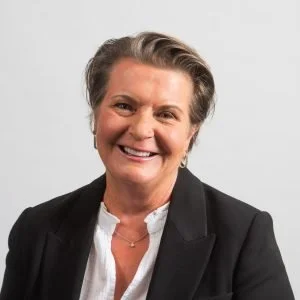
Kathryn Stone OBE
Chair, Bar Standards Board
Regulating the Bar in the Public Interest
Kathryn Stone OBE, Chair of the Bar Standards Board, covers the BSB's EDI consultation, the Harriet Harman KC review of bullying and harassment, the Worker Protection Act 2023, and her own route from a 1970s hippie school and five jobs to the top of public life.
Kathryn Stone OBE joined the Bar Standards Board in January 2018 and was appointed Chair in August 2022. Before the BSB she was Parliamentary Commissioner for Standards from January 2018 to December 2022 — a period that earned her the press description of Chief Sleaze Buster — and before that served as Chief Legal Ombudsman for England and Wales, Commissioner for the Independent Police Complaints Commission, and Commissioner of the Commission for Victims and Survivors in Northern Ireland. She received her OBE in 2007 for services to people with learning disabilities, following eleven years as Chief Executive of the charity Voice UK. She is not a lawyer. This episode was recorded at Staples Inn, hosted by 42BR Barristers, in November 2024. Since recording, she has been appointed HM Inspector of Constabulary and Fire & Rescue Authorities for the Wales and Western Region.
In this episode, Kathryn opens with her own background — growing up in Belper, attending a 1970s experimental school where attendance was optional and qualifications were not the priority, a formative experience at 15 caring for people with profound disabilities at a Derbyshire Miners' holiday camp in Skegness, and a teacher who took her in and persuaded her to get qualifications. She describes working four or five jobs simultaneously to put herself through her degree and professional qualification in London, and the moment in 2018 — standing in her House of Commons office — when she finally understood how she had got there. The conversation then covers the BSB's EDI consultation in detail, addressing online criticism directly, before turning to Baroness Harman's bullying and harassment review, the Worker Protection Act 2023, and the difficulty of reporting for junior members of a self-employed profession.
Enforcement is the last tool in the toolbox for a regulator and there are all sorts of things before anybody would consider enforcement action. But if people have concerns about the lack of clarity about how this would be enforced, how it would be measured, then that's certainly something that we'll look at in our response to the consultation.
Kathryn Stone OBE, Chair, Bar Standards Board
Kathryn also addresses the criticism levelled at the BSB over the pace of its disciplinary processes, setting out why the tension between speed and quality in regulatory investigations is not one that can be resolved by simply moving faster. She closes with her view on AI and technology as the most exciting development on the horizon for both the bar and the BSB — and a reference to the New York attorney fined for submitting ChatGPT-fabricated case law that Orlagh raises as the cautionary counterpoint.
Share this episode
In this episode
- Kathryn's background — growing up in Belper, attending a 1970s experimental school with no compulsory attendance or lessons, and a community service placement at 15 that led to her decision to make a difference.
- The teacher who took her in, persuaded her to get qualifications, and whom she tracked down in 2018 with a bunch of flowers and a copy of her CV — the subject line reading "you made this."
- Working four or five simultaneous jobs — cleaning, bar work, care work, wardening — to fund her degree and professional qualification in London.
- Her career in public life: Chief Executive of Voice UK for eleven years, Commissioner for Victims and Survivors in Northern Ireland, IPCC Commissioner, Chief Legal Ombudsman, and Parliamentary Commissioner for Standards — a role the press described as Chief Sleaze Buster.
- Managing deeply unpopular decisions and press criticism — including headlines about her work — and what it costs the families of people who hold those roles.
- Her six-year journey on the Bar Standards Board before becoming Chair, and her view of the regulator's role: setting and maintaining standards, not solely pursuing disciplinary proceedings.
- The BSB's EDI consultation — the proposal to shift from a negative duty not to unlawfully discriminate to a positive duty to promote equality, diversity and inclusion, and why Kathryn describes the backlash as surprising.
- Addressing online criticism directly: the claim that the consultation is coercive, illiberal and dangerous; the concern that barristers should only promote the rule of law; and the argument that the existing core duties suffice.
- Sam Townend KC's warning at Bar Council level about unintended consequences, and why Kathryn is waiting for the formal Bar Council submission before responding.
- Baroness Harman KC's review of bullying and harassment at the bar, the BSB's existing reporting processes, and the importance of addressing power imbalances in a self-employed profession.
- The Worker Protection Act 2023 and the new anticipatory duty on employers — the difficulty for junior barristers aged 22 or 23 of reporting someone who controls their career, and what the BSB can do to make that process feel possible.
- AI and technology as Kathryn's closing focus: the catastrophic fails involving fabricated ChatGPT case law, and why she believes artificial intelligence represents the most exciting development ahead for both the bar and the BSB.
From this episode
Kathryn's personal story is not incidental to the episode — it is the foundation of her argument about why the BSB's EDI work matters. She did not come from a background where the bar was visible, expected, or accessible. The teacher who changed her life did so through a combination of personal investment and a clear-eyed insistence on qualifications. Kathryn's point is that the profession cannot rely on the equivalent of a brilliant teacher turning up for every person from every background. It needs structural change, and the positive duty consultation is an attempt to begin that. The reaction to the consultation — which she describes as surprising — reflects, in her reading, a misunderstanding of what the BSB is actually proposing. The shift from a negative to a positive duty is not a revolution. It is a request for barristers to think about how they promote equality in their own practice.
On bullying, harassment, and the Worker Protection Act, her position is consistent with her career: power imbalances require institutional processes that make it feel safe to report, not just assurances that reports will be taken seriously. Her experience investigating misconduct in Parliament and in the police is directly relevant. The bar's particular challenge — self-employed individuals, hierarchies of seniority, careers that can be damaged by a single complaint from the wrong person — is one she has seen in other forms before. The BSB's role is to be a credible destination for those reports. Whether it currently is, she acknowledges, is a question the Harman review will help to answer.
Chambers have legal obligations around bullying, sexual harassment, and equality and diversity that require trained staff and documented processes.
Briefed produces three courses relevant to the themes in this episode. Anti-Bullying and Harassment Training for the Bar covers the obligations placed on chambers and what a compliant culture looks like in practice. Prevention of Sexual Harassment at the Bar (Essentials) covers the anticipatory duty introduced by the Worker Protection Act 2023 — the legislation Kathryn references directly. Equality and Diversity Training for the Bar covers the BSB requirements and what chambers need to have in place, including in the context of the Core Duty consultation discussed in this episode.
About the guest
Kathryn Stone OBE
Chair, Bar Standards Board at time of recording — now HM Inspector of Constabulary and Fire & Rescue Authorities
Kathryn Stone OBE joined the Bar Standards Board in January 2018 and served as Chair from August 2022 until summer 2025. She is not a lawyer. Before the BSB she was Parliamentary Commissioner for Standards from January 2018 to December 2022, Chief Legal Ombudsman for England and Wales from 2016, a Commissioner for the Independent Police Complaints Commission, and Commissioner of the Commission for Victims and Survivors in Northern Ireland. Earlier in her career she spent eleven years as Chief Executive of Voice UK, a national charity supporting people with learning disabilities who have experienced crime or abuse. She received her OBE in 2007 for services to people with learning disabilities and an honorary Doctor of Laws from the University of Derby in 2018. She has since been appointed HM Inspector of Constabulary and HM Inspector of Fire & Rescue Services for the Wales and Western Region, a role she took up in March 2025.
Transcript
Orlagh Kelly: Welcome Kathryn Stone OBE, Chair of the Bar Standards Board, to the Get Briefed podcast. Thank you for coming.
Kathryn Stone OBE: Well thank you for having me.
Orlagh Kelly: Yeah, I'm delighted. And so for those in the audience that maybe don't know some of your professional background — in more recent years you've been Parliamentary Commissioner for Standards from January 2018 to December 2022. You were Chief Legal Ombudsman for England and Wales, Commissioner for the Independent Police Complaints Commission, and Commissioner of the Commission for Victims and Survivors in Northern Ireland, having been awarded your OBE in 2007 — is that right?
Kathryn Stone OBE: That's right.
Orlagh Kelly: So that is a fantastic lineup of qualifications and jobs and positions that you have held. And I'm absolutely fascinated to think about the journey — not only from where you first came from to getting there, but how that has led you to being Chair of the Bar Standards Board. So before we get into that, can you tell us a little bit about where you come from and how you started out in life?
Kathryn Stone OBE: I'm happy to do that, Orlagh. I think if you look at my most recent jobs, you might think, well, this is somebody from a very privileged background. This is somebody who's had lots and lots of different opportunities and doors have opened. And like many, many people, I've worked really hard to get the roles that I've had, to get the jobs that I've had. And certainly when you're at school and you do careers, nobody says, do you want to be Parliamentary Commissioner for Standards? Or how about Chair of the Bar Standards Board? And in fact, when I was at school, the only ambition for girls of my background where I'm from was to be a hairdresser, a typist or work in a factory. And I have to say that my hand-eye coordination would mean that I'd be absolutely disastrous at any of those. I did actually spend quite a bit of time thinking about what I wanted to do and I decided that my ambition was to make a difference — and that sounds very naïve and very cheesy now, but that's what it was then. And there was a particular moment that really sparked that for me.
I think quite a few people know now that I went to a very hippie school. We didn't have to go if we didn't want to. We called all the teachers by their first names. The head teacher was an atheist. If we didn't want to go to lessons, we didn't go. There were no playgrounds. It was all kind of bean bags and coffee machines. It was a 1970s experiment. And it was fantastic for everything apart from qualifications, actually. One thing we absolutely had to do was community service — and that makes it sound like a borstal or an approved school and I promise you, it was nothing like those things. But at the age of 15, a mini busload of us were sent off to Skegness, to the Derbyshire Miners' holiday camp in Skegness, to care for — physically care for — a coachload of people with profound and complex physical and learning difficulties.
And it was our job — I mean, you would never ever be allowed to do that now, just wouldn't be allowed. And I was completely horrified that these folk were so vulnerable and by the lack of dignity that was afforded them, because they were sleeping on the floor on mattresses, they didn't have their own clothes, their clothes came out of a carrier bag, a bin bag, and we just kind of saw what fitted each person. And I thought, I can't have this. I need to do something about this. So I went back to school and said, that's it. I'm going to make a difference. By this time, my home life was quite different. I'd gone to live with a teacher and her family. And she said to me, well, if you want to make a difference you need to get some qualifications. And I thought it was rubbish — I don't need qualifications to do this. But actually she persuaded me that I needed to get qualifications, and having scraped through O levels and A levels at 17, I went off to live in London to do my degree and to do my professional qualification.
To do that, I had to work and at one stage I think I had four, maybe five jobs — cleaning, bar work, care work, children's homes, day centres, warden in an old people's home — to put myself through that education to get the qualifications I needed to make a difference. And if you'll just indulge me for a minute to share with you what happened with this brilliant teacher — I left her home, left home, came to London. Had all sorts of different jobs. And it wasn't until 2018, when I was standing in my office in the House of Commons with its enormous fireplace and enormous chandelier, that I thought, how did this happen? How did I get here? And it was all because of this most brilliant teacher who took me in and told me my fortune.
So I tracked her down and I sent her a card and said, I just want to thank you for everything you did for me because if it wasn't for you I wouldn't be in this job now, and I was so grateful to you for everything you did. And she emailed me and said, you know, thank you for getting in touch — I think about you. What have you done with your life? And I sent her a copy of my CV with all these big jobs and said, this is what you did. And in the subject heading I wrote, you made this. And I then went to see her. I had a bunch of flowers bigger than she was and went to meet her in a café. It was a very emotional — I thought I was going to be very cool and calm and too cool for school. But actually we were both in floods of tears. So now when I listen to people talk about the challenges that they face — getting access to the bar or becoming a barrister — I really know what that feels like. I know how hard it is for people from different backgrounds, whatever their background, to break into a profession that has been traditionally very, very different from the ambition that was expected for somebody like me, from my background, from my part of the world. And part of the reason why I do what I do is so that people from where I'm from, people with backgrounds like mine, can have access to the bar and can have access to this brilliant profession and be a part of that. That's a bit of a long way around, Orlagh. I'm sorry about that.
Orlagh Kelly: It's just such a wonderful story. And the more people that we have as guests on the podcast, the more we get to understand the rich background and the tapestry that really goes into making it out of the bar from lots of different ways. And I'm keen to follow up on you because there is a little bit of controversy according to the Bar Standards Board potentially at the moment — I want to ask you about that. But before we get there, I can't go past the fact that — I read in my research, I apologise — you were described in one of the headlines as Chief Sleaze Buster for Parliament. Can you tell us a little bit about how do you get there? How do you do that job? Where does that come from?
Kathryn Stone OBE: So my grandad was a policeman and I spent a lot of time with my grandad as a very small child and he would tell me about good people and wrong ones and he said to me, you must always, always speak up if there's something wrong or bad.
So I think it's pretty much his fault, because I haven't really shut up ever since. But this kind of sense of social justice, and things being right and fair, is really, really important to me. So all my jobs have been about things being right and fair.
And when I was in Belfast, my job as Commissioner for Victims and Survivors was about what's right and fair for victims of the Troubles. The Independent Police Complaints Commission — or the Independent Office for Police Conduct as it is now — it's about what's right and fair. So when I was Parliamentary Commissioner for Standards, my job was to implement the Code of Conduct and do that in a way that was independent, impartial, thorough and fair. And those were the values that we as a team set for the office, and that's what we delivered. And I have to say there were many occasions when the decisions were deeply unpopular, and being popular has never been an ambition. Making sure that the job I did was right and fair has always been what I've set out to do.
Orlagh Kelly: And I do know that in your time in Belfast you did court controversy as well, inadvertently, by not necessarily getting pulled into what is the political mire that can happen in Northern Ireland where you're asked difficult questions where really there's no right answer to keep everybody happy — and I think that one was in and around your definition of a victim and where people who were involved in organisations and in incidents fell into that category. And we'll not get into that, but one of the things that I've noticed in the roles that you've had and the public face that you've had is that you very clearly want things to be fair. You've had to be resilient. There have been headlines about you in the press that have been, you know, not that attractive, that will have been a little bit confronting when you're really only trying to do your job. How do you manage that, because it doesn't seem like something that any of us are trained for at school or in college — it's something that you must have to learn along the way.
Kathryn Stone OBE: I cried a lot and ate a lot of crisps. The crying is fine, I've just got to deal with the crisps I think. Seriously, the only way to deal with those difficult and challenging situations is to work with a brilliant team of people. And I was always and am now privileged to work with a brilliant team of people who I know have got my back. And if we conduct ourselves in a way that people can see is fair — to go back to that — then we can stand over our decision making, however unpopular it is. And I have to say those situations were very difficult for my family, very difficult for my children, very difficult for my loved ones. But they kind of have come to almost a resolution that this is mum doing her job.
Orlagh Kelly: And so it feels like being popular has never been front of mind for you because you have on occasion made deeply unpopular decisions and stood by those.
Kathryn Stone OBE: Yeah, yeah. As I said, you know, being popular is not an ambition. Doing a job that is professional, thorough, evidence-based, impartial, independent — all those words — that's what my jobs have been about. And I hope that people can see that even if they didn't agree with the outcome or felt that the decision was wrong, that it was actually evidence-based and it was a thorough job. And I think even Mr Johnson might concede that.
Orlagh Kelly: And so bringing it a little bit closer to where we are at the moment — we're sitting in the beautiful building at Staples Inn, hosted by 42BR Barristers very kindly, and we're talking about all things barristers, codes of conduct. I know that you've just been at a recent event with the LPMA. As I understand it, you've sat on the board of the Bar Standards Board since around 2018. So you've been on a journey with the Bar Standards Board — you weren't just appointed Chair out of the blue. And so in the past six years, what has that journey with the Bar Standards Board felt like and been like for you?
Kathryn Stone OBE: I had, growing up and as a young adult, absolutely no exposure to the bar. I had no idea what a barrister was. It wasn't anywhere in my frame of reference. I never encountered a barrister until I was a child protection social worker. I have to say, in mill towns in the north of England, we didn't have barristers. Well, we probably did, but we weren't exposed to them. And I absolutely respect and admire the professionalism that barristers bring and the hard work and the dedication that it takes to become a barrister. And like any other profession — police officers that I've been involved with, politicians — absolutely the majority of barristers go out every single day to do the very best job they can. And it's the job of the Bar Standards Board — and this is the journey that I've been on — to understand the profession, to understand properly the regulation of the profession, to set and maintain standards. It's not the job of the regulator solely to focus on miscreants and bring disciplinary proceedings. It's the job of a regulator to set and to maintain standards, to challenge standards, to encourage debate and to ensure that there is a continued improvement of those professional standards. We regulate in the public interest and that's what we have to do.
Orlagh Kelly: And so would it be fair to say that in the past six years there has been some scrutiny placed upon the Bar Standards Board and some suggestion that there needs to be a little bit more productivity, or decision making needs to be reached faster, and a little bit of criticism levied at the Bar Standards Board?
Kathryn Stone OBE: Whenever you have a process that is about investigating things, there will always be a tension between timeliness and quality. And it's something that I'm very, very used to. People will say, it's taken too long to investigate this. And very often people will say, justice delayed is justice denied. If it was rushed and the wrong outcome was achieved, then there would be an equal cry that this has gone too quickly, you've not looked at things carefully, you've not done things properly. And we have to be — and I hate to say this again — fair to people who complain and to the people who are subjects of the complaint, to give them time to respond properly and to give them time to take advice, to think about how to respond. And we have to make sure that we build a case and build a process properly and not rush that. And I accept — and we're in the middle of a reform programme at the moment at the Bar Standards Board — that there are things we need to do quicker. We need to do them with pace, with purpose, but what we can't do is sacrifice quality for speed. Nobody would thank us for that.
Orlagh Kelly: Yeah, absolutely. So Kathryn, one of the things that I really want to ask you about today is the particular consultation that the Bar Standards Board is in with the bar around a Core Duty and EDI, which has garnered a lot of attention and possibly a bit of a backlash if you were to read everything online. Could you tell us a bit about what the consultation is on?
Kathryn Stone OBE: Okay, so first rule — don't believe everything you read online. And what we're trying to do is to consult — and it really is a genuine consultation. We're very, very interested to know what people think about our proposal to shift from a negative duty not to unlawfully discriminate, which all of us have to do, to a positive duty to promote equality, diversity and inclusion. And one of the things that's really surprised me about all of this is the reaction that people have had to it. And what we're trying to do is to promote a better understanding throughout the bar of what equality, diversity and inclusion mean in terms of practice — for example, in chambers. It's about barristers' practice in chambers. How do barristers know that work is being distributed equally and fairly? How do barristers know that pupillage opportunities are being given to people equally and fairly? How do they know that? What steps can they put in place? We're not seeking to revolutionise anything. We don't want the sky to fall in. We just want barristers to behave in a way that is positively promoting equality, diversity and inclusion. And in fact, the Solicitors Regulation Authority has something very similar to this already. And all barristers who apply to be a KC — Competency D, for the enthusiast — they have to be able to demonstrate a competence in taking positive action to promote equality, diversity and inclusion. So there are already precedents across the legal profession for this anyway. It is a genuine consultation. It doesn't close till the 29th of November at 5pm, so if people want to make sure that we hear their views, please, please write in, get in touch, tell us what you think.
Orlagh Kelly: And so just picking up on that — as you've said, there has been quite a big reaction, even from where you might have expected an ally. And there appears to have been some concern at Bar Council level, with the Chair of the Bar Council, Sam Townend KC, warning that this kind of radical change could have unintended detrimental consequences.
Kathryn Stone OBE: Well, I've been speaking at a conference this morning with the Chair of the Bar Council — we were both speaking at the LPMA, the Legal Practice Managers Association, event this morning. And we're looking forward to receiving the formal submission from the Bar Council. I think it's right that we wait until we get that before we respond to anything that's been said.
Orlagh Kelly: In terms of outside of and away from the formal Bar Council response, some of the other views essentially indicated on LinkedIn by barristers not to be named — some of the things that are here, and it would be remiss of me not to at least ask — someone indicates: it shouldn't be the role of a barrister to promote anything beyond the rule of law and the best interests of clients.
Kathryn Stone OBE: I think it's a responsibility for all of us, especially professionals, to promote equality, diversity and inclusion. Barristers, it seems to me, are ideally placed with their knowledge, skill and experience to ensure that the bar is a more equal, inclusive and diverse profession.
Orlagh Kelly: To those people that say the existing core duties actually suffice — leave well enough alone — what would you say to that?
Kathryn Stone OBE: Well... I think we're about promoting and setting high standards and making sure that, as I said earlier, everyone has an opportunity. This is about equality of opportunity for people. And all barristers who want to become KCs have to promote this positive duty anyway, show competence at promoting positive action — and we've clarified with the King's Counsel Appointments body that that's absolutely what they have to do. We're not asking for a revolution. We're asking for people to just think about how they can promote this in their practice in chambers.
Orlagh Kelly: Some other comments on LinkedIn — and I'll not ask you to comment on all of them because I appreciate what you've indicated. The BSB is imposing conformity with its EDI agenda. It is coercive, illiberal and dangerous.
Kathryn Stone OBE: I love that. I love that because it's absolutely anything but those things. You know, how can a consultation asking people's views be coercive, illiberal and dangerous? It's just... Sorry, forgive me. Let me be respectful of that view and say it's absolutely not those things.
Orlagh Kelly: Yeah. And so then finally — someone has indicated: this is the Bar Standards Board imposing its own views on social justice on the practitioners.
Kathryn Stone OBE: Right.
We're not imposing anything on anyone. We're asking for views and then we'll make a decision. As a regulator, it's right that we impose — and the code of conduct is an imposition on the profession. A regulator is there to regulate and that's what we have to do. In this context, we're asking for people's views and we look forward to receiving those.
Orlagh Kelly: And so just then, leaving aside the comments online but thinking about it on a more practical basis — do you have a thought process for how exactly this would be measured? A concern would appear to be that potentially people could be disciplined by their professional regulator for not meeting this requirement, but that the context in which they needed to do so wouldn't be sufficiently clear for them to understand what was expected. Do you have any concerns around implementation — if it were to come in — and the monitoring and regulation around that?
Kathryn Stone OBE: I think enforcement has to be a very last resort. You know, enforcement is the last tool in the toolbox for a regulator and there are all sorts of things before anybody would consider enforcement action. But if people have concerns about the lack of clarity about how this would be enforced, how it would be measured, then that's certainly something that we'll look at in our response to the consultation responses that we've received.
Orlagh Kelly: And of course, just to reiterate, there's an opportunity to respond until 5pm on the 29th of November. And people should do that if that's what they want to do. Don't just speak out online — get involved. And I look forward to seeing how that progresses.
In other topics — somewhat away from EDI — there has been the review of the bar, a bullying and harassment review set up by and being carried out by Harriet Harman KC. Do you have any thoughts around that so far?
Kathryn Stone OBE: Well, absolutely — I've met with Baroness Harman. Our Director General Mark Neale, who you described as lovely — he was quite surprised by that, and I think others of us were quite surprised by that.
Orlagh Kelly: He was lovely to me, and he's been on the podcast.
Kathryn Stone OBE: He's about to meet with Baroness Harman on behalf of the Bar Standards Board, so we are engaged with that. Obviously if Baroness Harman has any recommendations as to discipline and sanction, that will be for the Bar Standards Board to consider. So we look forward to that. Obviously in my previous roles I've had some experience of investigating bullying, harassment and sexual misconduct, and one of the things that's really crucial is that proper consideration is given to an imbalance of power and authority. And we could see that in the House of Commons and we certainly see it at the bar. You know, people in positions of power and authority who have sway over people's careers, their livelihoods — it's very, very difficult for people to think about making a report or bringing a complaint. And one of the things that we at the Bar Standards Board are absolutely clear about is that we will deal effectively with any reports that we have of bullying, harassment and sexual misconduct, and whatever recommendations come out of Baroness Harman's review, we'll look very carefully at those and implement them.
Orlagh Kelly: And very interesting that you indicate that, particularly around sexual misconduct, given that we are just days from new legislation coming into force under the Worker Protection Act. Now it's coming into force in England and Wales for all businesses, and businesses need to take anticipatory steps to protect their employees from sexual harassment in the workplace — which can include in the office, so to speak, or events that people go to. And we've been doing a lot of work with chambers and law firms on how they essentially audit how things work, how they create a complaints process, a reporting process. But one of the complexities that does arise is having people with a full understanding of the breadth and the depth of what sexual harassment can be, because I think a lot of people assume it's the old school dancing someone round a desk trying to get away from someone. And actually it's much broader and somewhat more insidious these days with the advancement of digital technology. But it is difficult for people who are very junior — 22, 23, at the start of their career — to somehow make a report or to flag that there's someone who potentially is their pupillage supervisor or a senior member of chambers, or someone in their network who is so much more senior. And this is a world of self-employed individuals. So how does an industry help protect those people who don't have that power and who have really worked very hard to get into the profession? The last thing they want to do is make one false step that will throw away all of that hard work, that will destroy the career they've started to build. They're finally just about getting there. How can the industry and the profession protect those individuals?
Kathryn Stone OBE: Well, that's about how we as the Bar Standards Board promote trust and confidence in our processes and give people trust and confidence that making a report — coming forward, their complaint, their report — will be taken seriously, they'll be listened to, they'll be helped to make that report, and our processes are fair, thorough, evidence-based.
I absolutely appreciate that it's very, very difficult for people to come forward who don't have that power and don't have that authority and have worked very, very hard to get a pupillage, to get a tenancy. They don't want to undermine that, they don't want to rock the boat. So we will look forward to seeing and hearing what comes out of Baroness Harman's review, but we do have those processes in place already. The Bar Council has a reporting line that people have used. We have our reporting mechanisms and our job is to investigate those matters.
Orlagh Kelly: Very good. And so just to start to wrap up — are there any key developments in 2024 in the Bar Standards Board or the broader profession that you're reflecting on as we come to the end of the year? Things that have been a positive change, or things that maybe need a bit of work that we can look forward to in 2025?
Kathryn Stone OBE: Okay, so this is kind of off the left wall — via the 32 bus route maybe — from the conversation that we've been having so far, Orlagh, but I'm really excited about how we harness technology and how we use artificial intelligence to support the work of the bar, and how we use artificial intelligence, data and technology to improve and develop our processes and systems at the Bar Standards Board. So I think that's something that's really exciting for us as an organisation and exciting for the profession. I think there have been some catastrophic fails where people have used ChatGPT to write their skeleton arguments and they've used case law that doesn't exist — so you know, there's a way to go yet — but I think that's something that's really exciting.
Orlagh Kelly: And it's interesting — it wasn't on our topic of conversation for today, so we might have to follow it up on a different day. But thinking about that case in New York where the attorney used ChatGPT to formulate skeleton arguments and ChatGPT did essentially fabricate the case law — he actually got fined by his professional regulator, the New York Bar Association. I think it was the New York Bar. And that does make me wonder — I guess that the Bar Standards Board Code of Conduct is set up to allow for conduct, even if it's a use of AI and not using it properly and proficiently, such that the code of conduct as it's set up allows for this to fall within it, albeit with this new technology. Do you see that this might be something that would increase from a regulation perspective if members of the bar are not using it appropriately or effectively? Thank you for being here today. I really appreciate your time and thanks to 42BR Barristers for hosting us. I've enjoyed speaking with you immensely. I look forward to hearing how the consultation on the Core Duty goes and we'll bring you back to talk about AI the next time.
Kathryn Stone OBE: I think that's one for next time. I think that's Watch This Space.
Thank you very much. Thank you.
Listen and subscribe
New episodes published monthly.
You're subscribed. New episodes monthly.
No spam. Unsubscribe any time.