
EP. 16
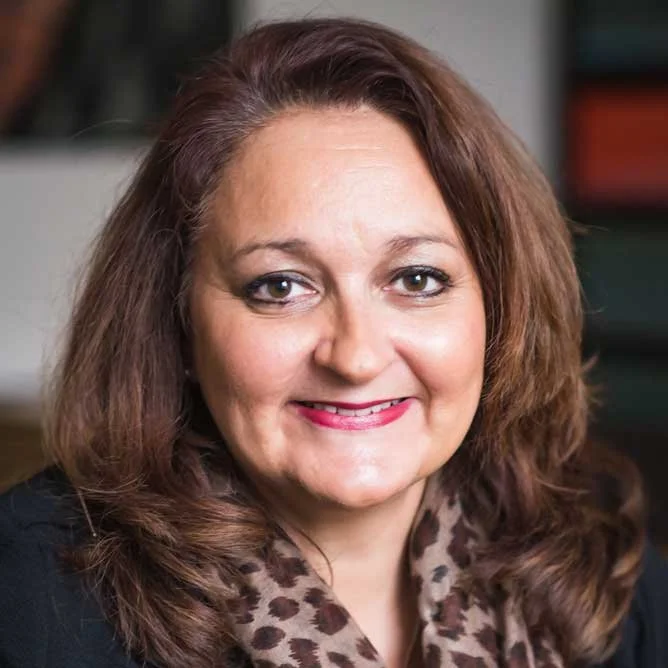
Lucy Barbet
Director of Development and Compliance, 11KBW
From Receptionist to Senior Clerk: Lucy Barbet on 30 Years in the Temple, Leadership and EDI
Lucy Barbet spent 30 years at 11KBW — nearly 20 of them as joint senior clerk — before writing her own job description for a new role as Director of Development and Compliance. She covers the Temple she joined in 1990, the career she built from scratch, and why EDI at the bar needs someone dedicated to it.
Lucy Barbet started in the Temple in August 1990 as an Office Receptionist at 1 Essex Court — a role she landed after being turned down by 11KBW for not having shorthand, on the suggestion of 11KBW's senior clerk Philip Monahan. She clerked at 1 Essex for five years, joined 11KBW in 1996 as second junior, gave up her job when expecting a child, returned as first junior when the incumbent resigned, and was made joint senior clerk alongside Philip Monahan at around 35. She served as chair of the Institute of Barristers' Clerks from 2019 to 2022 — the first woman to hold that role. In early 2024 she moved into the newly created position of Director of Development and Compliance at 11KBW, with responsibility for EDI, compliance and the BSB Handbook, tenders, and the chambers' parental leave policy.
This episode covers the clerking world of the early 1990s — paper diaries, physical authorities in court, no marketing, and a social life centred around a mile-radius of the High Court — and how it compares to the profession now. Lucy is candid about her experience as a female in a male-dominated clerks' room, the things she witnessed that would be unthinkable today, and the one barrister at 1 Essex who was her role model. She describes her own experience of anxiety and depression, the support she received from 11KBW over decades, and what she asked for and was always given. She is also candid about imposter syndrome — feeling she was winging it throughout — and why work was her constant through everything else.
We've got the theory, we know what the theory is, but practically, what are we doing to improve diversity? We can all talk the talk, but who's actually walking the walk? And that's what the problem is. So have somebody that's dedicated to it. Have somebody that's all over your policies. Have somebody that's making sure that everybody is doing the training that they need.
Lucy Barbet, Director of Development and Compliance, 11KBW
The episode closes with Lucy's argument for the BSB regulating EDI within chambers — an unpopular position in some quarters but one she makes directly and without hedging. She also covers the enhanced maternity, paternity and shared parental leave policy she introduced at 11KBW, the World Wellbeing Week initiative that gave the clerking team a free day off, and what it means to build a role that allows her to spend real time on the things she cares about rather than fitting them around everything else.
Share this episode
In this episode
- Lucy's route into the Temple — a year out to retake an exam, a place at Oxford Polytechnic cut short by anxiety and depression, and a job at 1 Essex Court that came via a neighbour and a phone call from the 11KBW senior clerk who had just turned her down.
- The clerking world of 1990 — paper diaries, physical law reports strapped up and carried to court, no marketing, no mobile phones, and a social life built around a mile radius of the High Court.
- The culture of a male-dominated clerks' room in the early 1990s — what was normal then, what would be unthinkable now, and the one female silk at 1 Essex who let her drive a BMW convertible during the Guinness trial.
- The moment she said she wouldn't mind having a go at clerking — and the senior clerk's response: if it doesn't work, you can't have your receptionist job back.
- Five years clerking at 1 Essex, joining 11KBW in 1996, giving up her job when expecting a child because it was the fairest thing to do to chambers, and being called back four months later to go back as first junior.
- Lord Justice Elias telling her at the chambers Christmas dinner: you're going to tell them you'll try it for six months, and then both of you have got to get out if it doesn't work.
- Being made joint senior clerk at around 35 — the conundrum of going back, the single-parent years, the support 11KBW gave consistently across decades, and what she asked for and was always given.
- Around 13 years clerking First Treasury Counsel Lord Sales — from junior barrister to Supreme Court Justice — and the day she carried his papers to the televised Hutton Inquiry and was asked at the door if she was counsel.
- Imposter syndrome across an entire career — always feeling she was winging it, always expecting someone to find out — and why work was her absolute constant through everything else going on in her life.
- The decision to step back from senior clerking — writing her own job description, taking it to chambers, and the newly created role of Director of Development and Compliance.
- The enhanced maternity, paternity and shared parental leave policy she introduced at 11KBW — six months full pay — and why she wants female clerks to come back to work knowing they are valued.
- The World Wellbeing Week initiative — giving the entire clerking team a free day off — and why sometimes a small gesture makes all the difference in a relentless job.
- Lucy's argument for the BSB regulating EDI within chambers: the profession has the theory, talks about it constantly, but the numbers barely move. Dedication, someone whose job it actually is, is what changes that.
From this episode
Lucy's story moves from luck to structure. She credits luck for almost everything — the neighbour who suggested chambers, the senior clerk who pointed her to 1 Essex, being in the right place to be asked to come back from maternity leave. But the episode also shows what she did with each piece of luck: she asked for help when she needed it, she spoke up when something wasn't working, and she built relationships across three decades that became the foundation for everything else. Her point about imposter syndrome is the most useful one — she felt she was winging it throughout a career that included chairing the IBC and clerking a future Supreme Court Justice. The people with imposter syndrome, she says, are usually the high achievers. It is not evidence of inadequacy. It is almost a marker of it.
On EDI, she is direct in a way that the episode earns. She has been in the profession since 1990. She has seen what has and has not changed. Her position — that regulating EDI within chambers is a good thing because voluntary action alone does not move the numbers — is the conclusion of someone who has spent years trying to move them. The role she has created at 11KBW is her practical answer to the problem: not a committee, not a talking point, but someone who turns up every day with EDI as their actual job.
Chambers have BSB obligations around equality, diversity and the prevention of bullying and harassment that require training, documented processes and dedicated oversight.
Briefed produces two courses directly relevant to the themes in this episode. Equality and Diversity Training for the Bar covers the BSB requirements, the legal framework, and what chambers need to have in place — the foundation of the role Lucy now holds. Anti-Bullying and Harassment Training for the Bar covers the obligations on chambers, what a compliant culture looks like in practice, and what has changed since the environment Lucy describes from her early career.
About the guest
Lucy Barbet
Director of Development and Compliance, 11KBW
Lucy Barbet joined 11KBW in 1996 and served as joint senior clerk for around 19 years before moving into the newly created role of Director of Development and Compliance in early 2024. She began her clerking career at 1 Essex Court in 1990 and spent five years there before joining 11KBW. She served as chair of the Institute of Barristers' Clerks from 2019 to 2022, the first woman to hold that position. In her current role she holds responsibility for EDI, compliance and the BSB Handbook, tenders, and the chambers' enhanced parental leave policy. She has written for Counsel magazine on equitable briefing, the gender pay gap at the bar, and career planning for silk.
Transcript
Orlagh Kelly: Welcome to the lovely Lucy Barbet from 11KBW, former senior clerk and now moved into a different role, which we're going to talk about. Thank you, Lucy, so much for your time today. I know that you are very busy and you've a lot on your plate and I really appreciate you taking the time to talk to us at Get Briefed.
Lucy Barbet: Well, I'm absolutely honoured to be asked to have this chat with you for the podcast. So thank you very much for inviting me.
Orlagh Kelly: Fantastic. Well, let's dive in. So to set the scene and establish, you know, really where you are in your career now, I think we probably need to go back a little bit, a few years to the start, to see how did you get started in the world of the bar? What brought you into the profession?
Lucy Barbet: Obviously we're going back quite a few years. Next month I'll have been in the Temple 30 years. But I started as a receptionist at 1 Essex Court. Yeah — I'd been to school. I had to take a year out to retake an exam, which I got the same mark. Managed to score a place at Oxford Polytechnic. Wasn't a great student, but at the end of the first year I became quite poorly.
I was diagnosed with anxiety and depression, which is something that has dogged me forever, but we survive. And I couldn't go back to poly. So I had to sort of rebuild a little bit. Started working a bit locally, got to the stage where I thought this is really quite boring, I need to do something else. The people that lived opposite were barristers, said, why don't you try and get a job in chambers?
Looked at the adverts in the Evening Standard as we did in those days and a couple of jobs came up. One for a bilingual receptionist at 1 Essex Court and one for a receptionist with shorthand at 11KBW. With three language A levels and no secretarial skills at all, I decided to go for the one at 11KBW that needed shorthand anyway, so off I trotted.
The senior clerk at the time phoned me — which was Philip Monahan, who is a legend in his own lifetime. And he phoned me and really sorry, we can't offer you the job because you haven't got any shorthand. And Lord Irvine was the head of chambers and you needed shorthand to take down his speeches for the Lords. But if you ring 1 Essex and let them know that, you know, I've suggested you call them, he said you should get an interview. And I did. And I started as Office Receptionist on the 13th of August, 1990. I was 21 and a week.
I started in the middle of vacation and I just thought, oh my God, this is like so boring. Where is everybody? There was nobody around. We'd just got a fax machine. So everybody was like completely enthralled by the fact that this machine would spurt out pages with print on. It was absolutely fabulous. Anyway, you know, things picked up and, you know, I started to sort of feel my way around and everything. And then about a year later, the senior clerk was interviewing for someone to go and work on the table, so to do the diary work and that sort of thing. And people came in and out for interviews and he said to me one day, oh, he said, not a very good candidate. We've got one. He said, you don't know anybody that wants to be a clerk, do you? And I said, well, I wouldn't mind having a go. And he said, oh, really? He said, well, why not? But if it doesn't work, you can't have your receptionist job back. And I said, I'm probably prepared to sacrifice that. Yeah.
And kind of the rest, as they say, is history. So I did five years clerking at 1 Essex and then a job came up at 11 for a second junior clerk. I wanted a job with the title. And so I trotted down there for my interview, which was super scary. I was interviewed by about 12 barristers. Yeah, I can even remember what I wore, actually. That is how imprinted it is in all my memory.
Told them I was earning a bit less than I actually was because I really wanted the job. And that was it. I started there on about 27th May 1996.
Orlagh Kelly: Okay, fantastic. And so really you've been there since that — or have you moved in and out?
Lucy Barbet: No, no, I've been there since 1996. 28 years this year. Long time. I should get time off for good behaviour really.
Orlagh Kelly: Coming up to — well it sounds — but it sounds like you've got a bit of time off recently. So back in the early nineties, it really tickles me that the idea of the fax machine being so different and compelling for people to understand what this was. What was the world of a clerk like back in the early nineties compared to now?
Lucy Barbet: It was so entirely different. We had paper diaries. If you had a three-week hearing, you had to write it in every day in pencil in case it got adjourned or something or settled. Somebody would say, you've got the silk's diary — this great big red diary — come flying across the desk. It was very led by the senior clerks. Chambers was absolutely run — certainly at 1 Essex — by the senior clerks. At 1 Essex I was quite lucky because there were two or three females in that clerks' room, one of whom is still my very, very dear friend, Jackie Ginty, who's still at 1 Essex and up to senior clerk. Yeah, she met me back then, hasn't been able to get rid of me since, but we're actually still really good friends. But it was entirely different. It was incredibly social. You did everything in person.
You know, going over to List at the High Court was a little social event in itself. You'd all be standing in the corridor waiting for your case to be called out, probably having a cigarette, working out who was going to be where on Friday night. You know, it was this whole thing. It was this whole social arena as well. And that was such a fantastic, fantastic part of it. It was very different. As I say, it was unusual at 1 Essex because there were two or three female clerks at the time.
One, two, three — one, two, three, four — and I made five. Six. I think there were six of us actually, which was really, really unusual and very forward thinking. The rest of the world wasn't quite like that. You know, sometimes you'd get a phone call and say, I want to speak to the clerk, so and so. You'd say, oh yes, this is Lucy. This is Mr Brown's clerk speaking. They'd say, but you're a woman. You'd be like, yeah, kind of — last time I looked.
So you did get that sort of thing that pervaded quite a lot. Everybody in charge was generally male. We had one fabulous barrister at 1 Essex, a silk, and she really was my sort of role model. She's, I think, Dame Elizabeth Foster now. And I adored her because she was this real beacon of a woman who had succeeded in a sea of men.
She was absolutely brilliant. Most brilliantly, she used to let me drive her BMW convertible when she was doing the Guinness trial. Oh my God, that was so amazing. I absolutely loved that. It turned out to be an expensive introduction though. So it was very, very different. Everything was really across the board — men in suits.
I wouldn't say that women were second class citizens, but there was no thought to any kind of real equality and diversity — it really wasn't kind of a thing. When you look back now, there were things that you just think — I think probably at the time, you didn't even realise that they were inappropriate because it was just part of life. But now things have moved on so far. And you look back and you just think, I can't actually believe that that happened.
Having said that, I came through pretty unscathed. I don't know if that's because working in a world of men, you have to be reasonably tough. That's quite difficult not to toughen up without losing your own identity as a female. That's quite difficult. But you know, I did okay. I can see it sort of happening all around, but it's very different. You know, there was one thing that sticks out — there were instances of, you know, having a copy of the Sun in the clerks' room. And a barrister would come in and say, oh, what's she like on page three today, boys? And, you know —
I mean, God, could you imagine that happening now? You just absolutely wouldn't. But you just kind of ignored it. So it was different, but it was fun. It was a lot, a lot, a lot of fun as well, as jolly hard work, obviously.
Orlagh Kelly: It does sound like it almost — I have a picture in my mind of a subculture, of a complete social arena. I think that's the word that you use — that probably all of the clerking teams in London, and you know, even some that were able to get in from outside of London, were part of an entire social group, social culture back in the nineties. Which sounds super fun. I would be totally on for that.
Lucy Barbet: Yeah, it was great fun and you could go out on a Friday night and you knew that you'd walk into any pub sort of within a mile of the High Court and see somebody that you knew. I mean, it was great fun. Whereas now I don't — the juniors don't really go out so much unless it's an organised night — where I say juniors, I mean obviously young people — they don't go out unless it's an organised night out or something. Yeah. Because life has changed so much. There are lots of changes. Some good, you know, some maybe not.
Orlagh Kelly: I mean, listen, just thinking about it — that early nineties, you're going out, you don't have a — you're not able to text someone to say I'll see you in ten minutes. You've made a plan and you have to be there and if they're not there, they're not there, kind of thing.
Lucy Barbet: And you just had to be there. Yeah, exactly that. Where you'd be Friday, I'm going to start off here. And, you know, we'd be in the Witness Box, which is just around the corner — scene of many a crime. And, you know, then you just sort of — it was great. That's how I met so many people.
Orlagh Kelly: Thinking about the relationship you have — you mentioned Jackie there, who's really been a close friend for your entire career. It does — I mean, I chat to lots of people, and we're living in a world now where there's a huge amount of digital technology, things are more efficient in a certain way because people can work from lots of different locations. But I truly believe that the opportunities that existed to create friendships that were lifelong friendships, to meet your other half, to have mentors and sponsors within your career has really diluted — by virtue of technology and the remote working kind of move. Whereas you know — and I think it's very difficult for people to meet somebody and then have them as a — because you require that constant contact, face to face, one-to-one contact to do that in a social life. So I mean, in my opinion, we'll be seeing in fifteen or twenty years the repercussions of having gone down this route of everybody wanting to work from home. Even though it does bring — and I'm talking to you while you're working from home — it brings its own benefits. But that's one where I think there'd be a negative impact ultimately.
Lucy Barbet: I absolutely agree with you. Working from home has brought many benefits, particularly for women, I think, just in my opinion. But we have lost a lot of human contact. And that's a real shame, because that was the basis of, you know, my sort of working life — all the people that I knew, all the contacts that I made, all the people that I spoke to, the people like Jackie that, you know, are still friends all these years on.
Orlagh Kelly: Yeah, absolutely. And so talk to me then a little bit. You went to 11KBW — you were in around maybe twenty-five, twenty-six at the time and obviously made progression there. How did that all happen? And when were you appointed senior clerk?
Lucy Barbet: So I went in '96 as a second junior. I then got married and I was expecting a baby and so I decided that I should give my job up because I wasn't sure that I would be able to manage having a baby and be a clerk at the same time. So I decided that I would give my job up because that was the fairest thing to do to chambers.
See how different it was then. That was the fairest thing to do to chambers. So I gave my job up and somebody else came and took my job at second junior. And I was going to go back three days a week doing a bit of admin because back in those days you just had somebody that did a bit of admin. It's not like, you know, our fantastic Claire that we work with now who just runs the whole shebang. It was a bit of admin.
So that was all sorted. I had my childminder sorted and that was fine. And then in — I think it was the December — I was standing at my sink washing bottles and my daughter was four months old and I had a call from the head of chambers and he said that Nick, the first junior, had given in his notice and would I go back? But as the first junior. So that was like a bit of a bombshell because you sort of worked — you've got a newish baby.
Worked out what I was going to do. So I was in a bit of a conundrum, looked around to see what else I might do, how I might manage it. And then I went to chambers Christmas dinner. So I was still on maternity leave. Went to chambers Christmas dinner and I was chatting to Lord Justice Elias, as he was then, and he had interviewed me in one of the interviews, but he was the one that did the second interview and gave me the job at number 11. And he said to me, they want you back. And I said, yes. He said, what are you going to do? And I said, I just don't know. He said, I'll tell you what you're going to do. He said, you're going to tell them you'll try it for six months. He said, and then both of you have got to get out if it doesn't work. I said, okay, that's what I'll do. And that's what chambers agreed for me to do. And I went back — there was still a bit of a handover — so to sort of doing three days a week.
And then I went full time. And then that, you know, obviously that was fine. And then I —
So what was that? That would have been — I went back. 2003, I separated from my husband. So I was sort of a single mum from then. And I think — I actually can't remember, this is so bad, but I can't remember how old I was when I was made senior clerk — but I think I was about 35. I was made the joint senior clerk with Philip Monahan. He's just the most amazing man. And yeah, that was that really.
Orlagh Kelly: You know, that must have been an amazing achievement, kind of early noughties, to do that — especially coming from a receptionist role.
Lucy Barbet: I know. When I look back, I just think I was the luckiest girl in the world. I just literally was in the right place at the right time. I feel that that's how — I mean, I'm a great believer in destiny and that our path is set. When I look back on it, I just have had the best career that I could never have imagined. Yeah. And I loved every second of it.
Orlagh Kelly: I'm sure anyone that's worked with you would come back on you and say that that's not just luck. There's a little bit of luck, but predominantly it's been hard work and effort and work ethic. It's bound to be that. And you personally — it can't just be that you were in the right place at the right time. I'm going to say that on their behalf.
Lucy Barbet: You know, I do honestly think that I was super lucky. I guess it has been hard work. But, you know, I always feel that I was just winging it and someday someone was going to find out. We all have imposter syndrome. Yeah. I've never managed to lose that, but I just have — I have loved that job.
I've just — it's just been something that I could never have ever in a million years have imagined. You know, the people that I've met, the places that I've been, the things that I've seen, the cases that we've been involved in.
Orlagh Kelly: Are there any cases that stand out to you that are really memorable?
Lucy Barbet: I remember — so for about 13 years, I clerked First Treasury Counsel. Oh my God, that was so interesting. So he was the government's lawyer and he was involved in anything that you saw on the BBC News or whatever. He was involved in all that and shed loads more. And I was his clerk.
I mean, it was just — some of the cases he was in were absolutely amazing. I remember when he was involved in the Hutton Inquiry, which was to do with — I think his name was, I can't remember his name, I think it was Dr David — it was all to do with the weapons of mass destruction and the report that there had been weapons of mass destruction, was sort of relative to going into Iraq and so on. And this chap had — that wasn't his name, but I can't remember it now — he'd committed suicide and there was an inquiry. And I remember going over there on the first day, it was going to be televised. So this was like a really big thing. And going over on the first day with Lord Sales's papers, as he is now. Not that I ever really took the papers, but I was going to this day because there were cameras there and everything and it was a big thing and I wanted to go and have a look. So I thought to myself — I can't remember which court it was in, but it was up a few stairs — and they said, oh, are you counsel, madam? And I said, oh no, I'm counsel's clerk. And they said, okay, come through. And it was — I was just on this — you know, at that time it was such a big thing because it was being televised. It was a really terrible —
Dr David Kelly, that was his name. And I remember that, that was amazing.
I just — that's the one that really sticks out. We have done some incredible work in chambers at number 11 in the time that I've been there. There's really too many of them to mention, but real sort of groundbreaking, interesting stuff. So, yes — so being First Treasury Counsel's clerk was just the most amazing honour. Loved it. And we're still — he knows — still in touch now, which is so nice. So every time Lord Sales, as he is now, has been, you know, made a High Court judge or then Lord Justice of Appeal — and now he's in the Supreme Court — he always invites me to go and see him be sworn in and things. And it's just really, you know, it's just fantastic.
Orlagh Kelly: That must be quite a rewarding feeling that you were the support — and not to take away from any of his own abilities, but you know, it is a team effort. You know, on occasion because one person gets the spotlight doesn't mean that the team behind that person isn't super intrinsic to that. And so therefore I'm guessing it's quite rewarding for you to see such success.
Lucy Barbet: It is. Yeah, I'm just always so proud when I get, you know, a silk or I get another one on the bench or that sort of thing. I'm just so proud of them. And to be fair to Lord Sales, he was always, you know, I couldn't do it without you. He was very much one who said, oh, thank you so much. Thank you for your hard work. You know, so in being a clerk, it has to be a two-way thing.
Orlagh Kelly: Yeah. It's a relationship.
Lucy Barbet: Yeah, absolutely. Yeah.
Orlagh Kelly: That's amazing. And so I mean, one of the things that I'm hearing from you as you're — and you're being very open and candid on the podcast. And if there's anything you don't want to talk about, by all means just say no. But you have mentioned that, you know, in your kind of late teenage life that you were unwell, that you suffered from anxiety and depression, which is something that you have experience of since then. And the things that everyone typically deals with — you know, birth of a child, separation or divorce — those type of life things that are happening, are all going on in everyone's life. But the role of a clerk and a senior clerk, particularly in a busy high profile chambers, is very demanding. So I'm just wondering how you were able to — I kind of hate this question — but you were obviously thinking about, you know, making sure that you had resilient mental health in some capacity. You have a very young family, you have other stresses outside of work, and then this big job — like, really big job — in supporting these really brilliant people move on in their career.
How did you do it on reflection? Is there anything that you look back and said, that was the right decision there that I did, that support that I got? Or things that maybe you thought if I'd done something differently, it would have been a little bit easier?
Lucy Barbet: I frequently look back and think — now I work less than I did, I look back and think, how did I go into chambers five days a week? You know, I often look back and think I don't know how I did it. The reason that I was able to do it was I had massive support. I was very lucky with support from my parents, both of whom are now passed, but they were amazing. I had excellent childcare. My top tip to anybody coming back to work is get your childcare in place because without that — you know, I had two childminders in Georgia's period of time when she needed looking after and they were literally worth their weight in gold. I cannot emphasise that highly enough to anybody that needs to work and is a parent — have your childcare in place.
And, you know, my sister was also very supportive. And then I had chambers who were just brilliant. So they have been truly amazing, truly understanding. I have had periods of really quite bad illness, which have resulted in me having to be off for weeks at a time. It's kind of a thing that doesn't ever go away. And sometimes you can't work out what the reason is.
But they were always very good about it. And when I asked for help — so for example, I said, you know, when Georgia was at primary school and I said, is there any chance I could maybe have every other Friday off so that she could have a friend for tea? — you know, all these little things that she doesn't get because I'm working. Absolutely. They said yes to that. So they have always helped and supported me.
And the loveliest thing about it is it's been this lovely two-way street, because I put everything into work that I could, and then they helped me when I needed it. And I have — I'm going to say it to you again — but I have been really, really lucky, because I have had lots of support from all around, and I will be forever grateful for that, because that allowed me to have this fabulous career.
Orlagh Kelly: Yeah, gosh, that's really inspiring. But it also demonstrates that you need to be in the right place with the right people, don't you? Absolutely — because I don't think everybody would say that they have received that same type of support from their own set. I'm hearing that you have, through decades, received from 11. So the culture there must be extremely supportive generally.
Lucy Barbet: It was incredibly supportive. And I'm certain that other people don't receive that. What I did though was I asked and I spoke up when I needed help. I wasn't afraid to say, could you help me out? You know, I have the job — the job was my constant. So through all the stuff that was going on — you know, divorces, moving house, whatever it was — work was always there.
And having said that I have terrible imposter syndrome — which I do, and always thought I was winging it — you could go to work and feel like you knew what you were doing. So while all else is falling around you, I can get into work, focus and do it. So work was a lot of the time my absolute constant.
Orlagh Kelly: Yeah. Okay. And so one of the things I'm thinking about as you're saying that is you were lucky to benefit from that support and were able to ask for it. Particularly during decades of time at the bar where people weren't necessarily felt empowered to do that. And in fact, did they ask for help — particularly if it was around stress and anxiety and that type of thing — that looked like a weakness and they didn't feel that they could say anything. The world appears to have moved on a little bit.
And we were talking earlier, before we started recording, about World Wellbeing Week, which was a couple of weeks ago. And I know that we had carried out an initiative here at Briefed where we supported the bar — many sets of chambers at the bar — to access some of our wellbeing courses around stress management, mental health, and vicarious trauma, that type of thing. Now, am I right in saying that your team got an extra day off to celebrate and to, you know, chill out?
Lucy Barbet: Absolutely. See, now I'm so old, I'm even braver. And I thought, gosh, World Wellbeing Week — it slightly came upon me. And it was thanks to your email offering the access to these absolutely brilliant courses that I took you up on that. And I thought, right — we do lots of lovely wellbeing stuff, but I just wanted to make it a bit more tangible, if you like. So I thought, you know what, I'm going to just check with ManCom and ask if we could get the staff a wellbeing day. And there was, you know, certain conditions around it, but it was a free day off. Management Committee, who are amazing, said, yes, that's absolutely fine. So all the staff got a wellbeing day, which had to be taken between 24th of June and 24th of July. And you know, ManCom — and Clare managed the holiday diaries and everything — had to sort it out, but everybody got a day off. Yeah.
Orlagh Kelly: Well that's fantastic because of course that is such a little treat. And in fact what most people don't have these days is enough time. So you can do all the yoga that you want in chambers, but really what people want is maybe a little bit of time they can do something for themselves, whatever that is.
Lucy Barbet: Absolutely, we are all time poor. And I have to say, it was so well received. Everybody was just like, oh my God, this is amazing. Thank you. And people have told me what they did with their wellbeing day. And it was just — you know, it's just sometimes — as a clerk, I have been on that side — just somebody to give you something, or to have something for free, or to pat you on the back or say, that's amazing, thank you so much. Makes all the difference.
Because the job itself is absolutely relentless. It really is — especially in this world of emails and stuff, it's absolutely non-stop. And just when you get that little glint and somebody says, thank you all, do you know what, actually have an extra day off on us — it absolutely means the world. So a huge sort of wellbeing boost.
Orlagh Kelly: Yeah, that's good. And thanks for saying that you enjoyed the training. Really appreciate that. I know that our team spent a lot of time researching and writing it and building it. So I'm glad to hear that it was well received. So senior clerk — for how long at 11?
Lucy Barbet: Gosh, I'm going to have to work out now. Arithmetic — not my strongest suit, not the best thing for a client to say. What was that? Probably about — about 19 years. Yeah.
Orlagh Kelly: Oh wow. So let's call it an even twenty — twenty years at top of the pile, senior clerk, running the show — and you made a decision relatively recently to move away from that while staying in chambers. Can you tell us a bit about that? Because that's an unusual thing to do.
Lucy Barbet: I know — as you know, I don't really do things. I don't take the usual route to anything, do I? I just stumble around. Life had changed for me. I was getting older. My daughter moved out of home. I had, without — I don't want to sound like I'm boasting or anything — but I did feel that I'd achieved. I'd been chair of the IBC. That was kind of a bit of a pinnacle. And life had changed. I wasn't, you know — I didn't have all the financial responsibilities that I had always had, as everybody has, you know — lucky me.
I wasn't getting any younger. I had other interests. I'd worked my socks off for a very long time. And I just had this idea that I wanted to do something different, to change, to have time. You just mentioned we have no time. I didn't want to be time poor anymore. I didn't want to work in a way that I'd been working until I was 65. Because then what?
Then you'll be another 10 years older. Don't want to be another 10 years older and then stop. I want to have time to do things while I'm still young enough to do them. And so I just formulated this idea and I was turning it over and turning it over. And it took me a while to sort of come up with the decision and the suggestion. And I just thought, you know, I don't know if I can give up altogether.
I mean, how do you just stop working? It would be like cutting my right arm off and saying, okay, now manage. And I love chambers and I love the people in it. So I just thought, right, I don't want to keep clerking. You know, chambers is obviously — I've worked alongside Mark Dann for many years. He's absolutely brilliant. Chambers is in massively safe hands now. But I was quite happy to sort of say, you know what —
I'm going to let you go on that now. So I just thought, what could I do? Is there anything I can offer chambers that could sort of create a little role? So I just wrote a job description with some ideas about what I thought I might do. And I took it to chambers. There was me asking sort of for help again and saying, look, I feel like I've sort of done my time. I mean, there was part of me also that didn't want to be the old girl in the clerks' room that couldn't use the computer properly and all that sort of thing. I definitely didn't want to be that. Sometimes you need to quit while you're ahead. And so I took it to them and they considered it and they came back and said, certainly, let's give it a go and see how we get on. I'm understanding — nearly six months in — how, you know, sort of what an important role it is to have the time. So I used to do sort of EDI a little bit on the side. That was my sort of passion, but I did it on the side whilst I was doing my clerking and managing and whatever. To actually have the time to dedicate to it.
Orlagh Kelly: So what's the name of your new role?
Lucy Barbet: I am the Director of Development and Compliance.
Orlagh Kelly: Well, since you made it up yourself.
Lucy Barbet: So I am responsible for EDI. I'm also responsible for compliance, which is great because obviously I did loads of work with bar accounts and the BSB when I was chair of the IBC. So the BSB Handbook is very much my friend. I deal with any —
Orlagh Kelly: I don't believe I've ever heard anyone use that phrase before, but okay.
Lucy Barbet: I love the BSB Handbook. I deal with — we have any complaints or issues around that sort of thing in chambers. I also will take charge of tenders, which is a horrible job, but to be able to actually focus on it is going to make it much easier. So I can do the things — I do the things that we used to do sort of on the side, but really need such a lot of focus.
And so, yeah — so far I have just had approved enhanced maternity, paternity and shared parental leave and pay.
Orlagh Kelly: So you were telling me a little bit about that. That's for your team — that's six months full pay and six months after that? That's unbelievable.
Lucy Barbet: But it is so important. I mean, it is so important. When I took my maternity leave — which was obviously, well, it was 100 years ago, it was 25 years ago — it was just statutory pay. But, you know, and then I did have a mortgage and so on. How did we manage? I don't know. I think I had to buy my shoes from Sainsbury's — and to anybody that knows me, that will really shock them.
You just managed. And actually, you know, I wanted to come back to it. It was, funnily enough, that amazing opportunity to be first junior clerk. Again, I'm talking about how lucky I've been. And so I came back. But what we want now is — I want females to come back to work. I want them to come back to work. I want them to stay. I want to retain them. We've got many more female clerks in our own clerks' room now, which is incredible. But I want to keep them.
Now, I know not everybody wants to come back to work when they've had children, but, you know, it's entirely up to individuals what they do. And I really understand that. But if they want to come back, I want them to come back and know that they're completely valued. The job that you do here is completely valued. This is what we're going to do. Can't wait to see you back. Yeah. You know, and you can have a fabulous career and be a parent.
It's not without ups and downs. It's not without wondering about the mistakes that you made along the line. And now my daughter is 25. I sort of talked to her about it and she said, I don't know why you worry about these things. She said, I'm absolutely fine. But this is that internal guilt that you have that you never lose. And I, you know, so I'd just like to be a beacon to say we can do it and you can do it and end up in a lovely place.
That says, I've had a great career. Now I'll do something else that will help other people, but still keep working. But now I have a bit of time. I mean, I have the loveliest life in the world.
Orlagh Kelly: Well, that's fantastic. And so just thinking about — I mean, I know that this was your idea that you kind of noodled about and you got it presented, but ultimately what you've done is identified a role that has really become much more important in chambers than it used to be and then requires a level of dedication, focus and expertise that you're able to bring to it. And so there is an argument that chambers is becoming over-regulated. The Bar Standards Board are obviously looking at potentially regulating other areas, et cetera. There was a suggestion somewhat controversially earlier in the year that if chambers are not sufficiently big enough to afford a Lucy to be dedicated to that type of a role around compliance and regulation, that they should share people or they should share resources, et cetera. That didn't go down particularly well with the bar. They said, well, you know, we shouldn't have to do that. We should be able to subsist as businesses without being massive sets of chambers so that we can have full-time people and full-time roles. Do you have a thought around that controversy?
Lucy Barbet: EDI has always been massively important to me, not just because of my gender, but also in terms of social mobility and, you know, bringing ethnic diversity into the bar, but also into clerking as a profession. And I am very, very passionate about that. What I realise is that we talk about it a lot. Lots of people talk about it a lot.
And we come up with plans and ideas and things, but really not a lot changes. The changes are, you know, just edging forward a little bit. We might get a couple of percents up there, but then the next week you'll be a couple of percent down in terms of, you know, retention when you look at bands of call and so on. I mean, you only have to look at what the Bar Council put out about the gender pay gap. It is a real thing.
Orlagh Kelly: And it's not — you know, what was interesting about that report is the gender pay gap doesn't appear around the time of, you know — potentially people, women having their families. It starts right at the start. And it's interesting to understand well, why? What's the reason for that? Yeah. I thought that was a striking observation.
Lucy Barbet: I could talk to you about this for absolutely hours. Communication is absolutely key. Relationship with your clerk is key. Clerk's relationship with you is absolutely key. Not being afraid to speak up is key. For some reason, I think that we are still sometimes as females less likely to say, actually, I'm not so keen on that, or that doesn't sit very well with me. Or can you tell me — I think X down the corridor is getting better work than I am, but with the same core, we've got the same practice. How come he's been in three trials and I haven't had any? You know, we're getting much better, but we need to be able to speak and shout louder about things. And I think there needs to be positive action. So, you know, I've spoken about it, I've written about it. Lots of people have spoken and written about it. But what are we actually doing?
We've got the theory, we know what the theory is, but practically, what are we doing to improve diversity? And as unpopular as this is going to be — I think that regulating EDI and the BSB regulating EDI within chambers is a good thing because it is going to make it happen. We can all talk the talk, but who's actually walking the walk? And that's what the problem is. So have somebody that's dedicated to it. Have somebody that's all over your policies. Have somebody that's making sure that everybody is doing the training that they need. Have somebody that's monitoring what happens with pupillage. I just think it's a really important role. If we are going to get anywhere in terms of EDI, we need dedication. We need communication and we need to be really committed to it as well.
Orlagh Kelly: Yeah. Well, there you go. And I'm glad to hear from you that your love and life — that Director of Development and Compliance — is exactly where you want to be. And that you've had not only such a wonderful career, but such a wonderful time at 11 and continue to be successful. Yeah. And so I'm not sure about your shoe collection. I sense in there that you're not a Sainsbury's shoe person — that you must have — hopefully your new role's keeping you in your shoe of choice.
And thank you so much for coming on and sharing all of those great details about your career and your life to date. And I wonder, would you come back on again and tell us some more once you get a bit further into this role?
Lucy Barbet: I would absolutely love to. It's been a real pleasure talking to you. You know, I just hope by some of the things I've said today that, you know, we're all human, but I think anything is possible.
Orlagh Kelly: Fantastic. Thanks so much, Lucy.
Lucy Barbet: Pleasure, lovely to talk to you. Thank you so much, Orlagh.
Listen and subscribe
New episodes published monthly.
You're subscribed. New episodes monthly.
No spam. Unsubscribe any time.