

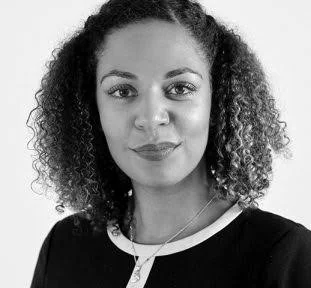
EP. 2
Nazarene Shah & Rachel Bale
Joint founders, HerBar
HerBar: Nazarene Shah & Rachel Bale on Building a Platform for Women at the Bar
Nazarene Shah and Rachel Bale are barristers and joint founders of HerBar — the multi-purpose platform supporting the careers of female barristers from pupillage to silk. They cover how HerBar started, the mock interview scheme that has helped 35 mentees into pupillage in its first year, and where they want to take it next.
Nazarene Shah and Rachel Bale were both COVID pupils who started at the bar in 2020 and 2021 respectively. They met at bar school, found themselves navigating a fragmented landscape of women's groups and support networks with no single platform connecting them, and built HerBar to fill that gap. This episode was recorded in March 2024 during International Women's Week, when HerBar had been running for around two and a half years.
The episode covers three areas in depth. First, the genesis of HerBar — what Nazarene and Rachel found missing when they arrived at the bar during COVID, why a platform that tracks the full trajectory of a woman barrister's career from entry to silk did not exist, and how they built one from an Excel spreadsheet schematic to a platform noticed by the Bar Council at launch. Second, what HerBar actually does — the flagship Hobbs membership event, the motherhood brunch, the junior barrister webinar that attracted over a hundred sign-ups, and the Judicial Office collaborative event that drew 150 women. Third, the mock interview scheme — the most substantive part of the episode — which in its first year saw 35 HerBar mentees secure pupillage and has been growing every year since.
It took me three years to get pupillage. It's a horrible process. It can really affect your confidence. And so that was a real key scheme close to both Nazarene and my heart, to try and promote kinship and community at the bar.
Rachel Bale, Barrister, 3BB & Co-founder, HerBar
The episode closes on HerBar's big hairy audacious goals — a thousand active subscribers, an annual conference bringing all women's organisations at the bar together, and expanding the platform beyond England and Wales to Northern Ireland, Scotland and Ireland. Nazarene makes a point worth noting: HerBar was not built to replace or compete with existing women's groups, but to surface and amplify what they are already doing. The platform is the connective tissue, not another silo.
Share this episode
In this episode
- Nazarene's background — from Luxembourg, international charity work across different continents, grassroots legal advice work with women in the UK, then the bar course and a criminal, regulatory and family practice.
- Rachel's background — state school, Legally Blonde at 14, years of self-directed work experience because no one in her network was a barrister, a year in Paris studying French law, bar school and tenancy in 2021.
- COVID pupillage — what it was like to start at the bar remotely, why Rachel's year had virtually no court time, and how that experience sat alongside the disproportionate impact COVID was having on women barristers.
- The gap HerBar fills — why the existing women's groups and platforms were fragmented, practice-area specific or locality specific, and why there was no single place tracking the full career arc of a woman barrister from entry to silk.
- Building HerBar from scratch — a schematic on paper, talented family members who built it digitally, the early blog posts from a junior clerk and a pupil who had just got tenancy, and the Bar Council noticing it at launch.
- The events programme — the biannual Hobbs membership event at Covent Garden, the motherhood brunch for women taking or returning from career breaks, and the junior barrister webinar that drew over a hundred sign-ups.
- The mock interview scheme — how it works, who volunteers, why Rachel interviews every year herself, the 35 mentees who secured pupillage in the first year, and why the scheme sits close to both founders' hearts.
- Men in HerBar — why the platform is universal, how male barristers have been allies and interviewers in the mock scheme, and why having different perspectives is part of what makes the scheme work.
- Running a business alongside practice — the time management discipline both founders describe, the communication that holds the co-founder relationship together, and the moments when talking about a new event is what gets them going again.
- The big goals — a thousand active subscribers, an annual conference bringing all women's groups at the bar together in person, and expanding to Northern Ireland, Scotland and Ireland.
- HerBar as connective tissue — Nazarene's point that the platform was never built to compete with existing women's groups but to surface and amplify what they are already doing.
From this episode
The mock interview scheme is the most substantive achievement HerBar describes in this episode, and the numbers are worth sitting with. Thirty-five mentees securing pupillage in the first year of the scheme is not a small number at a bar where pupillage is fiercely competitive and most applicants make multiple attempts over several years. The scheme asks volunteers for an hour of their time to interview three applicants. It provides a questionnaire and marking guidance. It is entirely free and entirely volunteer-run. Rachel's account of why it matters is direct: the scheme gives applicants what is often their first and only practice run at a pupillage interview, with detailed feedback afterwards. For many of those applicants, the bar was not a world they had grown up expecting to enter. The practice and the feedback changed the odds.
Nazarene's framing of what HerBar is not is equally important. The platform was not built to be another silo, and both founders were explicit from the beginning that they were not trying to replace or compete with existing women's groups at the bar. The value proposition is aggregation — one place where all the groups, resources and routes are visible, whatever stage you are at. That is a harder problem to solve than building another event series, and it is the problem HerBar has spent three years working on.
The BSB requires chambers to have documented equality and diversity policies and to demonstrate fair and open recruitment for pupillage.
Briefed's Equality and Diversity Training for the Bar gives chambers the structured content and documentation to meet their BSB obligations — the compliance foundation that underpins the culture HerBar is trying to build across the profession. Fair Recruitment Training for the Bar covers the specific obligations around pupillage recruitment, bias in selection and the documentation chambers need to demonstrate fair process — directly relevant to the access and entry themes at the heart of this episode.
About the guests
Nazarene Shah
Barrister, Great James Street Chambers & Co-founder, HerBar
Nazarene Shah is a barrister at Great James Street Chambers with a multidisciplinary practice in criminal law, regulatory work and family law. Originally from Luxembourg, she worked as a legal advisor for a charity before completing the bar course and being called in 2020. She is co-founder of HerBar alongside Rachel Bale and leads on the platform's international reach and partnerships strategy.
Rachel Bale
Barrister, 3BB & Co-founder, HerBar
Rachel Bale is a barrister at 3BB who was called in 2021. She studied law and French law at university, spent a year in Paris, and completed bar school before securing pupillage after three years of applications. She is co-founder of HerBar and leads on the mock interview scheme, membership growth and events programme. She interviews in the mock scheme every year.
Transcript
Orlagh Kelly: Welcome to the Get Briefed Podcast. I'm very excited to have our two guests today. Two special guests — Nazarene Shah and Rachel Bale, both barristers. Nazarene working out of Great James Street Chambers and Rachel out of 3BB. But most excitingly, they are the joint founders of HerBar, which is a multi-purpose platform designed to follow and support the trajectory of female barristers and their careers. So we want to find out a little bit more about your careers, ladies, and your thoughts and vision for HerBar. So Nazarene, kicking off with you, can you tell us a little bit about your background and how you got started in the legal industry?
Nazarene Shah: Sure, of course. Well, perhaps it starts from way back when. So I'm from Luxembourg originally. So my background is a bit more international. I did a lot of international work, primarily in the charity field, across different continents. And I found that very rewarding. So when I effectively came back to the UK, I started doing a lot of work with women and I was a legal advisor for a charity and I ran their criminal department effectively and did a lot of grassroots work. So I spent a number of years really at grassroots level applying the law to day-to-day instances and day-to-day lives and also seeing how they interact with local government policy. So that was really my start into the legal field until I did a bar course and ended up being a barrister.
Orlagh Kelly: And how long have you been practising now?
Nazarene Shah: It's been four years.
Orlagh Kelly: Four years. Very good. And is there a specific area that you practise in that you specialise?
Nazarene Shah: Yeah, so I have a multidisciplinary practice. My primary practice is in criminal law. However, I also do regulatory and family law. So it's quite interlinked.
Orlagh Kelly: Very good. Well done. And Rachel, what about yourself? How did you get started?
Rachel Bale: Hi, thank you so much, Orlagh. So my background, I suppose, is a little bit less exciting than Nazarene's. I studied at state school in the UK. And essentially my first glimpse into what a barrister would be was Legally Blonde, the film, which is my favourite film ever. And I was about 14 at the time when I watched it and I decided there and then that is it, I'm going to become a lawyer. And just essentially did everything that I could to get experience. It wasn't very well known where I was from. So I had to kind of go and look and speak to people, then, you know, make different contacts. And essentially just got all the work experience. I used to go to court, dress in a suit, just try and speak to judges — did, you know, just the bare bones way of just trying to get legal experience. And then I had quite a straightforward route studying law and French law at university, had a year in Paris, which was extremely exciting, but taught me that I don't want to be a French barrister. It's a very different system and I much prefer the common law system. And then I studied at bar school and became a barrister in 2021.
Orlagh Kelly: Okay. And so 2021 — that strikes me that you were maybe doing pupillage around a time when we were dealing with COVID restrictions, which I'm guessing had some impact on your ability to do pupillage and or have the same experience as maybe some people had pre-2020. Did that have any impact on your pupillage?
Rachel Bale: Yeah, so I started in October 2021. So kind of the tail end of COVID. So my pupillage was slightly better, I think, than the one before me, because I think they basically got absolutely no court time. But even then, even 2021, it was all remote. I think I was with my supervisor in court about three times. A lot of the cases were on remote. A lot of the cases were a bit quicker as well, because you know, it was just the case management style was very different then. And it was a different experience altogether. I am grateful that at least people were going into chambers at the time that I started because I think it must have just been so difficult. And maybe Nazarene has a bit more experience of it. And especially as a pupil trying to learn when you're kind of behind a computer screen, it is difficult. So yeah, I'm much happier now that we're back in person and COVID seems to be a bit of a distant memory.
Orlagh Kelly: Yes, here's hoping. And so, with both of you at somewhat at the junior end of the bar — four years called, or maybe slightly less in your case, Rachel — talk to me about HerBar and where the sort of genesis for the idea for HerBar came.
Rachel Bale: Okay, I'll happily answer this one. So the brainchild started in around 2020. Nazarene and I were very keen to do things, keep abreast of information. Everyone was at home, so it was just a case of, you know, keeping up to date with what was going on, the webinars and anything on LinkedIn that was being talked about. At that time, I actually got the news of my pupillage in 2020, so I was obviously very attuned to wanting to pick up my knowledge at the bar.
And essentially, what we were finding — and kind of the buzzword and the situation — was that women, specifically women barristers and women practitioners, were being disproportionately affected by COVID. So situations such as the court times were being elongated, court hours to make people sit beyond six o'clock sometimes — that was affecting their childcare issues. And women were just getting really fed up with it.
And I think that kind of sparked a conversation between the two of us in terms of what is out there for women barristers, what is the support. We're about to embark on this quite scary career, traditionally male-dominated, traditionally quite difficult to break into. And we're just trying to work out what kind of support and community there is. Now we were finding that there were groups, there were podcasts, there were, you know, women in family law, and we have criminal bar, women in criminal law. But there wasn't a cohesive platform where you could see all of the different things available or all the different resources. And I think that kind of sparked the genesis of where we thought HerBar could fit in.
Orlagh Kelly: Excellent. And Nazarene, what were your thoughts around this? Anything in addition to what Rachel has indicated?
Nazarene Shah: I think Rachel is absolutely spot on because ultimately we did the bar course together. So effectively we are the same call and I was a COVID pupil in 2020. So it was very much a very different arena to step into than what was, I suppose, promised from the initial application process. And we just had very different ideas of what our practices were going to look like, because we don't have the same interests in practice areas — we do overlap in some things such as family law, but generally speaking we don't have much overlap professionally. So we had a lot of discussions about it. And to Rachel's point as well, whilst there's a lot of groups out there and a lot of them do very good work and they do lots of events and they try to be accessible, for me personally when I started at the bar I found it really difficult to connect with people or get access to those groups. And even if I attended events, it almost seemed a bit like a cocoon. They were cocooning each other. You couldn't really get in unless you knew someone. And I don't think that's on the basis of being malicious or having any bad intent. I think especially when you're a more introverted person, it can be quite difficult to go into a new space and just communicate and speak to everyone present. So I think on that basis we just discussed what would be a great idea — to have all of these organisations form part of one big network so they can highlight their own achievements, what they stand for, and the one niche they perhaps are most effective in, and cater it to a broader audience. And we found there was no one platform where anyone could go to and effectively just find everything they wanted. You really had to do targeted searches and that's why we decided to design HerBar.
Rachel Bale: Sorry. I just wanted to add on that as well, because I think that's making a really good point. When you're doing these targeted searches, it tends to be kind of practice-area specific or potentially locality specific — the northern bar perhaps or the southern bar. And what I think is quite unique about HerBar is we kind of track the trajectory of a woman barrister's career from the point of entry all the way up to progression to silk, becoming a judge, becoming an author, becoming an academic. And I think that's quite a unique aspect that we bring in — that everyone is welcome and there is something for everyone. And that's why it's a huge challenge. And we find that quite difficult at times trying to target to all the different areas that we want to. But that is the aim — to provide this kind of one-stop shop, whatever stage that you're at, to find the resources that are available for you.
Orlagh Kelly: And so on a very practical level, talk me through how it got started. What was the first thing that you did? Was it an event? Was it a blog? What, you know — where does someone who typically works as a barrister but might have an idea for a different project or a side hustle — give some detail about how you started, just to give an idea to the audience.
Nazarene Shah: Well, maybe if I take that one, Rachel, if you don't mind. So effectively what happened is we were having all of these discussions and I think by springtime 2021, we had sat down and I had drawn up a schematic of what I would like a website to look like. I'm very fortunate that I have very talented family members as well who helped us out to picture it in a digital space because Rachel and I both have skills that very much complement each other. And that is why I think HerBar from its inception had immediately a reach. It still has a lot of ways to grow, but because we are very different people who work very well together, it's kind of naturally growing into this platform that has all of these different elements to it and it just became noticeable. And what was really impactful I believe is when the website first launched as well, other stakeholders — important stakeholders — including our own Bar Council, noticed it.
So it wasn't like we were doing something small or in isolation, but we actively made sure that we already had a presence when we became the platform that is continuously now still growing into what it hopefully will be in a few years' time.
Rachel Bale: I think the first — I mean, we had so many ideas, so it is very difficult to go back and work out what the first point is, but I think we first wanted to focus on blog posts and to try to get information from different areas. So we asked a junior clerk to provide a blog post, we asked a pupil barrister who had just got tenancy, and kind of just providing those glimpses of what it's like day to day, what it's like to manage your finances, those kind of information first. And then it's now grown over time — we've been running about two and a half years. It's now grown into events, both remote and in person. And I think that's where we really get to connect with our membership. We're growing our membership. We're growing our target base as well. And that's where I think we're hoping to grow into the bigger space.
Orlagh Kelly: And I've certainly been following some of the events that you've done recently and they sound interesting. So can you recap for the audience the type of events that you typically run?
Rachel Bale: Yeah, absolutely. So as I say, we do both remote and in-person. Our main flagship event, I suppose, that we do — we've been doing it biannually for the last couple of years — is our fantastic VIP Hobbs membership event. So that's at the moment exclusively for HerBar members. Nazarene has a fantastic partnership with the head of Hobbs in the London Covent Garden flagship store. They rent out for us for the evening. We provide champagne, snacks, an aperitif. And basically it's a way to network, present HerBar and what we do, connect different members together from all different disciplines, and also very importantly, juniors and KCs together. And then also have a bit of shopping time with a fantastic discount of 20%. So it's a really, really successful event. We really enjoyed that. Some other events that we do — we tend to target different areas as well. So we've done a motherhood brunch, more like a breakfast than a brunch. It was a very early morning. And essentially it's about women who are about to take a career break or have just returned, and it's about the support that's at the bar and how we can share tips and guidance for that. And then we've also just recently done, as of last week, a webinar on everything you need to know as a junior barrister. So we had a really fantastic panel event of financial advisors, mortgage advisors, we've had actual barristers who've just recently surpassed the five-year mark, for example, giving their tips and guidance. And it was just a really cohesive, very well attended — I think we had over a hundred sign-ups in the end who attended to get that knowledge and get that information. So we really do a whole range of different things as and when time permits.
Orlagh Kelly: And so, I mean, just thinking about the variety of things that you're doing there, it's so clear that you're thinking very specifically about how to cater to the requirements that females particularly have — either the interests that they have, the places they'd like to network and enjoy an event, the issues that are coming up around taking the career break, around motherhood. I can certainly say at any stage in my career — you know, I've been called twenty-two years and practised for twelve — there are different points in time where you need different levels of support and information, and being able to tap into a network at that time would have been extremely valuable. So I mean straight away I can see the benefit of what you're doing for the wider bar. And I mean, that piece that you talk about — where last week you had everything that you need to know as a junior barrister — I mean, how valuable is that in an effort, you know, 100 people signing up is a significant amount of people from the bar to start to understand more. And well done, I think that would have been very useful when I was much more junior. So that's great. Do you have anything coming up in the next month or two that might be interesting for the audience?
Nazarene Shah: Well, we are presently planning an additional event which is supposed to blend the more senior members of the bar with the more medium-level practising barristers. But we're keeping tight-lipped on that one. But just to give you a little glimpse — also to tie into what Rachel has just outlined — we also do make a conscious effort. We've hosted a previous event alongside the Judicial Office as well, and that had a huge traction. We had 150 women sign up for that as well. So I think we are focusing — the next limb since we've just had an all-encompassing event for the more junior bar — to cater in a similar fashion to the practising mid-level barristers to the more senior end, to make sure that they come into the fold as well and have that level of support from our platform.
Orlagh Kelly: Absolutely. And so you heard it here first — it's going to be an exciting new event that not much detail can be revealed. But I do think — you know, what everybody through their career goes through different stages. So yes, it'll be interesting to hear in due course what the exciting event for the more senior female members might be. And so the question that strikes me then is — it's wonderful to have focus and support for female barristers, and absolutely so important. Is there a role that men play in this? Our male barrister counterparts, or the male clerks, or the heads of chambers? Is there anything — are they completely excluded or is there a way for them to provide allyship essentially?
Nazarene Shah: No, they're not completely excluded. And I must say they've been very, very helpful and very engaging when it comes to our mock interview scheme, for instance. A lot of them are allies. And I think HerBar also again provides a unique platform in the sense that they feel like they can engage with us and impart their knowledge and experience upon young women entering the bar and being supportive throughout and provide that mentorship. Whereas perhaps usually organisations that are women-focused have more of a narrow perspective — for good reasons, oftentimes — but that was not the aim of HerBar. So because we are a universal platform, of course, men can access the information as well that you see on the platform day to day.
However, our core membership is of course geared towards women, and women are the main beneficiaries, as it were, from those membership benefits. However, men have been nothing but supportive towards HerBar. And it also shows in our rates in terms of pupillage interviews. We had our first year into our mock interview scheme — 35 HerBar mentees attained pupillage, which is not an insignificant number at a bar here in England and Wales. And that number has been steadily rising. So there is definitely value in having different perspectives and also different backgrounds. And it doesn't really at that point matter if you're a man or a woman, as long as you're willing to impart that information and knowledge.
Orlagh Kelly: And so tell me a little bit more about your mentoring scheme, because having 35 mentees that move on and get pupillage in one year is a significant milestone. Congratulations. You can see that you're doing great work. And so can you tell me a little bit more about that scheme and why you set that up?
Rachel Bale: Yeah, it's possibly one of our most successful schemes that we run year on year. It also brings a lot of traction and a lot of new blood — new subscribers to HerBar. So we run it normally towards the end of the year, November time, up until around February, March. And the aim is that we have our fantastic volunteers — we just couldn't do this without them — all practising barristers, some solicitors as well, who have signed up. And they offer an hour of their time essentially to interview three applicants, at a time that's convenient for them. They either do it all in one go or they do it separately on different days. They're all done remotely. We provide the questionnaire and some kind of guidance of the criteria that you should be looking for in your marking. But it is really informal, and the whole point is to give that applicant the chance — probably their first ever chance and possibly their only ever practice of a pupillage interview, or even a scholarship interview as well. They get that full 20 minutes to show themselves and to practise. And then we give them really detailed feedback. And I have to say, I also interview every year and I think it's so important to do that — to inform your own practice, inform your own skills of what you're looking for. And I mean some of the outcomes I see are so fantastic and, you know, much, much better than I ever was when I first started out. And some just need that extra bit of support. And I think that's the real key — it's all free time, it's all volunteer, but we're here to help and we're here to try to support each other. And because we know how difficult it is — it took me three years to get pupillage, it's a horrible process, it can really affect your confidence — and so that was a real key scheme close to both Nazarene and my heart, to try and promote kinship and community at the bar.
Orlagh Kelly: Yeah, and that's working really well. And so thinking about where you are now, compared to where you started, what would you say your key successes have been if you could list one or two?
And you're allowed to talk about success. It's International Women's Week.
Rachel Bale: Okay.
Nazarene Shah: Well, I think obviously one key success is getting all of the positive feedback from the women who've actually made an entry into the bar. I think it's very rewarding to say — it's always difficult to say "the next generation" because obviously it's one of those professions where we don't necessarily come into it by virtue of our age. Some people are from different cross-sections of life. But I think that is one of the key successes — how many women we feel we've been able to support through not only ourselves but our mentors and interviewers. And also I suppose on a personal level, it's quite nice to occasionally be recognised by our peers for the work we've done with HerBar and as individuals. Because as we've briefly said, it does take a lot of energy to run a company when you have a busy practice as well. And so occasionally just being told "job well done" is always a nice thing and keeps us going. Because at the end of the day, you know, we're human as well. And just having positive affirmation and getting HerBar on the wider map out there is really what, for me, would count as a big success.
Orlagh Kelly: Rachel, what about you? What have your successes been?
Rachel Bale: Well, yeah, I highly echo what Nazarene's saying. And I think it really is seeing the difference that we make in those people's interviews. Or, you know — when we had that Judicial Office collaborative event, we had people say, actually I got a judicial appointment this year and I've been trying for three years and it was your event that helped. So those kind of feedback moments. But also we are a limited company as well. I don't — this is probably something that's missed. So, you know, we do have a financial aspect here and it is our own time but our own money that we have put in at least initially. And I think a success is breaking even and making sure that we are a functioning business. And growth — I think, you know, we've been going now, as I say, two and a half coming up three years — and each and every year we're growing: growing subscriptions, growing our base, growing our events. And people are now coming to us. Big companies are coming to us and big organisations at the bar and saying, we'd like to partner with you and we'd like to do something together. And it's not us chasing them this time. So I think that's validation. Yeah.
Orlagh Kelly: Of course — I mean, I'm a big fan of understanding that you need to run a successful business and on occasion that just means that you have to make money. And that's what success is in business. So the fact that you've been able to do that alongside running your practices, which are also businesses, and I know they're very successful, I think that's wonderful. So what we've got — and really what I've got the privilege of talking to today — are some very successful female entrepreneurs who happen to operate in the industry at the bar.
And so looking towards the future, can you see where in five years you would want HerBar to sit? What are your big hairy audacious goals as they're described? And if we think about what those are, we can manifest and help you get there.
Rachel Bale: Well, I think yeah, I think for me I have two in the back of my mind. One — I'll share the number with you. A number of subscribers that I would like actively to be engaged with HerBar. I want a thousand subscribers, which sounds like a lot, but actually when you look at the balance of women at the bar — I think we have something around 9,000 women at the bar and it grows and it dips. And we have issues with women leaving after five years call constantly. But if we can capture a good market of that and have a regular base, a regular community where they are day in, day out engaging with HerBar, I think that would be really, really powerful. And the second goal that I have — and I'm not quite sure exactly how this would form — but I would love to do some sort of annual event, almost like a conference-style event every year, where we collaboratively work with the women's groups that are already existing. And it is just a fantastic day of celebration of women at the bar where we can all come together. And I would advocate in person because I think we're all sick of Teams and Zoom by now. And just have a really powerful event celebrating and also tackling some key issues that are still existing. And I think that would be a fantastic achievement for HerBar to run something like that.
Orlagh Kelly: Yeah, it sounds wonderful. I would go to that. I would go to that conference. I think you don't wait five years — get that started now. Nazarene, what about yourself? Any kind of key audacious goals that you would have over the next five years?
Nazarene Shah: Well, I think first of all, I would agree with Rachel on the conference aspect. I think one of the biggest misconceptions that we had to fight against with HerBar at the beginning was that we were going to usurp other women's organisations' space, whereas we always had to explain that actually our intention is to highlight you and put you on the forefront. We're just the platform that helps you spread the word even further in terms of what you're already doing. So I do agree — a big conference where you'd have everyone that you wanted, have different panels, you know, target the specific things that we do in small events like we've just run for the junior bar, but with a wider audience — would be really a key focus going forward. But also in terms of the company, I think I would like to see this company grow a bigger team, become more of a self-sufficient company that has the reach that is wider than just England and Wales, especially because we have links to all of our other four jurisdictions totally in the United Kingdom and beyond. So I do think it would be beneficial if HerBar could become a platform that not only unifies the organisations at the bar here, but also looks towards Ireland, Northern Ireland, Scotland — primarily as our neighbours — to see what we can do to make things better there and provide that access. Because those are very different bars and they work in a very different way. And perhaps sometimes, personally from experience, I would say even in a more difficult way to get into than the England and Wales bar. And anyone who's tried to become a barrister will probably say, you know, it's a very difficult thing to achieve, and you must really have the drive and the passion to get in there. So I think that is one of the key points for me — to expand not only on our reach domestically, but take it a bit further than that, because I think HerBar definitely has the potential to do that.
Orlagh Kelly: And of course, currently in both Northern Ireland and the Republic of Ireland, there are two wonderful female KCs that are chairs of the bar. So now might be a good time to tap into that. And you're correct. I mean, obviously I was at the bar in Northern Ireland, and the key difference, I guess I would say, is that you don't have the benefit of a clerking team or of chambers. And that I think intrinsically makes it a very different experience. And so where you're starting your own business as a barrister without anyone to help you do that — such as, you know, an experienced clerk — that brings its own challenges. So it would be interesting to understand how, of course, HerBar could then reach further and support female barristers throughout the UK and Ireland. That would be very exciting. And I'm sure it'll not take you five years to do that. And so a final question for me, I guess, is how do you find the time and the energy to run two businesses in parallel so successfully. And do you have any tips for anyone else thinking about it?
Rachel Bale: Okay. It isn't easy. I think that's the first thing — is accepting that there is going to be stress. There are going to be times where you just feel stretched. I think I have three key tips or skills, I suppose, that I try to deploy as we've grown this. So one is time management. You have to block out time. I try to do at least half a day, if not a day a week, towards HerBar. Now, of course, that can wane when you have a four-day trial that you just can't seem to get out of or seem to have the time to prep. But then that leads me into my second point, which is the teamwork element. So there have been distinct times where Nazarene just hasn't been available or I just haven't been available for a block of time. And we're very communicative with each other and say, can you just pick up these emails, or could you just deal with this for me? And so it really is about communication and just sharing. And I think thirdly, it's just about having that passion and drive. I find sometimes you can lose a little bit of motivation when you're getting bogged down in the bureaucratic emails and the management side. So that's when I think, okay, let's have a Teams meeting, let's talk about a new event that we should be doing, because that's the stuff that really gets us excited and gets us going again. And you know, it is difficult, but it is such a beautifully balanced business because it works so well with our practice. I'm constantly in robing rooms, giving out business cards for HerBar and talking to women and you know, recruiting them into the community and into the group, and just constantly a walking advertisement for HerBar as well as practising barristers. So they do complement very, very well, I would say.
Orlagh Kelly: Nazarene, what about you?
Nazarene Shah: Yeah, no, I agree with all of the points that Rachel has mentioned. Perhaps to expand a little on it as well, I think my advice would be — if you want to start a business, obviously an idea is always a good starting point, but really map out how it would work in practice, because it takes a lot of navigating to find out what will work in the market. You have to have market analysis and actually establish what is missing or how you could add something to an existing market. If you don't do that, you really risk not getting very far because the amount of time and effort you will have to put into the beginning stages is really key. And for our venture, I think the main thing that was key for me is I am very aware of my skills and I was very conscious that I needed a partner who could balance my skill set, especially with what I had planned for myself in my own career as a barrister. It would not work with someone who did not have the equal drive and the ability to push me in ways that I would not push myself for certain aspects. So I think that's where we complement each other. And that's what makes it a little easier — is not doing it by yourself, but always having someone to rely on. And I think lastly, I mean, you just need to accept that you are going to be tired.
Time management, as Rachel says, you just have to try your best. There needs to be some level of consistency, of course, because you can't just go MIA for weeks on end. But again, that's where it helps to have at least two people dealing with the core aspects of a company. But you just also need to accept that there will be drawbacks, you know — you can't assume that everything's just going to fall into place. You have to time manage and you have to accept that sometimes you'll be working on a weekend because that's just the way it is. But that doesn't mean — as we've discussed previously — that the benefits and what we derive from it does really help us. And you know, personally, it satisfies me to see what the outcome is of what we do. So as long as I feel like we have that satisfaction in terms of we're doing something that is beneficial not only to us but the community we work in, then I think that's already a good baseline of success and growth.
Orlagh Kelly: And certainly it's clear to me that the success that you have in terms of helping other people has given you a lot of energy to keep driving you forward, even in those times where, you know, obviously there's a lot of pressure on your time from many different ways. And it's wonderful, I have to say, to see such a cohesive and stable and energetic pair of female co-founders. I think that's wonderful. There aren't a lot of female co-founded businesses, so well done, particularly with your success. And I have to say I look forward to seeing what events are coming up and what more you're going to do. It's obviously going to be a business with a significant amount of longevity and make incredible change at the bar. Is there anything — if you get to speak to our audience — is there anything that they can do to help you? Any kind of ask that you might have where people could help HerBar move forward?
Rachel Bale: Yeah, stay in tune with us. So we have a very big presence on LinkedIn, X — I keep saying Twitter — and YouTube. We're having another YouTube channel. As well as of course our website, www.herbar.co.uk. Also we're always looking for blog submissions, we're always looking for people to actually contribute in terms of an aspect of their practice that they find really interesting. And just to contribute in that way and just share the word and come to events. You know, if you're curious about us, just log in. We do a lot of remote events. You know, Nazarene and I are based in very different cities. So we do try and keep it quite regional and try and get that access as well. So there will be something for you. Just stay in touch, get involved and we look forward to welcoming you to the HerBar community.
Orlagh Kelly: We will list all of the different ways that they can follow or connect with you on the podcast so that that can be done easily. Well thank you so much for your time. I know that you both have work to go to, court to be in today. And so I'll not take up any more of your time. It's been lovely. And I look forward to coming back in about a year and seeing what else you've done — and probably having achieved your big goals by then and having to set even bigger goals. And I'll see you both soon.
Rachel Bale: Orlagh, can I just say a huge thank you to you and Briefed for allowing us to come. It's great to be speaking to another female-owned company as well. And again, this is just talking to community and supporting each other.
Orlagh Kelly: Thank you. You're so welcome. I will chat to you soon. All the best.
Listen and subscribe
New episodes published monthly.
You're subscribed. New episodes monthly.
No spam. Unsubscribe any time.