
EP. 18
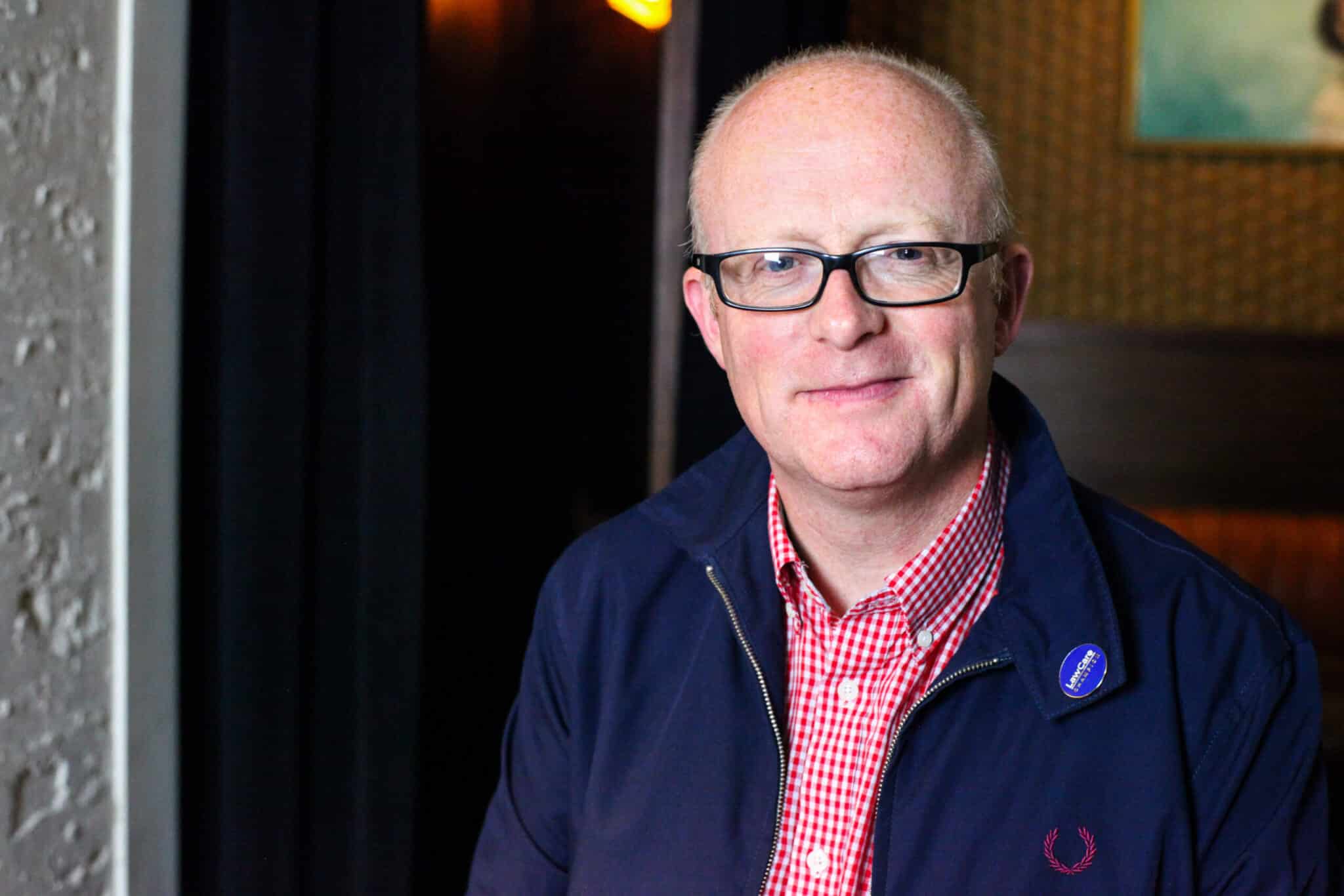
Nicholas O'Neill
Chambers Director, Oriel Chambers
From Litigator to Men's Mental Health Champion: Nicholas O'Neill on Leadership and Wellbeing at the Bar
Nicholas O'Neill is Chambers Director at Oriel Chambers, Liverpool, and a LawCare Champion. He covers his personal journey with mental health, the men's wellbeing group he founded in Liverpool, imposter syndrome in the legal profession, and how the conversation is changing from the bottom up.
Nicholas O'Neill is Chambers Director at Oriel Chambers in Liverpool — now part of Hundred Court Chambers following a 2025 merger with Atlantic Chambers. He spent 20 years as a civil litigator and partner before completing his MBA at Nottingham Trent University and moving into full-time practice management in 2010. He managed three private sector law firms and spent five years as Legal Governance and Practice Manager at Wirral Borough Council before joining Oriel in January 2021. He has been a LawCare support worker since 2010, is a LawCare Champion, and co-founded the Liverpool Legal Men's Wellbeing Group in January 2024.
Nick opens with what makes managing barristers different from managing lawyers in a firm — the move from telling to asking, the challenge of aligning self-employed individuals around a shared strategy, and how Oriel built relationships with four Liverpool city region universities to embed the chambers in its community. He then traces his own mental health journey, beginning with difficulties in his 20s as a young solicitor, the Adlerian psychotherapy training that followed, and the moment he saw a LawCare advert for volunteers and applied. The episode then focuses on the men's wellbeing group: why it needed to be men-only, how it was set up by copying the model used in Scotland, what it covers each month, and how to start something similar in any city.
Ironically, people who don't have imposter syndrome are usually the ones who are the imposter. The ones who have imposter syndrome tend to be quite high achievers, have quite high targets and expectations for themselves — and that plays into their behaviour.
Nicholas O'Neill, Chambers Director, Oriel Chambers
Nick also addresses the generational shift in how mental health is discussed at the bar — the junior barristers now comfortable enough to raise it in practice development meetings, and what that transparency does for clerks and directors who can then actually help. He closes with practical steps for anyone who wants to set up a wellbeing group: contact the local law society, set up an email address, advertise on LinkedIn, engage the Junior Lawyers Division, and look at the LawCare guide to creating a wellbeing group. If you want to get in touch with Nick directly, he can be found on LinkedIn.
Share this episode
In this episode
- What makes managing barristers different from managing lawyers in a law firm — the shift from telling to asking, and why selling a project as advantageous for the individual is the only way to move a group of self-employed people in the same direction.
- How Oriel built a strategy around cultural and operational development, involving virtually every barrister in the chambers, and created relationships with four Liverpool city region universities.
- Nick's own mental health journey — difficulties in his 20s as a young solicitor, training in Adlerian psychotherapy, and becoming a LawCare support worker in 2010 after seeing an advert for volunteers.
- LawCare's history — from its earlier name SolCare to the expanded remit covering all legal professionals — and what Nick received when he first contacted them as a junior lawyer needing advice on heavy workloads.
- Nick Bloy's role in facilitating a LawCare workshop on men's mental health, and how that workshop led to the Liverpool Legal Men's Wellbeing Group launching in January 2024.
- How the group works: men only, Chatham House rules, a topic set each month — sleep, imposter syndrome, generational differences — with input from the group on what to cover next, and around 20 members drawn from across the profession including solicitors, students, costs draftsmen and barristers at all levels.
- Why mixed-sex mental health forums often result in women dominating the conversation — not because women are doing better, but because they are more naturally comfortable in that space — and why the men-only format produces a markedly different result.
- Imposter syndrome at the bar — a barrister looking around the robing room and thinking they don't belong, the ever-decreasing circle of poor sleep and poor performance, and why the people who have imposter syndrome tend to be the high achievers.
- The generational shift: junior barristers now comfortable enough to raise mental health in practice development meetings, and what that transparency means for the people trying to support them.
- The leadership problem: the tension between a Gen Z junior workforce that expects mental health to be part of the conversation, and a leadership tier still shaped by the stiff upper lip generation — and why the bar's democratic structure gives junior members more leverage than their equivalents in a law firm.
- How to start a men's wellbeing group: contact the local law society, set up an email address, advertise on LinkedIn, engage the Junior Lawyers Division, and consult the LawCare guide to creating a wellbeing group.
From this episode
Nick's account of his own mental health journey is the foundation of everything else in the episode. He is not an advocate for men's mental health because he has studied it — he is an advocate because he has lived it, sought help at a point when the profession offered very little, and found in LawCare something that worked. The men's wellbeing group is a direct extension of that: he saw what was missing, copied a model that existed in Scotland, and built something in Liverpool. The group works, he says, because the format is right. Men in a room with other men, Chatham House rules, a topic they chose themselves. Simple.
The most useful point in the episode for chambers and firms is the one about junior barristers. The generation coming through now will say, in a practice development meeting, that they are struggling. They will name it. That is not a problem to manage — it is information that makes everyone's job easier. Nick's argument is that the profession should stop treating transparency about mental health as a complication and start treating it as the thing that makes good management possible.
Chambers have a duty of care around mental health that goes beyond signposting — it requires training and a culture where people feel able to speak up.
Briefed produces two courses relevant to this episode. Mental Health Awareness for the Bar is designed for barristers, clerks and chambers staff who want to understand how mental health problems present in the workplace and how to respond. Managing Stress at the Bar covers anxiety, imposter syndrome, workload management and the practical tools available — drawn from the real pressures of practice at the bar.
About the guest
Nicholas O'Neill
Chambers Director, Oriel Chambers (now Hundred Court Chambers)
Nicholas O'Neill spent 20 years as a civil litigator and partner before completing his MBA at Nottingham Trent University and moving into full-time practice management in 2010. He managed three private sector law firms and spent five years as Legal Governance and Practice Manager at Wirral Borough Council before joining Oriel Chambers in Liverpool as Chambers Director in January 2021. Oriel Chambers merged with Atlantic Chambers in 2025 to form Hundred Court Chambers, one of the largest sets on the Northern Circuit. Nick has been a LawCare support worker since 2010, is a LawCare Champion and speaker, and co-founded the Liverpool Legal Men's Wellbeing Group in January 2024. He holds an ILM Level 5 Certificate in Effective Coaching and Mentoring from the British School of Coaching.
Transcript
Orlagh Kelly: Welcome to the Get Briefed podcast. Thank you, Nick O'Neill, for attending and giving up your time. We've lots of stuff that we want to talk about today. You have a very particular background and very particular interest, particularly in supporting men's mental health within the legal profession, and you've taken steps not only being candid about your own journey, but also supporting and creating safe spaces essentially for others that want to have support. So let's get started.
Nicholas O'Neill: Okay.
Orlagh Kelly: Okay, so where are you sitting today? I'm looking at a background there — which part of the UK?
Nicholas O'Neill: Sitting in sunny Liverpool, in chambers. So I am in chambers five days a week and I like being in chambers. I like being close to the staff — we have all of the clerks on site five days a week, there's no remote working. They actually like being together to support each other and I think it works really well.
We've got two barristers in today, which is — I wouldn't say average — sometimes it's normally two or three coming and going. And post-COVID, the physical attendance of barristers has spectacularly dropped off. But we do lots of other things where we get barristers in to engage with clients, to engage with staff, to engage with each other. So we're trying to find our way around how our set operates in this brave new world.
Orlagh Kelly: Yeah. And I think, you know, every single set of chambers has got the same issue in terms of trying to engage members and make them more readily available on site — some obviously believing that part of the culture of chambers comes from interacting on a personal level. The relationships are built. It's easier for the clerks to clerk their barristers if they can establish and maintain relationships. But in a world where technology has helped greatly create opportunities for people to work without having to do a long commute, of course there are competing requirements. And so what's your decision about wanting to be in five days a week? What personally drives you on that?
Nicholas O'Neill: I find if I'm working at home, I'm not as focused as I am when I'm in the office. I like working in Liverpool. It's a very vibrant city. I like being close to my staff. So I'm tuned in to how they're thinking and how they're operating, and if there are any pinch points with particular barristers or clients or how they're feeling themselves.
It's a lot easier and a lot healthier, I think, to physically be together as a group. And I think it benefits me personally, you know, being sociable with the people I work with. And because I'm in Liverpool city centre and there are lots of clients here and friends and colleagues, you get to interact. I just think it's healthier than being at home. I work at home occasionally if I've got a particular project to work on, a little bit of peace and quiet, or I'm working on the accounts — and well, that side I prefer to be in chambers.
Orlagh Kelly: Yeah, very good. And so tell me a little bit about your career background because of course you're not new to the bar as such, but you didn't join at the age of sixteen, as many of our other guests have.
Nicholas O'Neill: Certainly not. I describe myself as starting as the office cat. I didn't have a particularly good schooling life. I left school halfway through sixth form and got a job at a local law firm as a clerk in the matrimonial department. I was always interested in law.
I did my A levels and started on the legal executive course, but I always wanted to go to university full time. So I went away to university, did law with business, then went to Chester to do the LPC and was in practice for 20 years as a civil litigator in the main. And then I was working as a partner at a medium-sized national practice with offices in the Wirral, Warrington and London. And I was managing teams across our organisation and found myself actually really enjoying the management side of things — and quite a people person. I like operations and strategy. So I spoke to my senior partner, did the MBA and then moved into full-time management about 15 years ago.
Realised that if I was going to grow and learn, I'd have to leave where I was because there was no real scope to develop that particular organisation. So I stayed in the private sector for four years with a couple of law firms and then I moved to the public sector with Wirral Council because I wanted to experience a different sector with a different group of lawyers, culturally and operationally. And then when I was at Wirral, sort of — I ran out of things that I could do with Wirral because with local government you're very constrained financially. So I realised that if I wanted to progress managerially, I needed to move again. And I had a real think, spoke to a coach about where my next step was in my career. And I was really attracted to the bar. I liked the idea of —
A lot of chambers were taking on directors, chief execs, not necessarily having been embedded in the world of the bar for a long time. And so I spoke to a lot of friends and colleagues about opportunities and there was one at Oriel. I knew it was a great set with excellent barristers. I knew it had a lovely culture that was really collegial. I also had the advantage of having relationships with the clerks and a lot of the barristers as a client. So I saw it as a real — and it was ready for change, speaking to the barristers. So it was a real challenge and an opportunity for the set to grow and develop and we're still on that progressive journey. Yeah, so it's good. I'm enjoying it.
Orlagh Kelly: How long are you at Oriel now?
Nicholas O'Neill: Fourth year. Honestly, I have no idea where that time's gone.
Orlagh Kelly: Yeah, right. Well, time flies when you're having fun, I guess. And so —
Nicholas O'Neill: Well, yeah, yeah. We've made a lot of progress in that time. It's good.
Orlagh Kelly: Yeah. And I want to hear about that progress, but the first thing that occurs to me that's interesting is what is the difference between working in a law firm, particularly on a management side, versus working in a chambers?
Nicholas O'Neill: So managing people and processes are the same everywhere you work — managing barristers is completely different as they're all self-employed. So your role, my role as a director is to work with the barristers to build and enhance their various practices. When you're managing in a law firm, you tell people what to do. So you say, you know, on a particular project, you do that, you do that, you do that. Try that at the bar and you'll end up with egg on your face. So you have to realise swiftly, you're moving from telling to asking. It's markedly different and you quickly develop the skills to ensure you get the job done. I definitely had a few initial bumps on the road, but I learned quickly. A few scars.
Orlagh Kelly: Anything. Anything that you can tell us about?
Nicholas O'Neill: Just, yeah, telling people what to do and expecting it to happen. And you can't — what you'd do if you were project managing in the private sector or the public sector, you'd have particular projects that you wanted to happen and you'd have everything time-bound and everything was time-managed with project steps and goals and what have you. And at the bar, you're dealing with all of these self-employed people who are all rowing canoes in completely different directions, have different practices, different time constraints. And to pull them all together on a particular project is really challenging. And I found the way round that is to sell a particular project as advantageous for the individual and for the business — chambers as a whole. And that seems to work quite well.
And to be honest with you, in the main, everyone's engaged with what we're trying to do. We built a strategy three years ago now that was quite focused on developing the set culturally and operationally. And virtually every barrister in the chambers is involved in some capacity in that journey. So it's working.
Orlagh Kelly: Yeah, that's great. And of course, what occurs to me — you know, and for anybody who's listening to us and doesn't necessarily understand the differences between law firms and chambers — when we talk about self-employed, what you're doing when you're asking barristers to contribute to projects for the benefit of the organisation is that that's an extra. That's not their job that they get paid for. In most cases it's a voluntary role that has to somehow sit within a very busy practice and their own personal life as well. And so those people that do — and there's a huge tradition at the bar of contributing a significant amount of personal time and effort and energy to help move chambers forward as a business — is done really out of kindness and out of a feeling of responsibility to the profession and not remunerated. So it is obviously difficult to pull that all together, but a lot of praise has to go to the people that will participate for the wider benefit of chambers.
Nicholas O'Neill: I think if the barristers are proficient in big picture thinking and they see that what they put in, they ultimately will get back. You're working on projects involving clients, involving corporate social responsibility. You picture to them, this is your set. What do you want your set to look like? What do you want to be part of? You're part of an organisation and that works really well. And we've created something with Oriel that we're quite proud of. We've become far more embedded in the community than we ever have been and we have these relationships with four of the city region universities. And what the barristers give, they get back in spades when they're engaging with these young people who are going to be barristers of the future. So it works really well for us.
Orlagh Kelly: Yeah. And so you've talked about the strategy, you've talked about how you've moved forward quite significantly in the past four years. Apart from that embedding into the — I guess seeding the market, as I would describe it — working with the universities directly with the barristers and creating those relationships, what other new initiatives have you done or taken forward in the time that you've been there?
Nicholas O'Neill: I think what I've really done and enjoy is client-facing work, especially post-COVID. A lot of clients are really desperate to have that physical interaction with human beings essentially. So getting out and about and meeting clients — and it works really well for me because I was a solicitor, I get it, especially across the litigation practice area. I get what their needs are and they can communicate quite easily with me because I've worked in that space. I've obviously learned about commercial law, family law especially, and understanding what the clients want. So a lot of client interaction is involved in my role and I really enjoy that. I'm quite happy just going directly to clients and talking to them about their wants. And in the industry at the moment, there's a real want from clients.
So I work out with the barristers what they want their practices to look like, where they can help and service clients. And then I go out and speak to the clients. And obviously, a little bit of a matchmaker really in a lot of respects. But it's working really well and I'm enjoying it.
Orlagh Kelly: Good, good, good, good. And so I know I've had the benefit of you being a great speaker at our leadership conference this year in April, and you have a particular topic that you're passionate about. You've dedicated a lot of your personal time to trying to advocate for men's mental health in the legal profession. Can you tell me a little bit about where this passion has come from?
Nicholas O'Neill: So my own journey started with issues around my own mental health in my 20s. And I sought help from a counsellor. We became close friends and I trained in a branch of psychology called Adlerian Psychotherapy, which is very much based around your own growth as a human being. I could wax lyrical for ages, but it's a fascinating branch.
Came across LawCare — its previous name was SolCare, what it used to be called in the 90s. I needed some advice on some issues that I was having with difficult workloads that I was being presented with. The advice I was given wasn't great. It was basically get a grip and speak to your senior partner.
With all my clients that I have through LawCare now, I certainly wouldn't say that, but ironically it worked and my efforts within that firm were then recognised. I saw an advert for LawCare volunteers and thought I'd really enjoy working with my peers and supporting my peers. So I started taking on two or three clients a year.
And it just rolled on from that, really. I was invited to become a speaker and a champion in 2017, I think. And the men's health work came via a workshop about four years ago with a guy who's very prevalent — an ex-lawyer called Nick Bloy — who's really involved in the industry and some of the solicitors within the profession. The Scottish guys launched their men's wellbeing group two years ago. And we launched ours in January of this year. Going really well. Really exciting.
Orlagh Kelly: Can I just interject — why specifically men's mental health in the legal profession?
Nicholas O'Neill: Well, being a man, first and foremost — I've always known that I was a bit of an anomaly talking about mental health in the profession. My mum was a therapist, so it's a very natural thing to talk about at home. So I understood the importance of mental health in the profession. And I also realised that men often struggle talking and communicating about mental health. I've always been quite open about it. I didn't see it as being particularly detrimental because that just wasn't in my headspace. But I quickly realised that other men who I engaged with did perceive it to be possibly a sign of weakness in the profession and that it could be damaging to their career progression.
So I realised that the conversation needed to be progressed within the profession. And there were a number of us, Nick Bloy being one of them, who were keen to help. So LawCare facilitated a workshop for us a few years ago and it just snowballed from there really. And now we do a hell of a lot of work with men in the profession and it's great, really great.
Orlagh Kelly: You know, just thinking about the audience listening who perhaps haven't had the benefit — particularly the male members of the profession who haven't had the benefit of understanding the work that you're doing — can you give some kind of an idea as to the issues that your male colleagues are presenting through the group, et cetera, that might resonate with others in the profession?
Nicholas O'Neill: Where do I start? Anxiety, stress, imposter syndrome. So what we do — we have particular topics once a month that we talk about. So I'll set the scene. So at end of September, we're talking about sleep. So the conversation about sleep is based around essentially: you become — you can struggle with work, it impacts on your sleep. Then lack of sleep has the knock-on effect with problems with work and it becomes this ever-decreasing circle that people really struggle with. And sleep is so pivotal to our wellbeing. So everyone's quite excited about that. So that's the next one. And we've talked about generations, all kinds of things. And we say to the group, what would you like to talk about? And we've recently had a meeting with our peers in Scotland and understanding where they are, what they're doing, how they approach it. So it's a real collaborative effort by us all and it's really progressing well.
Orlagh Kelly: And when you talk about, for example, anxiety, stress, imposter syndrome — how are those things presenting themselves in someone's day to day life that they're causing issues? What would that typical individual look like at work on any given day?
Nicholas O'Neill: Typically, imposter syndrome, as you know, is something that is prevalent with lawyers. I spoke to a barrister recently who said they were in a robing room and they looked around and just thought, I don't belong here. And there was a myriad of different reasons behind that belief. But it was that sense of, I'm not good enough.
I'm not clever enough. Everyone's better than me. And so you've got those kinds of situations and you've got the situations in a law firm where you're surrounded by all of these people who are, you know, operating at quite a high level or quite intelligent. And if someone is having a particularly tough time — it doesn't have to be to do with work — they can perceive themselves as not performing, so everyone else is performing better than I am. So it's all of these different pinch points that can impact on someone's mental health and wellbeing — and that has a direct result of imposter syndrome. Anxiety presents itself in a myriad of different ways, you know — too much work, too little work — and I've had clients I've spoken to who feel like they're literally drowning and don't know how to address it, how to communicate to their superiors. Because it could possibly — in their mind — be perceived to be a sign of weakness and you fall back into that trap. If I'm weak, I won't be seen as management material. I won't be seen as partnership material. I won't be made an associate.
All of these things begin to spiral out of control. So the profession really has this —
I wouldn't describe it as a culture, but a challenge to address these issues. It's good that we have these spaces where we can talk to each other. I mean, imposter syndrome — everyone shared their own stories and it was really cathartic for everyone to be part of that conversation. Especially — it's not just me feeling like that. I have imposter syndrome regularly at this job and I know a lot of our barristers do. And it's just how you manage those emotions.
Orlagh Kelly: And typically how do you suggest that people manage that type of an emotion or a thought that they're having in the moment?
Nicholas O'Neill: Google imposter syndrome — there's loads of great resources out there. And just talk about it. Talk about it. As soon as you start talking about it, it becomes apparent that you haven't got imposter syndrome. Ironically, people who don't have imposter syndrome are usually the ones who are the imposter. The ones who have imposter syndrome tend to be quite high achievers, have quite high targets and expectations for themselves. And that plays into their behaviour.
Orlagh Kelly: Okay, very good. That's very interesting because of course what I'm thinking is — in dealing with those type of thoughts or drowning with workloads and high levels of anxiety — it just doesn't stop there. I mean, the pathway for anyone in that world, if they don't manage or deal with that, has to be probably moving down a path that's harder to deal with, which might be addiction of some sort or —
Nicholas O'Neill: Absolutely.
Orlagh Kelly: Failures in relationships, because they're not able to manage work and home lives — which has a hugely detrimental effect on them and their family. And, you know, there are obviously instances where it's even more serious than that — people feel that they can't go on. Yeah. And we've had some recent stories of that in the legal profession where people were just really drowning in work. So it's certainly evident that there are catastrophic consequences to not understanding that mental health is very important to look after, but it is historically within the legal profession typically seen as a weakness. And so it's trying to get past that stigma. And I know that you're doing that really successfully with the group that you've set up and the work that you do with LawCare. What are your thoughts on how this could progress on a more profession-wide basis? Is this a leadership issue? Is it going to be something that comes from the ground up with a different generation? What does the future look like for progressing and destigmatising mental health for everyone in the profession?
Nicholas O'Neill: I think the journey that we're on with mental health in the profession at the moment is from the bottom up — that's where the real energy is coming from and the real demand almost for mental health to be part of my contract. So I started out as a young lawyer. I am so embedded in the world of mental health through my generation that I will demand that mental health is part of how I am managed, how my career progresses — work-life balance, mental health issues, I need to be able to talk about it. So that push from the bottom is where we're seeing the real impetus in the mental health conversation.
It tends to be from the top — tends to be, is the leader invested in mental health as part of the conversation? Do they see the benefits of mental health? So it's coming from two directions at the moment. I think if you get the right leader, then you'll be fine. If you don't have the right leader, it just doesn't work. But the real energy I've found recently is coming from the bottom end of the profession. And that will drive it for the future, which is great to see.
Orlagh Kelly: And so just thinking on a very practical level — two thoughts occur. The first one being you're seeing the energy come from the younger end of the profession. What does that look like? Do you have, for example, young barristers talking to their clerks during a practice development meeting and indicating I need help and being very open and honest about that? Is that how it would present itself? And they would feel comfortable doing that?
Nicholas O'Neill: Yeah, we've got a generation of junior barristers who are totally comfortable in talking about their mental health and it's a breath of fresh air for us as clerks and in my role because you know where the issues are, you know what their needs are, you know how to help them and the conversation is so much more transparent.
So as a profession moving forward, if you're having these transparent conversations, the management and the practice development conversations are just so much easier because they're honest.
Orlagh Kelly: Yeah. Okay. And so then what had also occurred to me is that clash — and again I'm describing it as a clash — but you've got people, Gen Z, let's call them if that's the correct term, in their twenties, feeling very comfortable with these conversations and able to expect to be supported. Leadership typically currently in chambers — and you know, the bar is very much a — seniority is the wrong phrase, but you know, it tends to be — your leadership is based on how long you've been called to the bar and consequently is typically related to age. And so let's assume leadership are people that are not necessarily even in their fifties, but they could be in their sixties or seventies. And at that stage, you're — you know, somewhat of a broad brush — suggesting that that's more the stiff upper lip generation. Yeah. So if progress in this area is dependent upon leadership, how do we leapfrog from — so you mean there could be fifty years between someone who's comfortable and at the bottom end and, you know, very junior in their career, and the people that are leading that business. How do you corral the two?
Nicholas O'Neill: Well, the great thing about being at the bar is that you have pretty much an equal voice because as soon as you become a member of a set, it's that democratic dynamic — you have a say in how your set is managed. And if you have a passion for mental health, you'll have an EDI committee and you can go on the EDI committee and say, this is what I want to happen. It's a lot easier at the bar, I think, than it is in the legal profession, say, at a private sector firm where you're at the bottom of the pile in terms of your career path and you want something to happen with mental health. But you've got barrier after barrier after barrier of alpha characters within that firm who are all about commercials, all about the money, not interested in mental health. It just won't happen. So the opportunity at the bar is there because it's a level playing field in terms of passion for particular issues, which is great.
Orlagh Kelly: Yeah, and that's an advantage that really hadn't occurred to me previously — the fact that essentially once you're in — I don't know that all sets of chambers have that democratic thought process, that everyone has an equal voice. I maybe would push back — I feel there might be some sets where it's related to your seniority. But if that's a culture that you've been able to create at Oriel, it's of huge benefit obviously not only to the more junior members, but to everyone holistically to benefit from the different conversations that can happen.
Nicholas O'Neill: It works, you know what, it works really well here. And we actively encourage, especially the junior end. One of the things I say to them is don't be beige and don't be wallpaper. You're here to make a difference to the set. You're the future of the set. I want you knocking on my door telling me what you want this set to look like. And that really works well. And I get a lot of communication from the junior end as a result of that. But no, I'm certainly not — I've had enough experience of various sets to realise the way they work and the way they manage. But I do think, because sets are set up essentially democratically with membership, the opportunity is there to drive the conversation a little bit more through committees.
Orlagh Kelly: Yeah. And so then one of the things that of course it occurs to me — we're talking about men's mental health because that is where you focused. Do you think women are better at dealing or talking about mental health? That women are more progressive in this or benefiting more? Or are all legal professionals the same?
Nicholas O'Neill: I wouldn't say that women are doing a better job per se. I'd say women are more naturally adept at discussing emotional issues. I found it to be a bit of a double-edged sword, to be honest with you. Women have done a phenomenal job driving the conversation, but it can be easily perceived to be a female-dominated space. And it's challenging for someone like me to encourage men to get into that space. And that's obviously coupled with the fact that the industry attracts male alpha characters who often struggle to engage about their own emotional issues and their own mental health. So fortunately we've got — as we spoke about earlier — we've got a younger generation coming through at the moment who are genuinely invested in the conversation. So we're seeing a real sea change with men at the moment. And yeah — you probably look up to about age 30 — you've got the men in the profession who are a lot more comfortable now, because you've probably had about 10 years where the profession has been discussing mental health in an open forum. So you've had those 10 years of those people, those men in the profession, who are a lot more comfortable now in that space.
Orlagh Kelly: Yeah. And if I recall correctly from a conversation we had back in April, an interesting point that you made was that on occasions when there's a mixed-sex forum, panel, audience — typically the women will be more vocal and often the men will retreat backwards and therefore not necessarily seek to get the help or the information or express their concerns as much. They will take a back seat to the more vocal females in the room. And that — yeah, is that correct? Am I attributing this to someone else? But I was sure that it was you — and that was one of the main reasons for making a men-only group, so that that dynamic could just be — men could feel a little bit more comfortable coming forward.
Nicholas O'Neill: I'd had experience of a couple of groups, mental health groups where they were supposed to be male, talking about male topics, but there were women in the groups and I thought, I don't know how this is going to work dynamically. And the women just dominated the conversation — for no other reason than they are so attuned to mental health and comfortable about it. They were just so much more comfortable talking in that space. Well, the men there just didn't feel comfortable enough to step forward and talk. I mean, I'm fine in that space — I'll just talk in any forum, any sex forum. But we addressed that as an issue and said, we're going to encourage men to talk about mental health, it needs to be only men in the room. And it's proven correct that they're so much more relaxed, so much more open, and it's Chatham House rules. And it works really well.
Orlagh Kelly: As a mix of solicitor and bar, is that right?
Nicholas O'Neill: A mix of all kinds. We've got some students, we've got solicitors, we've got people from the bar, all different levels. We've got partners, junior lawyers, we've got costs draftsmen. So a real broad range of men in the group at the moment. We've got about 20 at the moment in the group.
Orlagh Kelly: Very good. And so, I mean, given the success of that, the kind of cross-pollination to some extent in the profession — if someone listens to this podcast today and they think, well, we don't have that resource in Leeds or London or Cardiff or Edinburgh or any of those places that they might be, or smaller towns and cities — what could they do to start and to access a resource like that? Possibly start a group?
Nicholas O'Neill: Start a group. I blatantly plagiarised the way my friends did it in Scotland. So spoke to the local law society, set up an email address, advertised on LinkedIn. The local law society pushed it for us as well. And just got social media, word of mouth — I'm quite embedded in the local community as well. So we just got the conversation moving and the interest just slowly built from that. If you want to do that, I would advocate doing exactly what I've done. One of the things that we've done as well is we've engaged with the Junior Lawyers Division because — talking about all the young people in the profession who are engaged in the conversation around mental health — they're more likely to be interested in coming to a session like that. LawCare actually has a page on its website that is dedicated to the creation of a wellbeing group, so have a look at that as well.
Orlagh Kelly: And I'm sure you'd be happy for someone to get in touch with you to get started. Yeah, okay.
Nicholas O'Neill: Absolutely, find me on LinkedIn. Just ping me an email. I'll be happy to help and I'll be happy to signpost you to others in the profession who are working in this space at the moment.
Orlagh Kelly: Well, I'm very happy that you've come on and that at Briefed we've been able to give you somewhat of a platform in sharing the success that you've had. And hopefully off the back of that what we'll see are little seedlings of success where other people decide that this is something that they could replicate for the benefit of the profession generally and particularly for the male end of the profession. So thank you very much. Thank you, and I'll talk to you soon.
Nicholas O'Neill: Thanks for having me, Orlagh.
Listen and subscribe
New episodes published monthly.
You're subscribed. New episodes monthly.
No spam. Unsubscribe any time.